
 EN
What Indicators Define An Efficient lawn mower
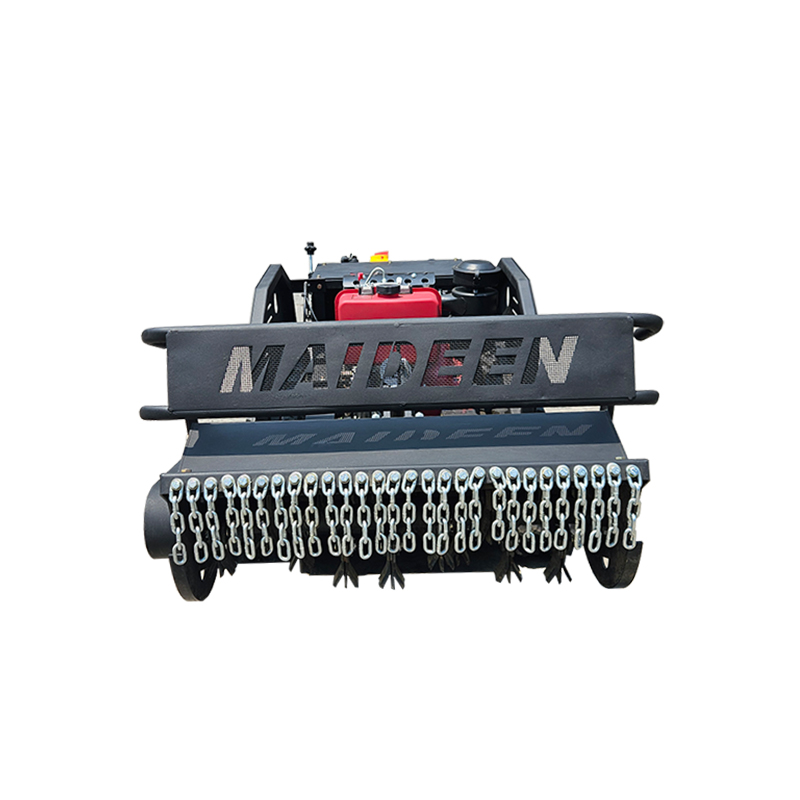
As commercial groundskeepers, orchard managers, and land clearance professionals know firsthand, field efficiency goes far beyond simple forward movement. Over years of testing equipment across uneven terrain and steep slopes, our engineering and field teams at Shandong Maide En Intelligent Technology Co., Ltd have observed that true operational productivity depends on precise technical alignment. Selecting an equipment setup requires examining specific operational metrics—such as area coverage per hour, power transmission stability, and terrain capability—rather than relying solely on engine horsepower ratings. In challenging land maintenance applications, evaluating lawn mower efficiency means examining how power systems, blade architecture, and chassis design interact to deliver consistent cutting performance under demanding real-world conditions.
Assessing Power Architecture: Gas vs Electric Lawn Mower Performance Metrics
Evaluating power unit performance requires matching internal combustion or hybrid drive systems to specific workload demands. When comparing a gas vs electric lawn mower, operators must analyze continuous torque output, runtime autonomy, and energy conversion rates under heavy thicket conditions. Gasoline engines, such as the 196cc 4-stroke units or heavy-duty 224cc and 608cc engines utilized across our product line, provide consistent mechanical energy density necessary for long shifts across overgrown brush. Conversely, hybrid electric configurations utilize dual thrusters and brushless electric drive motors to maximize energy delivery directly to the propulsion tracks or drive wheels. This hybrid combination allows internal combustion engines to run at optimal RPM solely for power generation and blade actuation, while high-torque electric motors manage smooth low-speed maneuverability. Through our field testing across agricultural fields and steep embankments, optimizing this power loop yields higher overall lawn mower efficiency, lowering fuel consumption while maintaining steady torque under variable cutting resistance.
Evaluating Cutting Deck Design and Cutting Width Parameters
A major technical factor influencing field productivity is cutting deck design. The geometry of the mower deck, combined with blade lift aerodynamics and cutting width dimensions, determines how efficiently grass and dense brush are processed without clogging the chamber. For instance, integrated cutting widths ranging from 550mm on compact units up to 900mm on heavy-duty crawler models directly dictate square-meter-per-hour coverage. In our manufacturing process at Shandong Maide En Intelligent Technology Co., Ltd, we equip our remote-controlled mowers with impact-resistant flexible blades, thickened cutting elements, and adjustable cutter head lifting mechanisms. Proper airflow within a reinforced steel deck creates sufficient suction to elevate flattened turf before impact, ensuring a uniform cut in a single pass. A well-engineered cutting deck design reduces drag on the engine, prevents debris accumulation, and minimizes duplicate passes, establishing critical efficient lawn mower indicators for professional users managing large properties or delicate orchard floors.
Analyzing Terrain Adaptability, Drive Systems, and Slope Handling
To accurately measure operational throughput on difficult landscapes, terrain adaptability serves as a core performance metric. Traditional ride-on or push mowers experience sharp drops in work rate on inclines exceeding 15 degrees due to traction loss and safety constraints. By contrast, specialized machinery utilizing heavy-duty rubber crawler chassis, four-wheel drive systems, and low centers of gravity can navigate working slopes from 50 degrees up to 80 degrees safely. Remote control capabilities with operational ranges up to 200 meters remove human operators from hazardous inclines, eliminating personal injury risks while preserving steady travel speeds. When assessing efficient lawn mower indicators, evaluating track ground-pressure distribution, brushless motor responsiveness, and slope stability ensures high operational output without sacrificing operator safety or destroying delicate topsoil. These architectural advantages directly raise overall lawn mower efficiency across complex land clearing assignments.
Establishing Preventive Maintenance Protocols for Long-Term Output
Sustaining high operational throughput throughout the equipment lifecycle requires disciplined lawn mower maintenance. Mechanical components subjected to continuous vibrations and abrasive debris demand predictable servicing schedules to prevent unexpected downtime. Essential maintenance practices include regular inspection of multi-use drive belts, checking brushless motor wiring connections, sharpening thickened impact blades, and inspecting rubber track tensioners. At Shandong Maide En Intelligent Technology Co., Ltd, we design our machinery with accessible service panels and modular parts to simplify routine checks. Adhering to structured lawn mower maintenance schedules preserves mechanical alignment, prevents parasitic power losses from worn bearings or dull blades, and ensures that key performance indicators remain consistently high season after season.
Optimizing Fuel Economy and Power-to-Weight Dynamics for Maximum Return
Beyond immediate cutting speed and terrain capability, long-term efficiency is fundamentally shaped by power-to-weight optimization and overall fuel consumption metrics. An oversized engine mounted on an overly heavy frame creates excessive ground pressure and consumes excess fuel without adding proportional cutting productivity, while an underpowered chassis bogs down in thick vegetation, burning surplus fuel through engine strain. High-efficiency mower design relies on balancing lightweight structural frames, such as reinforced alloy or low-profile crawler tracks, with high-torque engine configurations. By optimizing the mechanical transfer ratio between the power plant and the cutting blades, modern machinery achieves superior work output per liter of fuel consumed. For commercial land contractors, park management authorities, and agricultural enterprises, evaluating fuel economy alongside hourly area coverage provides a clear picture of total operational expenditure, ensuring that overall lawn mower efficiency translates directly into lower operating costs and higher long-term return on investment across every project.