EN
How Does Orchard lawn mower Protect Fruit Tree Trunks During Mowing
In an orchard, a lawn mower has a different job from a mower working on an open lawn. It must manage grass and weeds between rows while staying clear of bark, low limbs, irrigation parts, and the uneven ground around each tree. The important question is not whether a lawn mower can cut close to fruit trees; it is how the mowing system creates a repeatable buffer so the machine does not contact trunks in the first place.
From an operator’s perspective, trunk protection starts before the engine or drive system is engaged. A careful orchard lawn mower routine combines a visible no-mow zone, suitable guards or mulch, a planned travel path, and a slow approach near every tree row. Those layers matter because bark injuries can be easy to miss at first and difficult for a tree to overcome later.
Why fruit tree trunks need a protected zone
A lawn mower can damage a trunk in more than one way. A deck edge, wheel, thrown debris, or an overly tight turn can scrape bark. Repeated contact can be worse than one obvious strike because it removes protective tissue little by little. Young trees and trees with low branching are especially exposed, but established trunks also benefit from clear working space.
It is tempting to judge the job only by how neatly the grass is cut. In practice, the safer measure is whether the lawn mower can complete each pass without forcing the operator to guess where the deck, wheels, or turning arc are relative to the trees. That is why an orchard should be set up around clearance rather than last-minute corrections.
Build a physical and visual buffer around every trunk
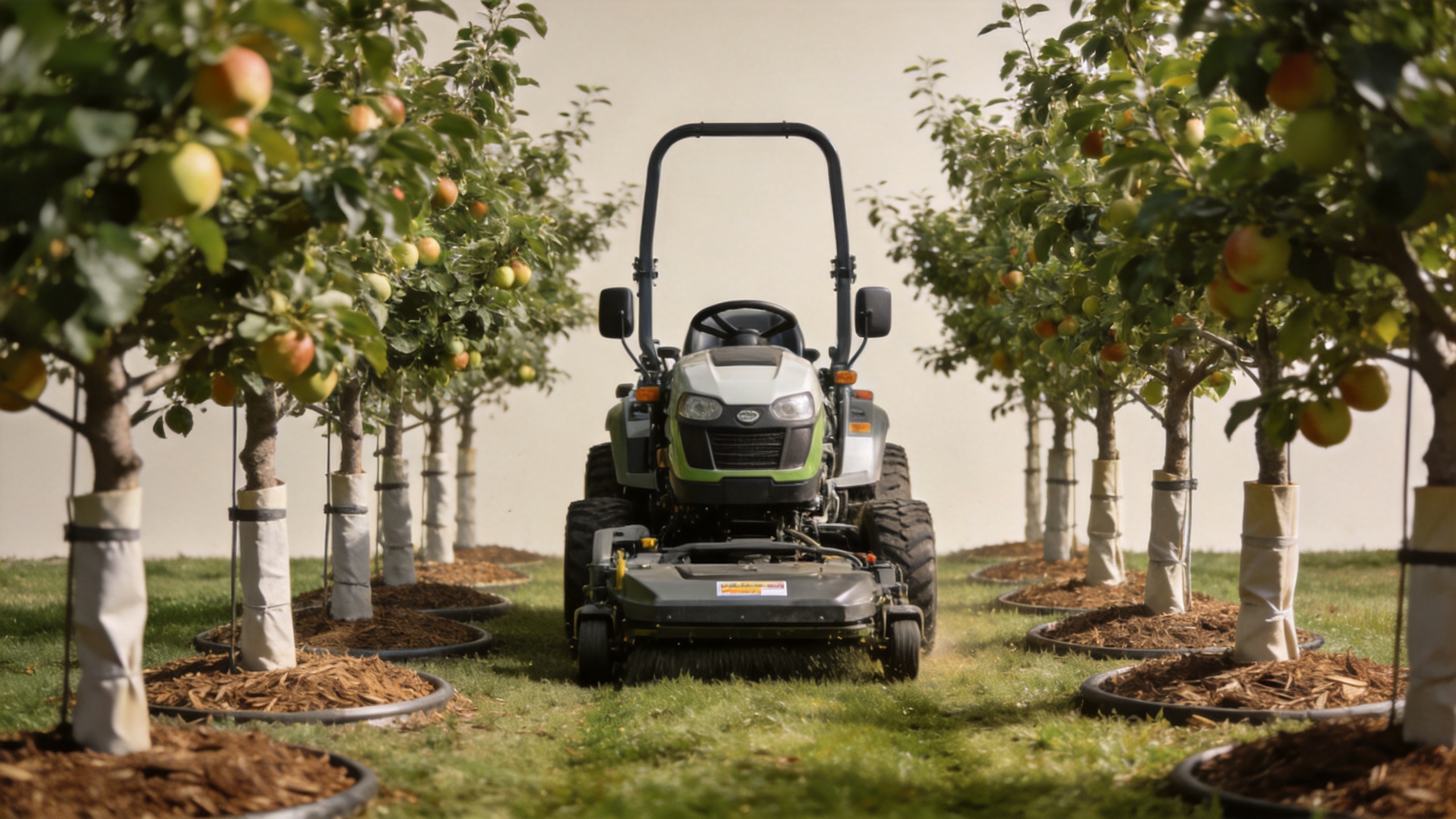
The most reliable protection is a zone that gives the lawn mower no reason to travel against the base of a tree. A maintained mulch ring can reduce the area that needs close mowing and make the boundary visible from the operator’s position. Purdue Extension guidance notes that a 2–3 inch mulch layer over the root zone can be appropriate, while mulch should not be piled against the trunk. The exact ring width should fit tree age, row spacing, irrigation layout, and the equipment used in the orchard.
For trees that need added mechanical protection, use a purpose-made trunk guard or another suitable barrier that does not trap moisture against the bark. A guard is not a substitute for careful driving; it is a second layer if the lawn mower approaches too closely. Inspect guards regularly for rubbing, debris buildup, loose fasteners, or conditions that could harbor pests. Keep each barrier easy to see so it works as a route marker as well as a shield.
- Keep mulch off the trunk rather than building a “volcano” around it.
- Use a consistent buffer shape so the operator can recognize the edge of the no-mow zone.
- Mark young trees, replacement trees, stakes, and irrigation components before mowing begins.
- Remove fallen branches, wire, and other obstacles that could pull a lawn mower toward a trunk.
Plan row passes before the lawn mower enters the orchard
Route planning is a trunk-protection feature, not just an efficiency step. Before using a lawn mower, walk or visually inspect the first row and identify narrow spots, low limbs, wet ground, hidden stumps, and changes in slope. Decide where each pass begins, where it ends, and where turns will occur. A suitable turning area is normally outside the tree’s protected zone, where the mower has enough room to straighten before re-entering the row.
In an orchard lawn mower workflow, a straight, deliberate row pass is generally easier to control than repeated tight corrections around individual trees. Leave a predictable strip beside the trunks for another tool or a later manual pass if necessary. Trying to make one machine finish every inch of vegetation often increases the chance of bark contact.
Use a slow approach and a controlled mowing pattern
Once the route is clear, set a pace that leaves time to observe both sides of the machine. The lawn mower should approach trees with its travel path already established, rather than turning sharply at the last second. On slopes, ruts, or wet soil, reassess the route because traction and steering can change the clearance that looked adequate on dry, level ground.
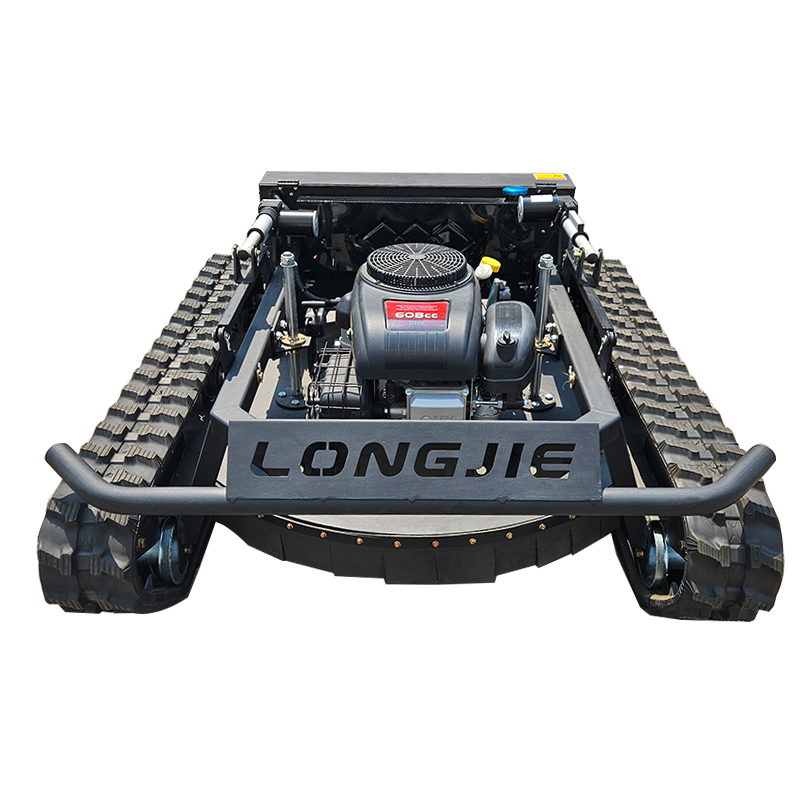
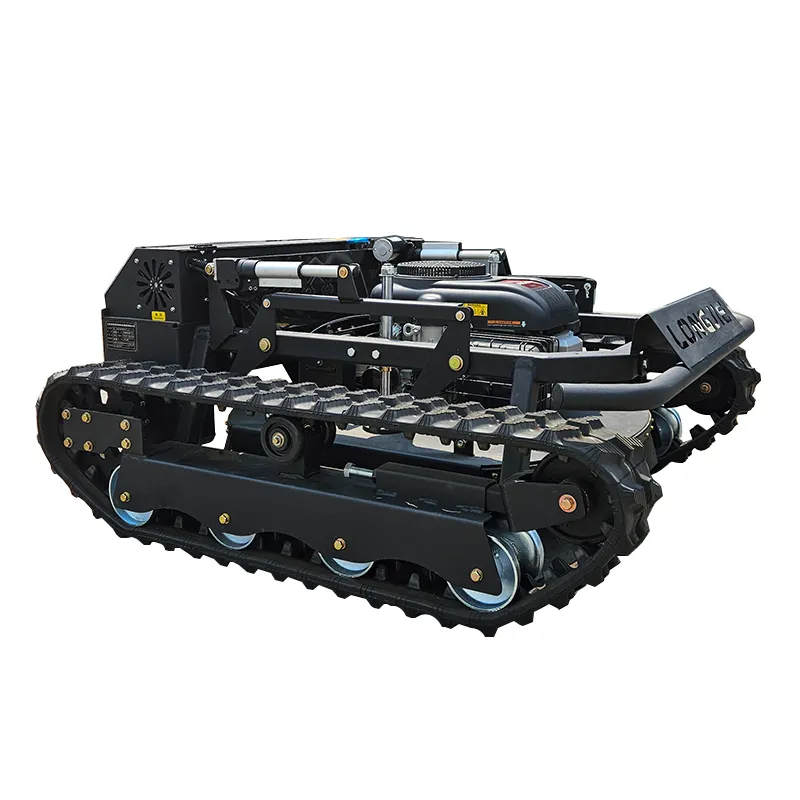
Remote-control or ride-on equipment can make row work more manageable, but it does not remove the need for line-of-sight, safe spacing, and adherence to the manufacturer’s operating instructions. An operator should pause when a trunk disappears behind vegetation, when a wheel approaches a mulch edge, or when a low limb changes the available path. Efficiency is useful, but it should not replace a safety check near a living trunk.
Where close trimming fits
Close trimming around the base is often safer when treated as a separate task. Instead of pushing the lawn mower into the final few inches, use an approved hand tool or a carefully managed alternative suited to the orchard’s maintenance plan. This division of work protects both the tree and the mower: the machine handles the row area, while a controlled method handles the exclusion zone.
Check the orchard after mowing
After each section, make a quick walk-through before moving on. Look for fresh scuffs, displaced mulch, tilted guards, exposed irrigation lines, or grass clippings packed against a trunk. If a lawn mower has left a narrow strip that is too close to the tree, record that location instead of solving it with an aggressive return pass. The better fix may be to widen the buffer, adjust the route, or change the follow-up tool.
This review also improves future mowing. Note which turns felt tight, where surface changes pushed the lawn mower off line, and which tree guards need clearer visibility. Small adjustments made after one pass can prevent repeated contact throughout the season.
A practical pre-mow checklist for orchard rows
- Inspect trunks, guards, mulch rings, stakes, and irrigation components.
- Clear branches and debris from the planned path of the lawn mower.
- Confirm that turning points are outside the trunk-protection zones.
- Check ground conditions, especially slopes, wet patches, and ruts.
- Use a steady row-pass pattern and stop when visibility or clearance is uncertain.
- Walk the row afterward and correct the buffer or route before the next mowing cycle.
Choose the mowing plan around the orchard, not just the machine
A capable lawn mower contributes to orchard maintenance when its width, maneuverability, and operating method match the space between trees. Yet trunk protection depends on the whole system: how rows are prepared, how no-mow zones are marked, where turns occur, and how close work is handled. A larger or faster lawn mower is not automatically the safer choice in narrow, obstacle-rich rows.
Before selecting or assigning an orchard lawn mower, document row width, tree age, trunk-guard dimensions, terrain, vegetation density, and the required mowing frequency. Then confirm the equipment’s operating limits and safety guidance with the supplier and the machine documentation. When the route, buffer, and follow-up work are planned together, a lawn mower can maintain orchard rows while helping fruit tree trunks stay out of harm’s way.