EN
What Is The Difference Between Landscaping lawn mower And Farm Mower
Choosing a lawn mower becomes easier when you start with the job rather than the machine label. A landscaping mower is usually selected for a maintained site where appearance, maneuvering around obstacles, and a consistent finish matter. A farm mower is usually selected for broader vegetation control, rougher ground, and recurring work across less formal areas. Both may cut grass, but they solve different operating problems.
From a B2B buying perspective, the useful comparison is not “which lawn mower is better?” It is “which lawn mower fits the vegetation, terrain, work pattern, operator process, and desired result?” That distinction helps buyers avoid choosing by acreage alone.
Landscaping lawn mower vs. farm mower: the core difference
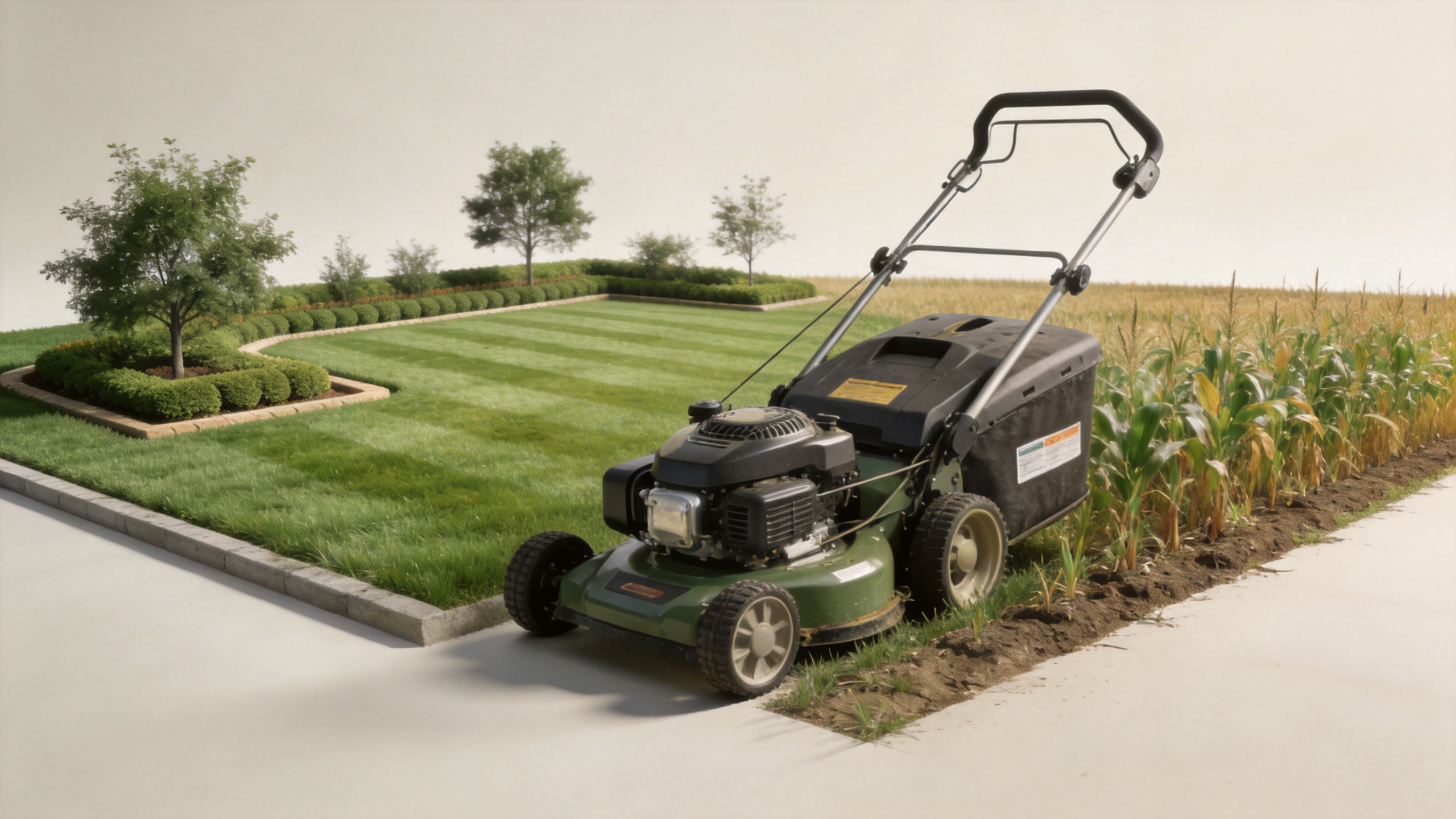
A landscaping lawn mower is generally used where turf presentation is part of the result. Think of landscaped grounds, managed green spaces, paths with edges, trees, beds, and areas that require frequent direction changes. In this setting, a lawn mower is judged by how it fits the route, how well it handles obstacles, and whether the cutting approach supports the expected appearance.
A farm mower is more often part of vegetation-management work. The task may include taller grass, denser growth, uneven surfaces, field edges, orchard rows, access lanes, or seasonal clearing. Here, the lawn mower decision shifts toward the nature of the material, the stability of the route, site access, maintenance planning, and safe operation in changing conditions. The aim may be functional control rather than a finely finished lawn.
| Decision area | Landscaping lawn mower | Farm mower |
|---|---|---|
| Primary goal | Maintained appearance and repeatable finish | Vegetation control and broad-area work |
| Typical site | Lawns with trees, beds, paths, and defined boundaries | Fields, orchard areas, lanes, rough grass, and less formal ground |
| Vegetation question | Regular turf and clipping presentation | Height, density, stems, and variability of growth |
| Route priority | Turning, trimming access, and obstacle navigation | Ground condition, access, clearance, and work sequence |
| Buying focus | Finish expectations, maneuverability, operating comfort | Task suitability, terrain review, durability, and support planning |
1. Start with the vegetation, not just the acreage
Two properties with similar area can need very different equipment. A landscaped lawn with regularly maintained turf does not place the same demands on a lawn mower as a field edge with taller, mixed, or seasonal vegetation. Grass height and weed density affect work rhythm, so area should be one input, not the whole decision.
For a landscaping lawn mower, ask how often the site is cut, whether clippings affect presentation, and where close work is needed around borders. For a farm lawn mower, document the heaviest vegetation expected during the work season, not only the condition on inspection day. If material type changes through the year, the purchase discussion should say so.
2. Compare terrain and route complexity
A landscaping lawn mower often works on a planned route through visually sensitive areas. Turning space, tree spacing, curbs, beds, gates, and pedestrian zones can all influence the right format. A larger lawn mower is not automatically more productive if it cannot move through the site efficiently.
Farm work introduces a different terrain review. Ruts, hidden debris, soft ground, slopes, drainage features, fences, and changing surface conditions can change the operating plan. Before selecting a farm lawn mower, identify where equipment enters, turns, parks, and exits. If remote operation is under consideration, line of sight, boundary control, and the applicable operating instructions deserve separate review; remote control does not remove the need for site management.
3. Finish quality and work outcome are different priorities
The right landscaping lawn mower supports an orderly, repeatable look. That does not mean every landscape needs the same cutting approach, but it does mean the desired finish should be stated clearly. Buyers should explain whether the priority is a regularly maintained lawn, edge access, appearance near public areas, or reduced operator effort across a defined route.
With a farm lawn mower, the outcome may be clearance, access, and manageable vegetation rather than a uniform ornamental finish. This is why comparing only deck size, engine figures, or a promotional claim can mislead. Put every feature back into the actual task: what material is cut, how often, where it is cut, and what must be checked before operation.
4. Operation, safety, and maintenance should influence the choice
Both categories require a clear operating process. For a landscaping lawn mower, that can include obstacle checks, route planning, pedestrian separation, and post-work cleanup. For a farm lawn mower, the inspection may need to account for debris, holes, boundaries, changing vegetation, and ground stability. Follow the machine documentation and site rules rather than treating this article as an operating manual.
Maintenance is also part of the decision. When comparing a lawn mower, request the information needed to plan routine checks, wear items, cleaning, storage, service access, and spare-parts support. A lower initial quote does not necessarily mean a lower overall operating burden if these questions remain unanswered.
A practical selection checklist
- Describe the main job: turf presentation, vegetation control, access maintenance, or a combination.
- Record grass height, density, seasonal change, and any mixed growth that affects the lawn mower task.
- Map slopes, wet areas, obstacles, gates, turning points, boundaries, and parking space.
- Specify the finish expected after each pass and how frequently the site is maintained.
- Confirm who will operate the lawn mower, what training or documentation is required, and how the site will be checked.
- Ask suppliers to clarify configuration, maintenance, safety information, and support scope in writing.
Which lawn mower category should you choose?
Choose a landscaping lawn mower when a consistent turf result, maneuvering around designed features, and frequent scheduled maintenance are central to the work. Consider a farm-oriented mower when vegetation control, broader routes, variable growth, and rougher field conditions define the task. In some operations, the answer is not a single universal lawn mower; separate machines or a clearly prioritized configuration may be more appropriate.
Before requesting a quotation, prepare a short site brief with photos, terrain notes, vegetation conditions, work frequency, access limits, and the desired outcome. That gives a supplier a better basis for discussing a suitable lawn mower configuration and for identifying points that still need verification. The most dependable choice is the one that fits the real work—not simply the biggest, lowest-priced, or most feature-heavy option.