EN
What New Technology Is Applied in a New Style Lawn Mower?
A new style lawn mower is not defined by a futuristic shell or a long feature list. The useful changes are the ones that help an operator make a safer, more repeatable decision about cutting, turning, monitoring, and maintaining the machine. When people compare a lawn mower today, they commonly see electric power, electronic controls, sensors, connected displays, and improved drive systems. The important question is not which feature sounds newest. It is whether that feature fits the grass, terrain, work frequency, operator skill, and maintenance plan.
From a remote-mower technical explainer’s perspective, technology should be separated into control, power delivery, sensing, and safety boundaries. That makes a lawn mower easier to evaluate than a brochure full of isolated claims. It also prevents a common mistake: assuming a new style lawn mower will perform the same way on short, dry turf and on a rough site with taller vegetation, slopes, or obstacles.
1. Smarter power systems are changing the lawn mower
Battery-electric designs are one of the most visible changes in a new style lawn mower. A battery system can reduce local exhaust during use and may simplify some routine checks compared with an engine-driven lawn mower. However, battery technology should be assessed as a system rather than as a single capacity number. Battery, charger, cable, thermal protection, charge management, and the mower’s load profile all matter.
For a commercial or property-management lawn mower, ask how runtime is measured, what grass and terrain conditions were used, how charging is managed, and what inspection procedure applies to the battery enclosure. The U.S. Consumer Product Safety Commission’s battery guidance emphasizes system-level considerations such as thermal protection and charge/discharge protection. That is a useful evaluation principle, not proof that any particular lawn mower has been tested or certified.
Electric power is only one option. Modern engine-powered equipment may also use improved fuel control, more deliberate cooling layouts, or better transmission matching. A practical lawn mower comparison therefore starts with the actual cutting load and duty cycle, then checks whether the selected power system can be supported at the site.
2. Electronic drive control can improve consistency
Another common technology area is electronic drive control. In a walk-behind, ride-on, or remote-control lawn mower, control logic can help manage acceleration, speed changes, steering response, and in some designs blade engagement. The benefit is not that electronics automatically make every lawn mower easier to operate. The benefit is that the response can be designed to be more predictable when conditions change.
For example, a work area may include narrow approaches, repeated turns around trees, or transitions between open grass and uneven ground. In those situations, gradual speed control and clear operator feedback may reduce abrupt inputs. Still, the operator needs training, visibility, and an understood stop procedure. Efficiency matters, but a site inspection cannot be omitted before remote or mechanized work begins.
3. Sensors and monitoring add information, not guarantees
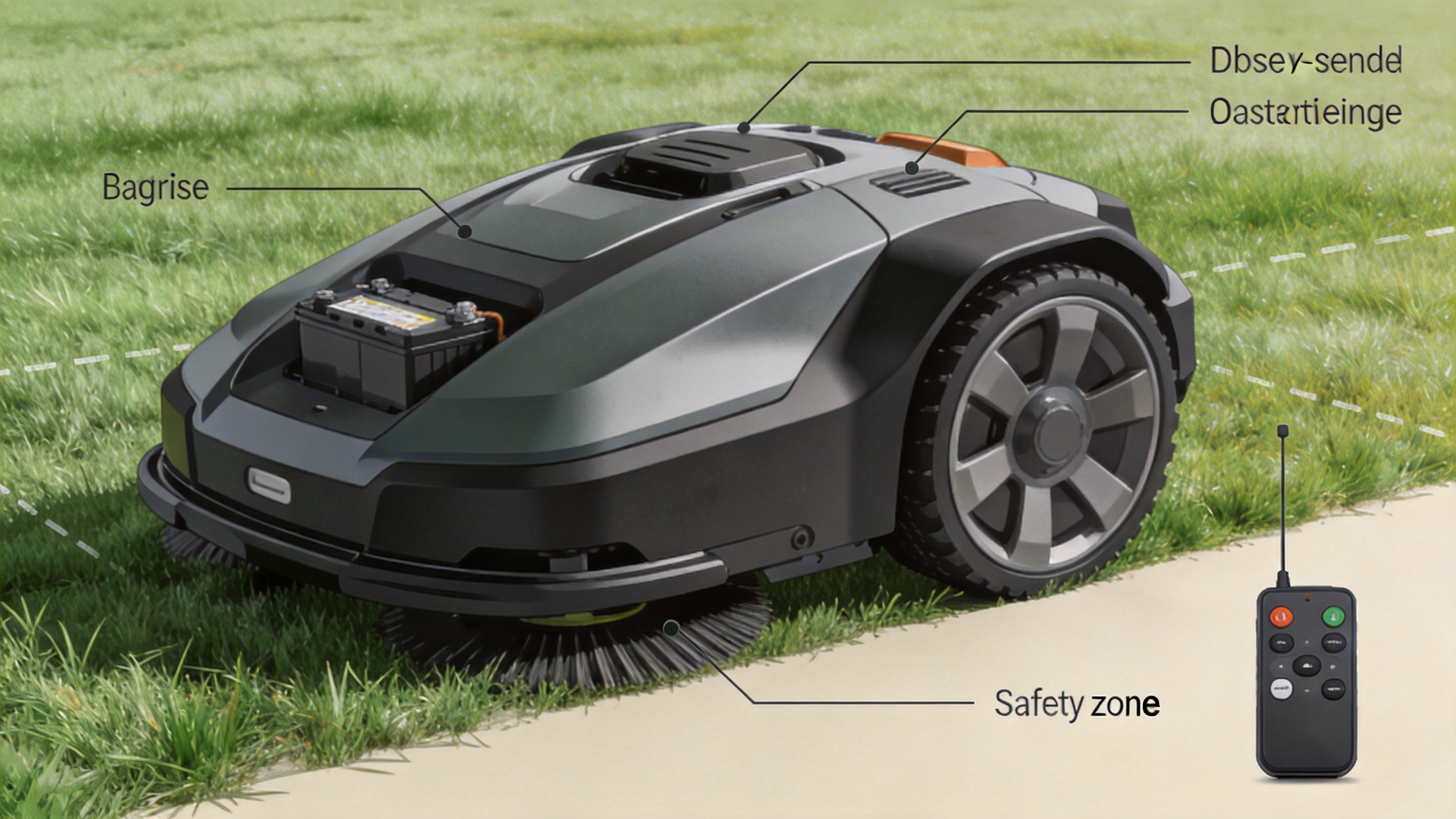
A new style lawn mower may include obstacle-related sensing, tilt awareness, speed feedback, diagnostic messages, or a display that reports operating state. These technologies can support better decisions, especially when an operator must monitor a larger area or a remote-control lawn mower from a safe position. They do not eliminate the need to inspect the route for people, animals, stones, wire, drainage edges, and hidden changes in grade.
It is better to ask what a sensor is intended to detect, under which conditions it works, and what action the machine takes after detection. A sensor that supports an alert is different from a system that slows, stops, or prevents blade operation. Before treating a feature as a safety control, request the applicable operating instructions, the feature description, and any test or configuration information that the supplier can verify.
4. Cutting and deck technology should be linked to the job
New technology can also appear in blade engagement, deck airflow, cutting-height adjustment, blade protection, and anti-clogging design. These changes may help a lawn mower address a particular cutting task, but no deck arrangement is universally right. Grass height, moisture, density, debris, slope, desired finish, and mowing frequency change the result.
Instead of starting with a claimed performance figure, break the job into preparation, cutting, and review. Preparation includes checking the terrain and removing obvious hazards. Cutting includes selecting a suitable travel speed and height. Review includes inspecting the cut, clearing buildup according to the manual, and checking wear items. This task-based approach turns a new style lawn mower feature into a question that can be verified on the intended site.
5. Connectivity and diagnostics can help maintenance planning
Some modern lawn mower designs add fault codes, service reminders, usage records, or connected monitoring. These functions can make maintenance conversations more organized because a buyer can identify what information should be recorded: hours, error messages, charging behavior, blade condition, and the circumstances around a fault. They should not be presented as a substitute for scheduled inspection or a supplier’s maintenance instructions.
For B2B buyers, the useful question is whether diagnostic information can be understood by the people responsible for operation and maintenance. Confirm what data is available, who can access it, whether a connection is required, how updates are handled, and which actions still require trained service personnel. A lawn mower is easier to keep in service when the team has a clear inspection routine and a realistic plan for consumables and support.
6. Safety technology remains the first checkpoint
New controls should not push safety into the background. In the United States, ANSI/OPEI B71.1-2017 is identified by CPSC as a voluntary safety standard for pedestrian-controlled and ride-on mowers. Requirements and applicable standards vary by machine category and market, so a purchaser should confirm the current requirements for the specific lawn mower rather than infer compliance from a feature list.
For any lawn mower, establish an exclusion zone, assess slope and ground conditions, confirm controls and emergency-stop procedures, and follow the relevant manual. If the machine uses remote control, assess line of sight, signal conditions, site boundaries, and communication between the operator and nearby workers. Technology is most useful when it supports disciplined operation rather than encouraging assumptions.
A practical checklist before selecting a new style lawn mower
- Describe the area: grass type, vegetation height, slopes, obstacles, access routes, and frequency of work.
- Match the lawn mower power system to the duty cycle and available charging or fuel-support process.
- Ask what each control or sensor does, what it does not do, and which conditions can limit it.
- Request verifiable documentation for safety functions, battery systems, and any claimed performance feature.
- Plan operator training, routine checks, blade and deck maintenance, and service communication before purchase.
A suitable new style lawn mower is not necessarily the one with the most visible technology. It is the lawn mower whose power, controls, sensing, cutting system, and maintenance requirements fit the real work. Before requesting a quotation, organize terrain details, vegetation conditions, expected operating time, desired cutting result, and the information your team needs to verify. That gives suppliers a clearer basis for discussing a suitable configuration without turning unconfirmed technology claims into promises.