EN
EN
What Thick Grass Can a High Power Remote Control Lawn Mower Cut Through?
A remote control lawn mower is often considered when grass has grown beyond the reach of a small residential machine, especially on slopes, roadsides, orchard rows, and uneven ground. The practical answer is not a single grass-height number. A high power remote control lawn mower may be suitable for dense growth, but actual cutting capacity depends on grass species, stem thickness, moisture, hidden debris, terrain, deck design, and the exact model’s operating instructions.
From a technical selection perspective, the useful question is not simply, “How tall is the grass?” It is, “What load will this vegetation place on the remote control lawn mower, and can the operator manage that load safely?” That shift prevents a nominal power figure from being treated as a promise of performance in every field condition.
Why Thick Grass Is More Than a Height Measurement
For a remote control lawn mower, tall grass is usually easier to manage when it is dry, flexible, and relatively sparse than when it is shorter but wet, tangled, or mixed with woody stems. Dense vegetation can pack under a deck, slow blade rotation, limit discharge, and hide rocks, wire, stumps, or holes. Each of those factors changes both cutting quality and operating risk.
Start by separating vegetation into four practical conditions:
- Long but light grass: thin, dry blades with open ground beneath may be manageable with a staged pass.
- Dense or matted grass: intertwined stems increase resistance and may require a narrower cutting path or more than one pass.
- Wet grass: moisture adds weight and encourages clumping, so a remote control lawn mower may need a slower, more conservative plan.
- Mixed brush or woody growth: this is not ordinary lawn mowing. Capability must be verified against the exact cutter, blade, and manufacturer instructions.
In other words, a high power remote control lawn mower should be evaluated by vegetation load rather than by grass height alone. A supplier’s stated cutting range, the recommended vegetation type, and the approved attachment or blade configuration are the documents that should settle the decision for a particular model.
What “High Power” Changes—and What It Does Not
Higher available power can help a remote control lawn mower maintain blade speed or traction when vegetation becomes heavier. It does not automatically make every overgrown site appropriate. Power must work with cutting width, blade or flail design, deck clearance, traction, cooling, discharge behavior, and controls that allow the operator to reduce speed or stop safely.
For example, a machine may have enough power for a planned grass condition but still be a poor fit if the cut material cannot discharge cleanly. The operator may then be tempted to push forward too quickly, which can overload the cutter, leave windrows, or conceal an obstruction. It is better to match travel speed and cutting width to the grass than to treat high power as permission to take one aggressive pass.
This is also why a high power remote control lawn mower should be assessed as a system. Ask for the model-specific information on recommended material, maximum operating conditions, blade or flail options, slope limits, and maintenance intervals. Where those details are not confirmed, they should remain a verification item rather than a marketing claim.
Use a Two-Pass Plan for Uncertain or Heavy Growth
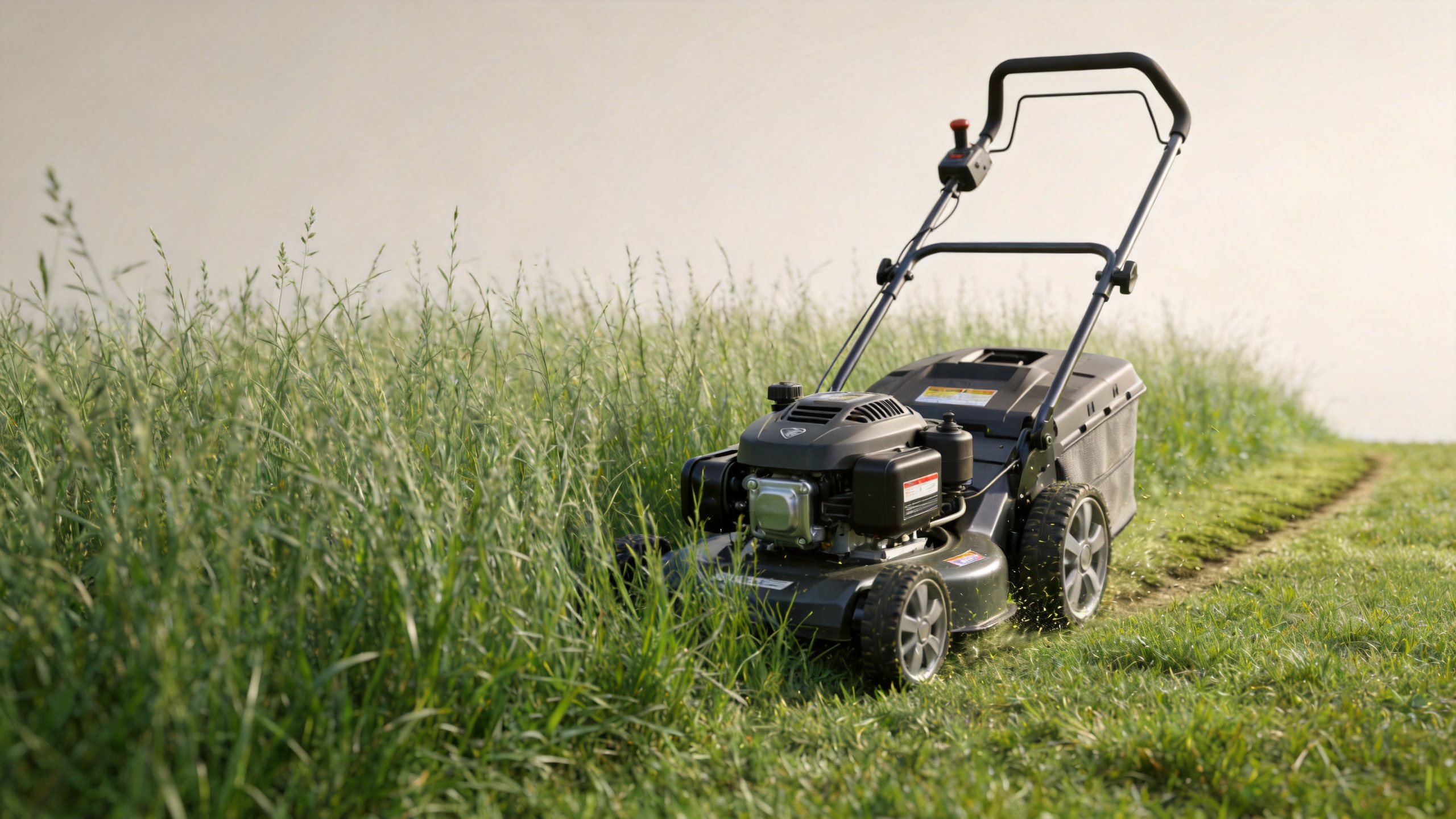
When a site is overgrown, a two-pass plan is often more controlled than trying to cut everything to the final height at once. The first pass reduces the standing material and reveals the ground. The second pass finishes the cut after the operator can see how the mower and vegetation are behaving.
- Inspect the route first. Walk the accessible area and mark or remove loose debris, wire, stones, branches, irrigation parts, and hidden level changes.
- Choose a conservative first pass. Use a travel speed and cutting height consistent with the exact remote control lawn mower manual. Do not assume a universal setting.
- Watch discharge and traction. Stop if material accumulates, the machine loses stable movement, or the operator loses a clear view of the cutting path.
- Recheck the exposed ground. The first pass may uncover obstacles or soft areas that were not visible in the grass.
- Make a finishing pass only when conditions remain controlled. If the vegetation is still too heavy, revise the work plan rather than forcing the machine through it.
This approach turns a vague thick-grass request into a sequence of manageable checks. It can also help a remote control lawn mower operator identify whether the limitation is vegetation, discharge, terrain, or visibility.
Terrain and Visibility Can Be the Real Limitation
Thick grass often hides the conditions that matter most: holes, ditches, rocks, fence remnants, and abrupt slope changes. Remote operation may allow the operator to stand away from the immediate cutting area, but it does not remove the need for line of sight, exclusion zones, training, or adherence to the manufacturer’s operating instructions.
A remote control lawn mower should not be sent into unseen vegetation simply because it has tracks or a high-output engine. Before work begins, confirm the route, turning areas, boundaries, surface firmness, and safe stopping distance. On slopes, factor in both the slope itself and how damp, loose, or obstructed the ground is. A dry incline and a wet incline may create very different traction and control conditions.
General mower safety resources reference standards such as ANSI/OPEI B71.1 for certain mower categories, but the applicable safety requirements for a specific remote-controlled commercial machine must be confirmed in that machine’s documentation and local work rules. This article does not replace those instructions.
A Field Checklist for a High Power Remote Control Lawn Mower
Use this checklist before deciding whether a high power remote control lawn mower is appropriate for thick grass:
| Check | Why it matters | What to verify |
|---|---|---|
| Grass type and density | Dense, matted, or fibrous vegetation loads the cutter differently from light grass. | Whether the exact mower documentation lists comparable material. |
| Moisture | Wet grass can clump and increase resistance. | Whether the work can wait for drier conditions or needs a slower plan. |
| Stem and brush content | Woody material may exceed a grass-cutting configuration. | Approved blade or flail type and stated material limits. |
| Hidden hazards | Obstacles can damage equipment or create a projectile hazard. | Pre-inspection, exclusion area, and route visibility. |
| Terrain | Slope, soft soil, and ruts affect stability and traction. | Model-specific slope and ground-condition guidance. |
| Maintenance readiness | A dull, damaged, or obstructed cutter changes the result. | Blade condition, guards, cleaning needs, and required checks. |
How to Compare Models Without Overstating Capability
When comparing a remote control lawn mower for high grass, request evidence rather than relying on broad labels. Useful questions include: Which vegetation was the machine designed to cut? What deck, blade, or flail configuration was used? Under what ground and moisture conditions was the guidance developed? What is the advised first-pass technique? What operating limits apply to slopes and obstacles? What shutdown and emergency-stop procedures are specified?
Shandong Maide En Intelligent Technology Co., Ltd. presents remote control lawnmowers among its agricultural machinery themes and can structure an initial selection discussion around site conditions. For any proposed configuration, capability, safety features, and applicable documentation should be confirmed against the final product information rather than assumed from this overview.
Conclusion: Verify the Job, Not Just the Power
A remote control lawn mower can be a practical option for heavy grass when the machine, cutter configuration, ground, and operating method are matched. The phrase “high power” is useful only when it is connected to a real work condition. Long, light grass may call for a controlled first pass; wet, matted grass may call for slower travel and a second pass; brush, hidden debris, or unsafe terrain may require a different plan altogether.
Before requesting a model recommendation, document the grass condition, moisture, slope, surface obstacles, work area, access route, and desired cutting result. That information gives a supplier and operator a sound basis for deciding whether a high power remote control lawn mower is suitable and what must be verified before operation.