EN
EN
Where Is Small gas lawn mower Widely Used In Home Yard
A compact mower can make a home yard easier to manage, but square footage alone does not decide whether it is the right fit. Gasoline lawn mowers are commonly used where a homeowner wants a cord-free walk-behind tool for regular cutting, has a place to store fuel and equipment safely, and can maintain the machine between seasons. The useful question is not simply “How large is the lawn?” but “What does this yard ask the mower to do?”
From a lawn-equipment selection perspective, begin with terrain, grass density, access, and mowing frequency. A small gas lawn mower can be a practical choice for ordinary turf, thicker seasonal growth, and yards with several separate patches of grass. It is not automatically the right choice for every property, especially where noise rules, enclosed storage limits, or very short mowing sessions matter most.
Home-Yard Areas Where Gasoline Lawn Mowers Are Often Useful
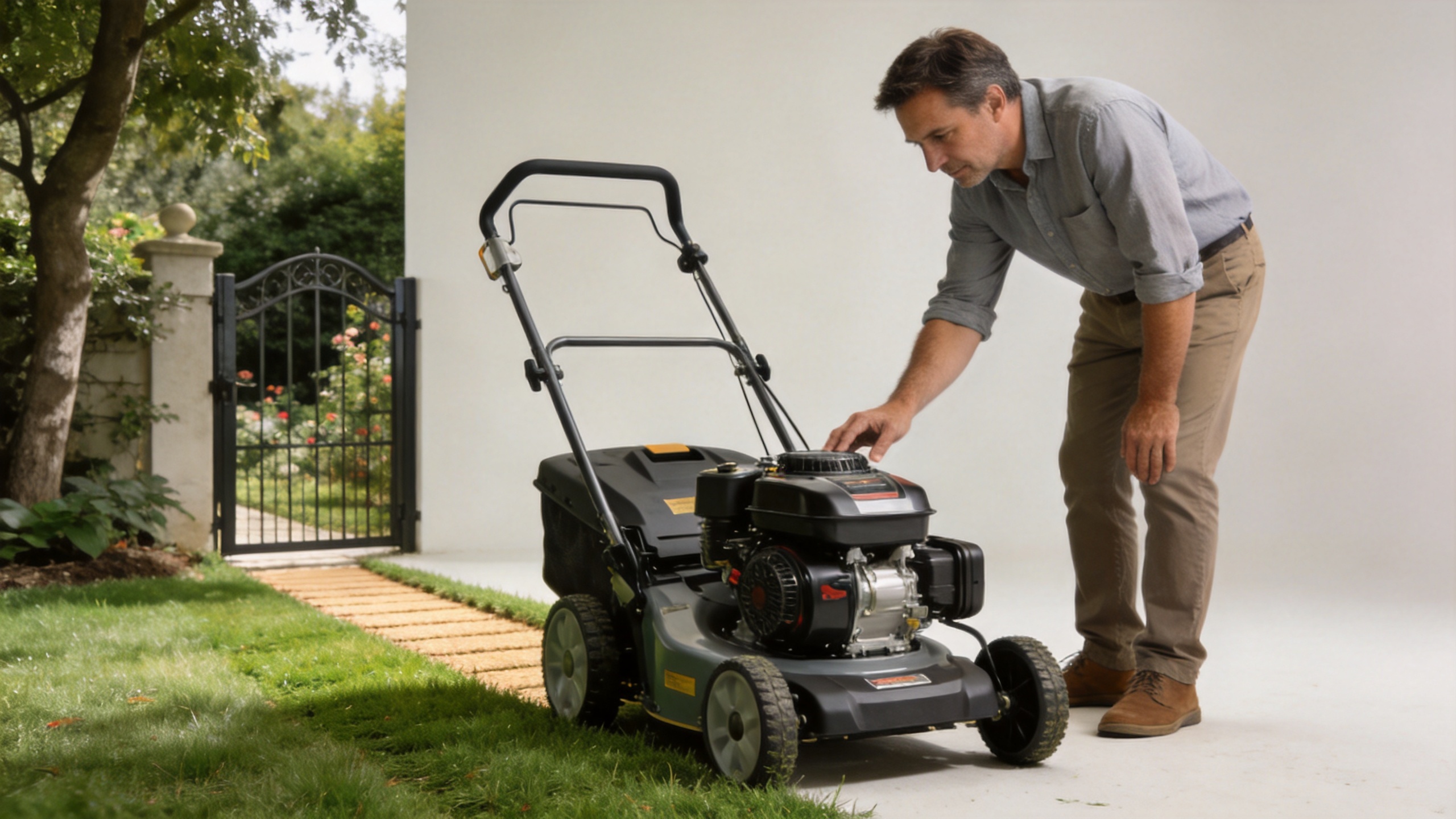
Gasoline lawn mowers are often used in detached-home yards that include a main lawn plus side strips, a back garden, or grass around a driveway. Because the mower carries its own power source, the operator is not tied to an outlet or extension lead. That can be useful when the route passes around trees, garden beds, play areas, sheds, or parked vehicles.
1. Medium lawns with an open central cutting area
An open lawn gives a compact walk-behind mower room to travel in steady passes. This is where a small gas lawn mower is often easiest to use: the operator can establish a simple pattern, turn at the edge, and return without repeatedly moving obstacles. Many search results for gasoline lawn mowers emphasize walk-behind and self-propelled choices, which reflects a common residential need rather than a one-size-fits-all specification.
Do not assume that a larger engine or wider deck will suit every yard. A yard with narrow access points, landscaping islands, or frequent turns may favor a mower that is easier to guide and store. Before comparing models, measure the narrowest gate, note the turning spaces, and identify places where the mower must be lifted or redirected.
2. Yards with thicker grass or uneven seasonal growth
When grass becomes denser after rain or grows faster during an active season, homeowners may prefer the familiar torque and refueling routine of gasoline lawn mowers. That does not mean every gas mower is suitable for tall or neglected grass. Blade condition, cutting-height adjustment, ground firmness, and the manufacturer’s operating instructions still matter.
A practical approach is to reduce the cutting load rather than force the mower through. Raise the cutting height for the first pass if the grass is long, clear sticks and hidden objects first, and avoid mowing when the surface is slippery or when wet clippings are likely to clog the deck. Grass height and weed density can change the work rhythm, so two yards with similar area may call for different mowing plans.
3. Properties with separated lawn zones
A home yard may have a front lawn, a fenced back section, and a narrow strip beside a garage. A compact gasoline mower can be useful when those zones are not connected by a convenient electrical path. The machine can be moved to each area without laying out a cable, provided the route is safe and the equipment can pass through gates or along paths without damaging plants or hard surfaces.
For these yards, map the work before starting. Begin with the open zone, then move to smaller sections once the main mowing is complete. This simple sequence reduces repeated handling. It also makes it easier to pause, inspect the blade area, and refuel only after the engine has cooled according to the equipment instructions.
When a Small Gas Lawn Mower May Be Less Suitable
Gasoline lawn mowers are not a default recommendation just because a yard has grass. Very compact urban plots with a few minutes of light trimming may be better served by another tool type. The same is true where local rules limit engine noise, where fuel storage cannot be handled safely, or where the operator cannot comfortably manage the mower’s starting, pushing, and maintenance requirements.
Slopes deserve separate attention. A slope that looks modest from a window can become difficult when the grass is damp, rutted, or covered with leaves. Check the product manual for slope guidance, maintain stable footing, keep children and bystanders away, and stop if traction or control is uncertain. Efficiency matters, but site inspection cannot be skipped.
Turn the Yard into a Selection Checklist
Instead of shopping by a single specification, use the yard itself as the checklist. Gasoline lawn mowers are more likely to be a sensible option when the following conditions can be confirmed:
- Access: Gates, paths, and storage doors allow the mower to move without awkward lifting or tight turns.
- Surface: The main route is firm enough for controlled walking, with holes, stones, hoses, and low branches removed.
- Vegetation: Grass type, height, and density are manageable within the mower’s stated operating guidance.
- Work pattern: The yard has enough cutting area or separated zones that cord-free movement is genuinely useful.
- Storage: Fuel and the mower can be stored and maintained in line with local requirements and the manufacturer’s instructions.
- Operator readiness: The person mowing understands starting, stopping, blade safety, refueling, and routine checks.
This checklist shifts the decision from “Which mower looks strongest?” to “Which mowing routine is safe and workable in this particular yard?” That is usually a more reliable starting point.
A Safe, Repeatable Home-Yard Routine
For a small gas lawn mower, split the task into preparation, mowing, and review. Before starting, walk the grass and remove visible debris. Mark low branches, garden edging, irrigation heads, and areas where the ground changes level. Confirm that pets and people are away from the work area. Review fuel, oil, guards, and controls only as directed by the product manual.
During mowing, keep the route deliberate rather than chasing every corner. Overlap passes slightly for an even result, slow down near boundaries, and do not pull a running mower toward your feet. If conditions change—such as wet grass, a hidden object, unusual vibration, or loss of traction—stop and inspect according to the manual before continuing.
Afterward, let the machine cool before cleaning, refueling, or putting it away. Check the lawn for missed strips and note any section that regularly causes trouble. Over time, this review can reveal whether the issue is mower capacity, a route problem, poor ground condition, or simply a need to mow earlier in the growth cycle.
Questions to Ask Before Choosing
If you are comparing gasoline lawn mowers for a home yard, write down these questions before reviewing product materials:
- What is the widest open cutting area and the narrowest access point?
- How often does the grass need cutting during the busiest season?
- Are there slopes, drainage channels, tree roots, fences, or frequent obstacles?
- Would push operation or self-propulsion better match the route and the operator’s comfort?
- What cleaning, blade-care, fuel, and storage steps can realistically be completed?
- Which claims or features need confirmation in the actual product manual or supplier documentation?
For homeowners and buyers who need help organizing a condition-based mower discussion, Shandong Maide En Intelligent Technology can use the site’s lawn and agricultural machinery focus as a starting point for a clearer requirements conversation. Specific configuration, suitability, and safety information should be verified against the relevant product documentation before a purchase or operating decision.
Final Takeaway
A small gas lawn mower is widely used in home yards with regular grass cutting, separated lawn zones, thicker seasonal growth, and enough open space for a controlled walk-behind routine. Gasoline lawn mowers are most useful when their mobility, maintenance needs, storage conditions, and operator requirements fit the actual property. Start with the ground, the grass, the route, and the safety checks; then compare the equipment features that support that real work.