EN
EN
Why a Small Grass Cutting Machine for Home Fits Backyard Garden Care
A small grass cutting machine for home can be a sensible fit when backyard garden care means regular trimming, changing grass conditions, and limited storage space rather than managing a large open field. The useful question is not simply whether a grass cutter is small. It is whether its cutting method, power source, maneuverability, and maintenance needs match the way your yard is actually cared for.
From a garden-equipment selection perspective, start with the work area before comparing features. A compact grass cutter is often easier to move around beds, trees, fences, and narrow passages, but it should still be chosen with the lawn surface, grass density, and work frequency in mind. This is a condition-based guide, not a promise that one machine suits every backyard.
Why Size Matters in Backyard Garden Care
Backyards usually combine several kinds of work: an open patch of lawn, borders around flower beds, corners near walls, and grass that grows differently in sun and shade. A large machine may cover open ground quickly, yet feel awkward where turning room is tight. A small grass cutting machine for home is easier to store, transport through a gate, and position near detailed landscaping.
That does not mean the smallest option is automatically the most appropriate. Grass height, wetness, density, and the presence of weeds can change the workload. Rather than choosing from a label alone, list the areas that need cutting and note where the machine must turn, pass through, or work near fixed objects.
Match the Grass Cutter to the Main Job
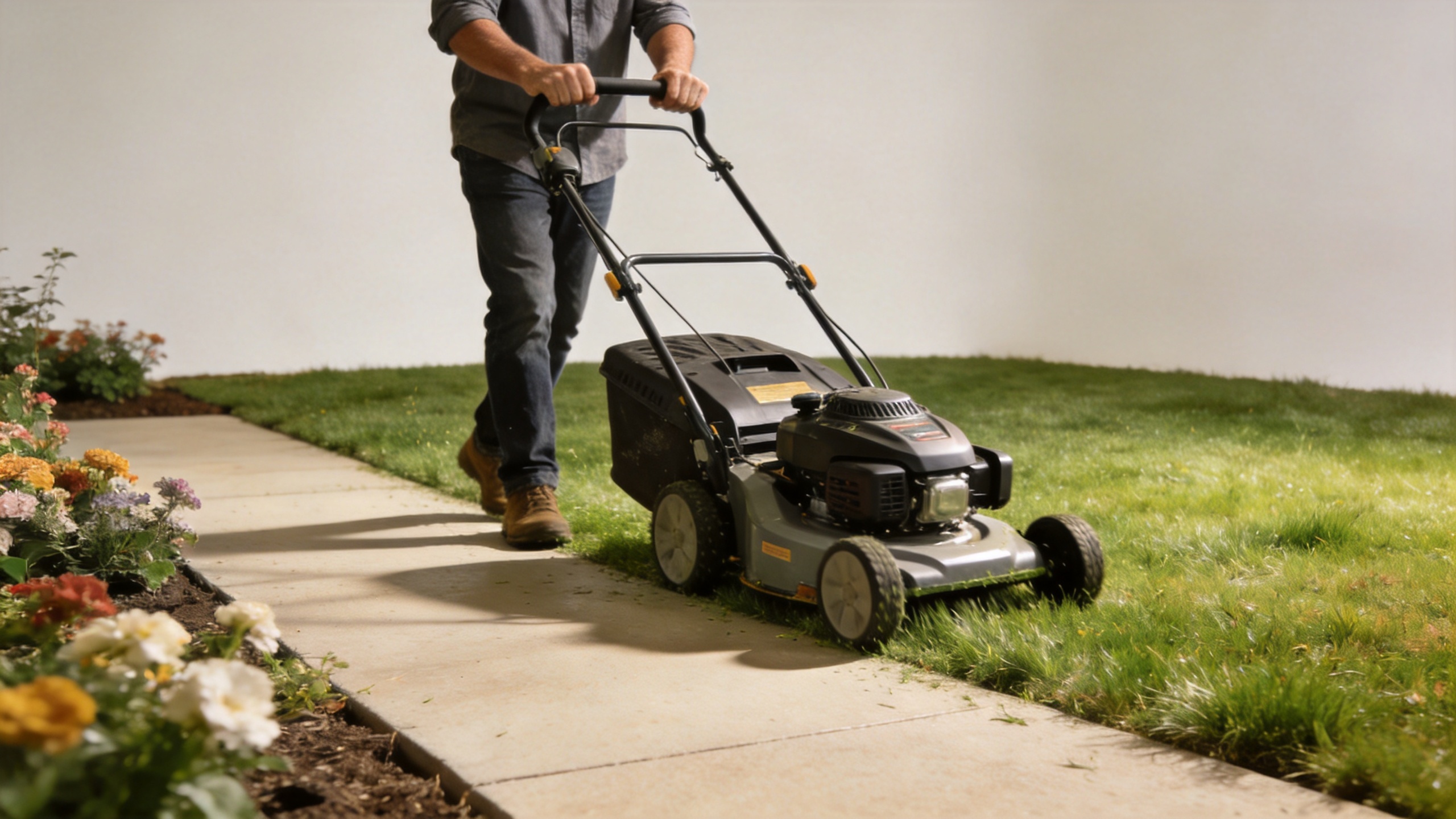
The term grass cutter covers more than one tool category. For a relatively even lawn, a compact walk-behind mower may be more practical for maintaining a consistent cut. For edges, trees, garden borders, and small uneven sections, a handheld trimmer may provide better reach. Heavier brush-cutting equipment may be relevant only when the property regularly has dense growth that ordinary lawn equipment is not intended to handle.
Think of the decision as a task split:
- Routine lawn area: prioritize a cutting width and collection approach that fit the open lawn.
- Edges and obstacles: prioritize reach, balance, and control around plants, fencing, and paths.
- Occasional tall growth: check the manufacturer’s stated vegetation limits instead of assuming a small machine can handle neglected grass.
- Mixed garden layouts: consider whether one compact mower plus a separate edge tool is easier to manage than forcing one tool into every task.
Search behavior around grass cutters often mixes mowers, trimmers, and brush cutters. That is why matching the tool to the job matters more than treating all grass-cutting machines as interchangeable.
Benefits That Can Make a Compact Machine Practical
For an appropriately sized backyard, a small grass cutting machine for home can simplify regular care in several ways. It generally needs less parking space than larger equipment, can be easier to guide along a planned route, and may reduce the effort needed to move between the lawn and storage. These are practical advantages only when the machine’s stated capacity matches the grass conditions.
Compact equipment can also support a steadier maintenance rhythm. Shorter, more frequent sessions are often easier to plan than waiting until grass becomes tall and dense. The important distinction is that a manageable routine does not remove the need for inspection. Stones, toys, branches, pet areas, irrigation components, and loose garden materials should be cleared before any grass cutter is used.
Check These Conditions Before Buying or Using One
1. Yard layout and access
Measure narrow gates, paths, and storage doors. Then look at turning points around trees, raised beds, and outdoor furniture. A compact machine is helpful only if it can safely reach the areas that need care without repeated awkward lifting or reversing.
2. Grass condition and cutting frequency
Fine, regularly maintained turf calls for a different approach than tall, mixed weeds. If grass is often allowed to become overgrown, confirm the intended cutting range in the product documentation. Avoid relying on a claimed power figure alone; actual suitability depends on the vegetation and ground condition together.
3. Power and charging or fuel routine
Choose a power arrangement that fits the time available and the location of storage. Corded tools require safe cable management. Battery-powered machines require a charging routine and realistic run-time planning. Fuel-powered equipment brings additional storage, ventilation, and maintenance considerations. Follow the manufacturer’s instructions for the specific machine rather than generalizing between models.
4. Operator comfort and control
Handle position, weight distribution, start procedure, and vibration all affect whether a grass cutter will be used regularly. If more than one household member may operate it, check whether each user can comfortably control it and understand the safety controls.
A Simple Backyard Work Routine
A good routine begins before the machine starts. Walk the yard, remove loose objects, identify children’s or pets’ access areas, and check that the cutting path is visible. Keep bystanders away, wear the protective equipment required by the machine instructions, and avoid using powered equipment where surface conditions make footing or control uncertain.
- Divide the yard into open lawn, edges, and obstacle-heavy zones.
- Start with the open section using an orderly route that avoids unnecessary turns.
- Stop and reassess if grass is wetter, taller, or denser than expected.
- Use the suitable edge tool for detailed areas rather than forcing a mower into beds or against fences.
- After work, inspect the cutter, remove grass buildup as directed, and store it in a dry, secure place.
This preparation-execution-review pattern helps prevent a compact grass cutter from being treated as a shortcut. Convenience is valuable, but safe use still depends on the site, the operator, and the instructions for the exact equipment.
Maintenance Makes a Small Machine More Useful Over Time
A small grass cutting machine for home is most useful when it is ready for the next scheduled session. After cutting, check for grass buildup, loose fasteners, damaged guards, and signs that the blade, line, or other cutting component needs service. Keep batteries, cables, fuel systems, and moving parts according to the manufacturer’s maintenance schedule. Do not service a machine while it is connected to power or otherwise able to start.
Before purchase, it is worth asking what routine care is expected, how replacement consumables are specified, and what support information is available. A lower initial price can become less attractive if basic upkeep is unclear or supplies are difficult to identify.
When a Small Home Grass Cutter May Not Be Enough
A small grass cutter may be less suitable when the property has extensive open acreage, repeated dense brush, steep or unstable ground, or a surface with frequent hidden obstacles. Those conditions may require different equipment, a different work plan, or professional assessment. The goal is not to oversize the machine; it is to keep the tool within the work it is designed to do.
Final Checklist for Backyard Garden Care
Before deciding, confirm the lawn area, narrow access points, common grass height, edge work, storage space, power routine, and maintenance plan. A small grass cutting machine for home fits backyard garden care when those details support regular, controlled work—not when the machine is expected to solve every cutting task without adjustment. If you are comparing options, provide the yard layout, vegetation conditions, and desired routine so the final configuration can be evaluated against documented specifications.