EN
EN
How Does Yard robot mower Save Garden Maintenance Time
A robot lawnmower saves garden-maintenance time by changing who performs repetitive cutting work and when it happens. Rather than reserving a block of time to push or ride a mower, the operator sets safe boundaries, plans a route, and lets the machine complete suitable routine passes. A yard robot mower is not a hands-off answer for every property, but it can reduce the repeated labor attached to regular grass cutting when the lawn, operating conditions, and maintenance plan fit the machine.
From an operator’s perspective, the useful question is not simply whether a robot lawnmower can cut grass. It is which steps it takes off the weekly checklist, which checks still require a person, and whether the time moved into setup and oversight is smaller than the time previously spent mowing. That is especially relevant for gardens with recurring growth, defined work zones, and a consistent mowing routine.
Where a robot lawnmower changes the weekly mowing workflow
Traditional mowing usually combines preparation, active cutting, edge work, cleanup, and equipment storage into one session. A robot lawnmower can redistribute that workflow. Once its work area and schedule are appropriately configured, it can handle repeat passes while the operator focuses on other garden tasks. The time benefit is therefore mainly a reduction in active attendance, not a promise that all lawn work disappears.
A yard robot mower can be useful for planned maintenance because regular, smaller cuts may avoid the need to schedule one long cutting session after grass becomes overgrown. Search results for the category commonly focus on navigation, boundaries, slope handling, and reliability. Those factors matter because a robot lawnmower saves time only when it can work predictably inside the intended area.
1. It reduces hands-on cutting time
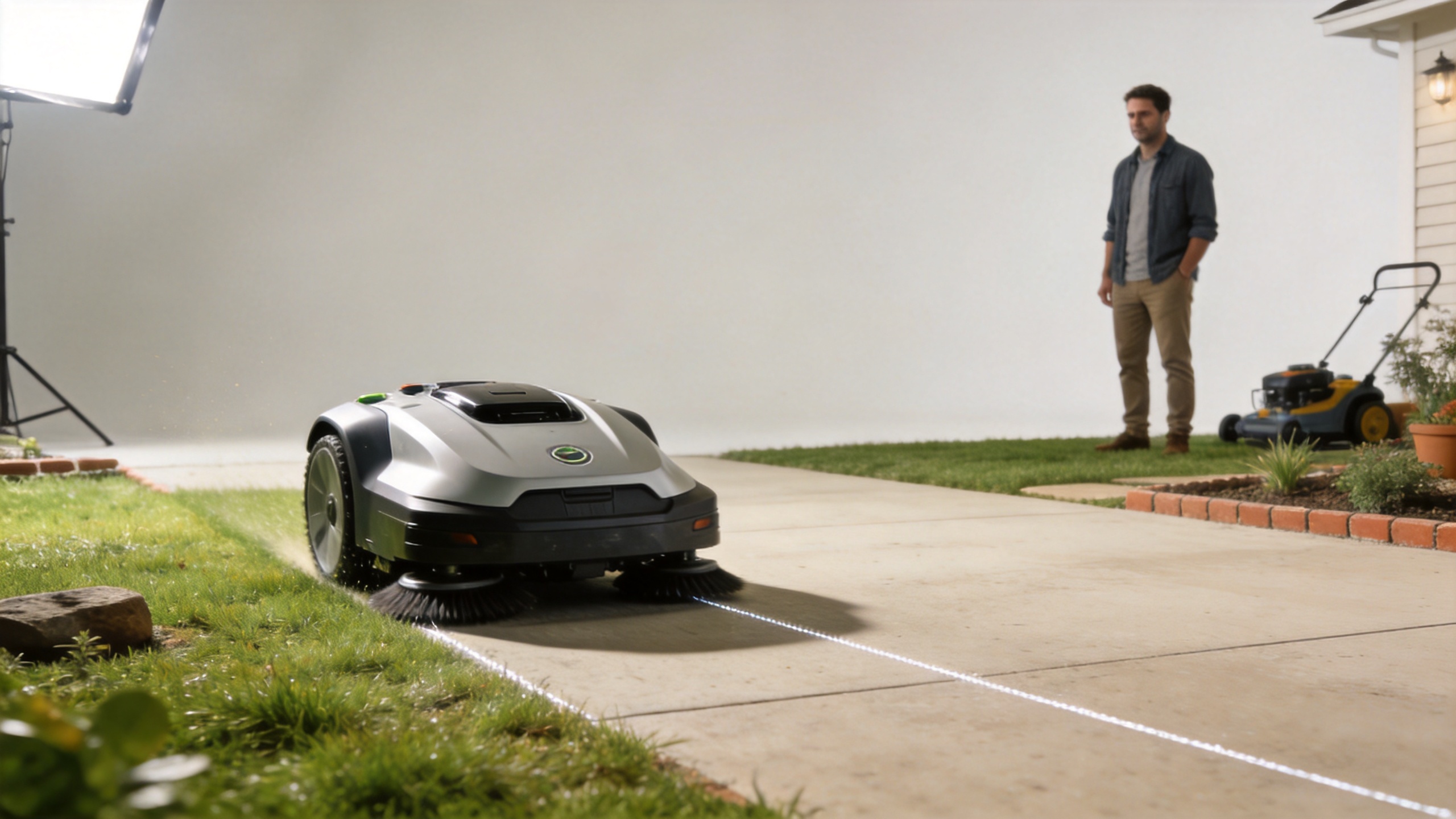
The clearest benefit of a robot lawnmower is that the operator does not need to walk behind the machine for every routine pass. Instead of guiding each turn, the person can review the work area, start or schedule the unit, and return for a check after the cycle. For a garden with stable boundaries and a repeatable layout, a yard robot mower can make mowing a background task rather than the main task of the day.
That does not mean the operator should ignore the site. Before starting a robot lawnmower, remove loose objects, confirm that people and animals are clear of the work zone, and check whether weather or ground conditions have changed. The time saving comes from less continuous cutting effort, while basic supervision remains part of responsible operation.
2. It supports a repeatable maintenance schedule
Garden maintenance often becomes time-consuming when mowing is delayed until the grass is tall or uneven. A robot lawnmower can support a more regular rhythm by running on planned days and within defined areas. With a consistent schedule, the operator spends less time deciding when to mow and more time reviewing whether the schedule still suits grass growth, seasonal conditions, and site access.
A yard robot mower is most useful when the schedule follows the garden rather than a fixed assumption. Fast growth, wet ground, fallen branches, or a recent landscaping change may require a pause or adjustment. In other words, automation can simplify routine decisions, but it should not replace the site check that keeps the routine appropriate.
3. It makes route planning more valuable
A robot lawnmower can save time by repeating a planned route or coverage pattern, especially where entry points, boundaries, and turning areas are clear. The gain is not merely speed; it is less time spent manually steering around the same features each week. Before comparing features, list the paths, narrow passages, trees, beds, fences, and drainage edges that shape the job.
This is where a yard robot mower needs realistic expectations. A lawn with the same area as another lawn may demand a different setup because its slope, obstacles, surface changes, and visibility are different. Complex areas can still be manageable, but they deserve a deliberate test plan rather than an assumption that a robot lawnmower will treat every garden in the same way.
4. It shifts effort to short, planned checks
Automation changes maintenance; it does not remove it. A robot lawnmower still needs periodic cleaning, blade-condition checks, inspection of wheels or moving parts, and a review of boundary or navigation conditions. The practical advantage is that these tasks can often be handled as shorter planned checks instead of being combined with a full hands-on mowing session.
For a yard robot mower, add a simple checklist: inspect the cutting area before use, check that the route is clear, monitor early runs after a layout change, and review maintenance guidance for the specific model. Avoid treating a smooth demonstration as proof that every slope or surface is suitable. If the garden includes wet patches, holes, roots, steep sections, or tight turns, confirm the equipment’s documented operating limits first.
5. It can free time for higher-value garden work
When a robot lawnmower takes on recurring grass cutting in an appropriate area, the operator may spend more time on pruning, irrigation checks, bed maintenance, seasonal planning, or property inspection. This is often the more meaningful benefit: the garden is still managed, but less of that management is spent on repetitive travel behind a mower.
A yard robot mower is therefore usefully evaluated as part of a workflow. Ask what the current mowing process requires from one person, how often the area needs attention, and which preparation tasks can be standardized. If the answers point to regular, predictable work, a robot lawnmower may reduce the active labor in that routine. If conditions change constantly, the same machine may require more oversight and provide less of a time advantage.
How to decide whether the time savings are realistic
Before selecting a robot lawnmower, map the job in three stages: preparation, operation, and review. During preparation, identify slopes, obstacles, boundaries, access points, grass conditions, and safety rules. During operation, decide who will monitor early runs and how changes to the garden will be handled. During review, set a maintenance routine and note any areas that still need manual trimming or a different tool.
- Choose a robot lawnmower only after comparing its documented limits with the actual terrain.
- Use a yard robot mower to automate repeatable zones, not to avoid necessary site inspection.
- Plan edge work and difficult corners separately if they fall outside the machine’s suitable route.
- Keep maintenance, storage, and safety checks on the garden calendar.
Final thought
A robot lawnmower can save garden-maintenance time by reducing hands-on, repetitive mowing and creating a steadier work rhythm. The strongest result comes from matching the machine to a well-understood site, maintaining clear operating boundaries, and keeping short checks in the routine. For a suitable garden, a yard robot mower can turn mowing from a long recurring session into a managed process with more time available for the rest of the landscape.