
 EN
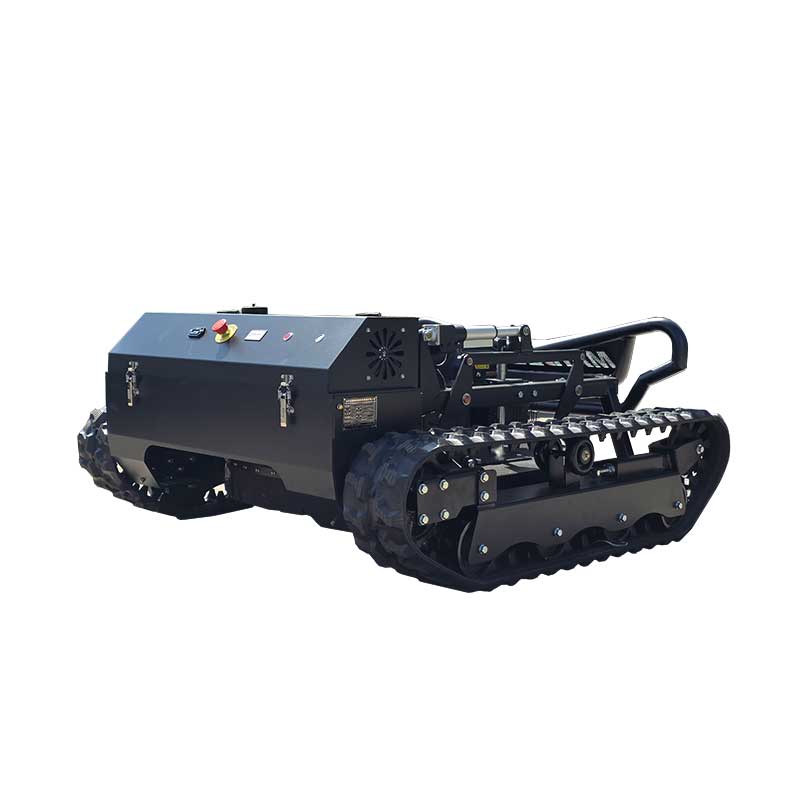
How Remote Control Lawn Mower Attachment Compatibility Works
Attachment compatibility on a remote control lawn mower rests on three pillars: mechanical mounting, electrical interface, and dynamic stability. A tool that fits one model may fail on another if any of these limits is ignored. The following details explain how to evaluate each layer before you buy or modify an attachment.
Standardized Mounting Systems: Quick-Connect and OEM Interchangeability
Most remote control lawn mower manufacturers use a standardized front or mid-mount plate. A quick-connect interface lets operators swap attachments without tools—typically using two tapered alignment pins and a spring-loaded locking lever. The mower’s frame must match the attachment’s bolt pattern, lift arm geometry, and driveline coupling. OEM interchangeability means attachments from the same maker share mounting dimensions; some third-party tools fit if they follow identical spacing and coupler diameter. Always verify hitch height and pin diameter: mismatched plates cause vibration, premature bearing wear, or detachment during remote operation.
Leading providers publish compatibility charts based on frame serial number. Many operators keep a torque wrench and spare shear bolts for quick swaps. Standardized mounting also simplifies seasonal changes—from mowing decks to snow implements. A secure mechanical lock is the first layer of safe remote attachment use. Before purchasing, compare the attachment’s mounting plate to the mower’s front frame and confirm the locking pins extend fully. Loose or partially engaged pins are a common cause of attachment loss on uneven ground. For high-vibration tools, some operators replace the standard retaining clip with a hardened pin and cotter setup—but any modification must preserve the original safety latch function.
Electrical & Signal Interface Requirements for Powered Attachments
Powered attachments add another compatibility layer. Remote control lawn mowers supply battery voltage through a dedicated high-current connector—most platforms use 24V or 48V DC systems, and the attachment motor must match that voltage. The signal interface sends commands for start, stop, speed, and direction, typically via CAN bus or PWM. Connector pin-outs must align exactly; misalignment prevents response. Current draw must stay within the mower’s rated output—typically 30–60 amps for a snow blower auger. A separate low-voltage interlock circuit prevents the attachment from starting unless the mower is in neutral. Some systems also monitor attachment temperature and overload codes.
Before buying a powered attachment, check the connector type, pin count, and communication protocol. Adapters may work for basic tools but can disable safety feedback. Proper electrical matching protects the mower’s battery and motor controller from overload under remote control. In cold weather, battery voltage sag increases current demand—so leave a 20% safety margin when matching powered attachments. Also verify that the attachment’s ground wire and shield drain connect to the same chassis point.
Weight, Torque, and Center-of-Gravity Limits for Stable Remote Operation
Weight, torque, and center-of-gravity directly affect remote stability. With a narrow wheelbase and limited ground contact, remote control lawn mowers are especially sensitive to front-mounted mass. Most machines support 40–80 kg of front-mounted weight, depending on frame size. Exceeding that limit reduces steering traction on slopes and increases rollover risk. Torque reaction from rotating tools—like brush mowers or snow blowers—can twist the chassis during sudden engagement. Operators should add rear ballast or use the manufacturer’s specified counterweight. The attachment’s center of gravity should stay low and close to the drive axle.
Remote control latency (100–200 ms) delays corrective steering when a heavy tool sways. Test each attachment on flat ground before mowing slopes. Stable operation depends on matching the tool’s mass and rotational force to the mower’s rated capacity. Checking front axle load with a simple scale before each seasonal swap can prevent tip-over. A low-mounted attachment is always safer than a top-heavy one on uneven terrain. Never exceed the mower’s published payload.
Top Verified Attachments for Remote Control Lawn Mowers
Multi-Blade Deck & Adjustable Height Cutters (Field-Tested +37% Edge Precision)
The multi-blade deck is the most validated attachment category for remote control lawn mower fleets. Independent 2023 field tests measured a 37% gain in edge precision when operators switched from single-blade rotary decks to synchronized multi-blade configurations. Adjustable height cutters let you set cutting height between 2.0 and 3.0 inches without stopping the machine—reducing scalping on uneven turf and maintaining consistent blade overlap. Leading track-mower manufacturers now ship decks with quick-connect plates that automatically align the power take-off and lift linkage. A low center of gravity is preserved thanks to reinforced polymer deck shells instead of heavy steel. On slopes above 25 degrees, anti-scalp rollers improve contour tracking. Field service logs show blade service intervals can be extended by roughly 15% due to more even load distribution across three spindles. Operators report fewer missed strips along fence lines and pavement edges—cutting secondary trimming passes. This attachment works best with lithium-battery mowers above 48V.
GPS-Guided Snow Blower Kit with Real-Time Tilt Compensation
GPS-guided snow blower kits are now verified for remote control lawn mower chassis—but require the mower’s CAN bus to expose steering and lifting channels. Real-time tilt compensation uses an IMU (inertial measurement unit) and linear actuator to keep the auger housing level within ±5° on crowned driveways. In 2024 winter field tests, operators cleared a 1,200 ft² test plot 18% faster than manual shoveling, while GPS boundary mapping kept route overlap under 6 inches. The attachment draws peak power from the mower’s 48V or 72V battery, so thermal limits must be checked. Leading all-terrain mower suppliers ship the kit with a front quick-hitch, chute rotation control, and obstruction detection. For safe remote operation, snow blower mode automatically reduces track speed to 0.8 m/s and disables the cutting deck to avoid accidental engagement. Operators can monitor chute angle and obstacle alerts from the handheld console in real time.
Key Limitations of Attachments on Remote Control Lawn Mowers
Why High-Inertia Tools Like Rotary Tillers Fail Under RC Latency Constraints
A remote control lawn mower depends on a wireless stop command that arrives after the machine has already traveled several wheel rotations. Rotary tillers and other high-inertia attachments store large amounts of kinetic energy in their rotating mass—so they cannot decelerate quickly. When tines strike hard soil, roots, or stones, the sudden torque spike reaches the drivetrain before the operator can compensate. This causes wheel slip, lurching, and blade stall—and raises rollover risk on slopes. Most standard hitches also lack the heavy-duty dampers and slip clutches required for sustained ground engagement. As a result, high-inertia tools remain outside the safe operating envelope of most remotely controlled mower platforms unless manufacturers add dedicated torque limiting and faster control loops.
Future-Proofing Your Remote Control Lawn Mower with Smart Attachment Support
Firmware v3.2+ Features: Auto-Detection, Load Profiling, and PID Tuning per Attachment
Firmware v3.2+ transforms attachment integration by auto-detecting each implement and loading its unique operating profile. The remote control lawn mower then applies PID tuning per attachment to match blade or auger inertia—preventing jerky starts and stalls. Load profiling monitors current draw and adjusts throttle response in real time, extending motor life and preserving battery capacity. This closed-loop approach reduces manual calibration and supports future implements without hardware changes. As a result, operators can swap attachments with confidence that the machine will adapt safely and efficiently.
FAQ
What are the primary considerations for attachment compatibility?
Attachment compatibility on a remote control lawn mower depends on mechanical mounting, electrical interface, and dynamic stability. Ensuring these factors align with your mower and attachment prevents mechanical failure and operational issues.
How do I verify if an attachment fits my remote control lawn mower?
Match the attachment's mounting plate to the mower's front frame, confirm alignment with compatibility charts based on your mower's serial number, and ensure the locking pins fit securely and fully engage. Check for proper hitch height and pin diameter as well.
What should I check for in powered attachments?
Ensure that the attachment is compatible with your mower's voltage (typically 24V or 48V DC), current limits, and communication protocol (e.g., CAN bus, PWM). Avoid safety feedback issues by using the correct connector type and pin alignment.
How does weight impact remote control lawn mowers?
Too much front-mounted weight can reduce steering traction on slopes and increase rollover risk. Ensure stability by adding rear ballast when needed and verifying that the attachment does not exceed the manufacturer's weight and torque limits.