EN
EN
How To Install Lawn tractor tracks On Lawn Equipment
Adding lawn tractor tracks can change how a compatible machine contacts soft, uneven, or rough ground. It does not turn every lawn tractor into a tracked lawn mower, however. The correct starting point is a documented, model-specific track kit and the tractor manufacturer’s operating instructions. From an operator’s point of view, the work begins with the site, the machine, and the approved hardware—not with the assumption that wider contact automatically makes every job safer.
This guide explains a careful installation process for lawn tractor tracks on compatible lawn equipment. It is general guidance, not a substitute for the instructions supplied with your particular track kit, tractor, or mower deck. If the kit documentation does not explicitly list your model, stop and confirm fitment with the equipment or kit supplier before proceeding.
First, confirm whether tracks are appropriate
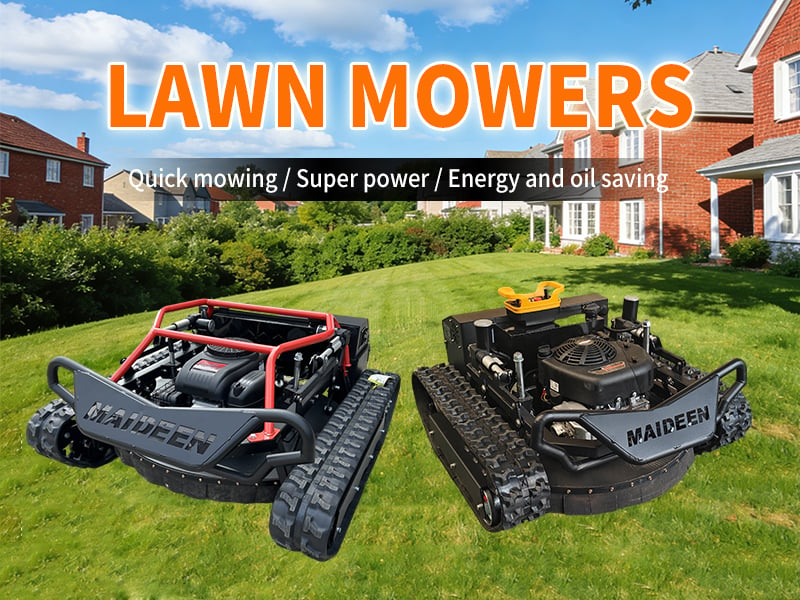
A tracked lawn mower is often discussed for rough fields, soft ground, or slope-oriented work because tracks may spread load differently than tires. That is a design consideration, not a blanket approval for a conversion. A lawn tractor can have steering, braking, axle, deck-clearance, guarding, and transmission limits that differ from a purpose-built tracked lawn mower.
Before ordering or fitting lawn tractor tracks, collect the exact model and serial number, tire or wheel specifications, axle configuration, deck position, and the kit part number. Compare those details with the fitment list. Also read the sections of the operator manual that address attachments, lifting, parking, slopes, towing, service, and personal protective equipment. Manufacturer manual portals commonly require the model number to identify the correct documentation; use that exact document rather than relying on a similar-looking machine.
- Verify that the kit is approved for your tractor or mower configuration.
- Check that the intended lawn tractor tracks do not interfere with the deck, guards, controls, or steering travel.
- Confirm the specified fasteners, torque values, tension procedure, and any required adapters.
- Decide whether the site conditions and operator training meet the equipment maker’s safety requirements.
If any of these points is unclear, treat the installation as unfinished. The question is not simply whether the tracks can be mounted; it is whether the resulting configuration can be operated and maintained within its approved limits.
Prepare the work area and machine
Park on a firm, level surface with enough room to remove wheels or route the track assembly without reaching under an unstable machine. Shut down the engine, remove the key, engage the parking brake, and allow hot components to cool. Follow the manual’s instructions for disabling the machine before service. Wear the protection called for in those instructions, and use lifting equipment with a rating appropriate for the machine.
It is tempting to begin by comparing track width or tread pattern. A better sequence is to break the task into preparation, installation, and verification. For a tracked lawn mower setup, preparation includes cleaning packed grass, mud, and debris from the wheel area; examining tire, hub, axle, and fastener condition; and checking that the supplied brackets and spacers match the kit inventory.
Lay out every part of the lawn tractor tracks kit before lifting the equipment. Separate left- and right-side hardware if the instructions distinguish them. Do not replace a missing spacer, pin, bolt, or retaining device with a part of unknown grade or length. Small differences in hardware can affect clearance and retention.
Install lawn tractor tracks in the specified sequence
1. Raise and support only as the manual permits
Use the approved lifting points and support the tractor with correctly rated stands before removing a wheel or working near the drive area. Do not rely on a jack alone. If the instructions do not require wheel removal, do not remove parts just to make the job seem easier. Stability during service matters as much as stability during mowing.
2. Fit adapters, drive components, and guides
Install adapters, sprockets, guide wheels, brackets, or spacers exactly in the kit order. A tracked lawn mower conversion may require components that keep the track aligned while the machine moves and turns. Tighten hardware only to the torque and sequence specified by the supplier. Avoid estimating torque by feel, and do not use thread treatment unless the instructions call for it.
3. Route the track without forcing it
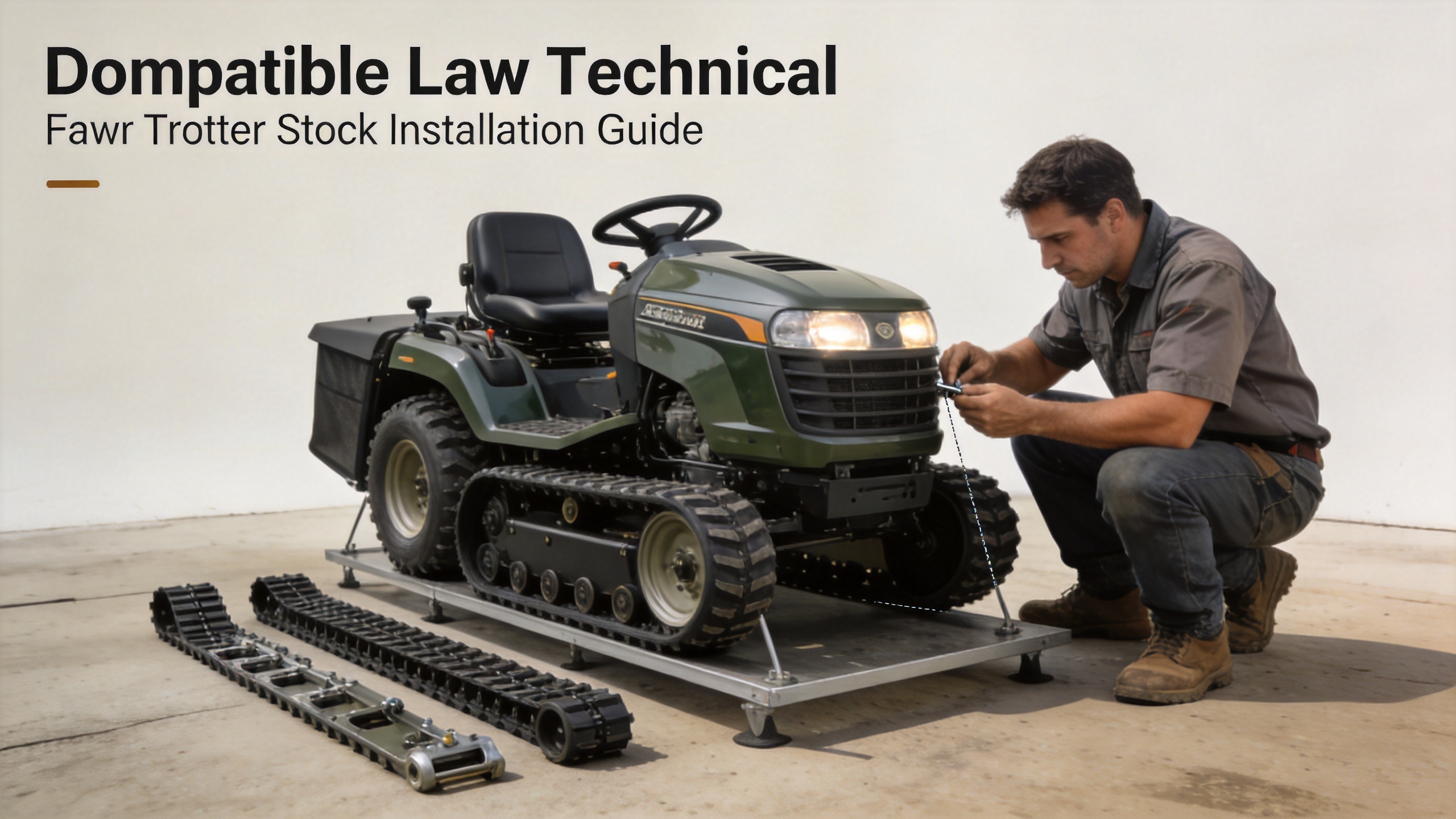
Route the lawn tractor tracks around the designated drive and guide components. Keep fingers clear of pinch points. If the track seems too short, misaligned, or difficult to seat, do not lever it into place with an improvised tool. Recheck the kit orientation, wheel size, adapters, and model compatibility. Forcing a track can damage a component or conceal an installation error.
4. Set tension by the kit specification
Correct tension is a measured setting, not a visual guess. Follow the supplier’s stated deflection, adjustment, or tensioning method for the exact lawn tractor tracks assembly. Too little tension can contribute to derailment or contact with nearby components; too much may place unnecessary load on the track system and machine. After adjustment, rotate the supported system by hand only if the manufacturer’s procedure permits it and with the engine off.
Inspect clearances before the first test
Before driving, check the full travel of steering, suspension or axle movement where applicable, deck lift range, guards, and controls. Look for rubbing, stretched cables, loose retainers, or a track that does not sit centrally on its guides. A tracked lawn mower arrangement should be evaluated with the mowing deck both raised and positioned as the manual permits, because clearance can change across the movement range.
| Inspection point | What to confirm |
|---|---|
| Fasteners | All specified hardware is present and tightened to the documented torque. |
| Track path | The lawn tractor tracks are seated on the intended drive and guide surfaces with no visible twist. |
| Clearance | No contact occurs with deck parts, guards, wiring, brake components, or controls. |
| Controls | Steering, braking, and stop functions operate as required before mowing. |
Perform a controlled first-use check
Do not take newly installed lawn tractor tracks directly to a bank, ditch, wet area, or dense vegetation. Start in an open, level area under the operating conditions permitted by the manual. Keep bystanders clear, use the recommended operator position, and test low-speed forward movement, stopping, turning, and reverse only where and how the equipment manufacturer allows.
Stop immediately for unusual noise, tracking drift, vibration, contact, loose hardware, or changes in steering or braking. Reinspect the installation after the short test and again at the interval listed by the track-kit instructions. This is where a common intuition needs correcting: tracks may be relevant to traction planning, but they do not remove the need to assess grade, soil, visibility, obstacles, weather, and emergency stopping space.
Maintain the installation as part of normal service
After each use, remove mud, grass, stones, and wrapped debris from the lawn tractor tracks and guide area with the engine off and the machine secured. Inspect for cuts, missing lugs, damaged guides, loose bolts, or abnormal wear. Record the track-kit part number, tension checks, and any retorque intervals so the next operator can work from verified information.
For a tracked lawn mower or a tractor fitted with approved tracks, safe performance depends on the whole operating system: compatible hardware, a clear work area, trained operation, and regular inspection. If the machine’s manual or the track kit does not approve a condition, do not treat this guide as permission to proceed. Confirm the configuration with the responsible supplier before returning the equipment to service.