EN
EN
Why Electric robot mower Produce Lower Emission Than Petrol Versions
For many property managers and homeowners, the environmental difference between an electric robot mower and a petrol machine starts with one simple fact: only one of them burns fuel while cutting. A robot lawnmower powered by a rechargeable battery has no exhaust pipe releasing emissions across the lawn. That does not mean its total footprint is automatically zero, but it does change the emissions that occur at the place and time of mowing.
From a technical-explainer perspective, it helps to separate direct operating emissions from lifecycle emissions. Once those are separated, the reason an electric robot mower usually produces lower local emissions than a petrol version becomes much clearer.
The central difference: combustion versus battery power
A petrol mower uses an internal-combustion engine. When it runs, it burns gasoline and releases carbon dioxide as well as pollutants associated with small-engine exhaust, including carbon monoxide and hydrocarbons. An electric robot mower runs an electric motor from stored battery energy. During mowing, that robot lawnmower has no tailpipe combustion and therefore no on-site exhaust emissions.
This distinction matters in the spaces where mowing happens. Parks, gardens, residential areas, campuses, and managed grounds are places where workers, visitors, and nearby residents may be present. Removing exhaust from the immediate work zone can reduce local exposure to combustion pollutants. It also avoids the routine emissions produced whenever a petrol engine idles, accelerates, or operates under load.
EPA material identified in the research context reports that lawn and garden equipment accounted for a substantial share of nonroad gasoline emissions in 2011. That figure should not be treated as a current, robot-mower-specific total, but it does show why replacing fuel combustion in routine landscape work is a meaningful operational change.
Why small petrol engines can have a larger local impact than expected
It is easy to focus only on a mower’s size. In practice, a small engine can still produce a concentrated stream of exhaust close to the operator and lawn. Petrol use also creates emissions before the engine starts: fuel must be produced, transported, stored, and refilled. Spillage and evaporative vapors are additional considerations around conventional lawn equipment.
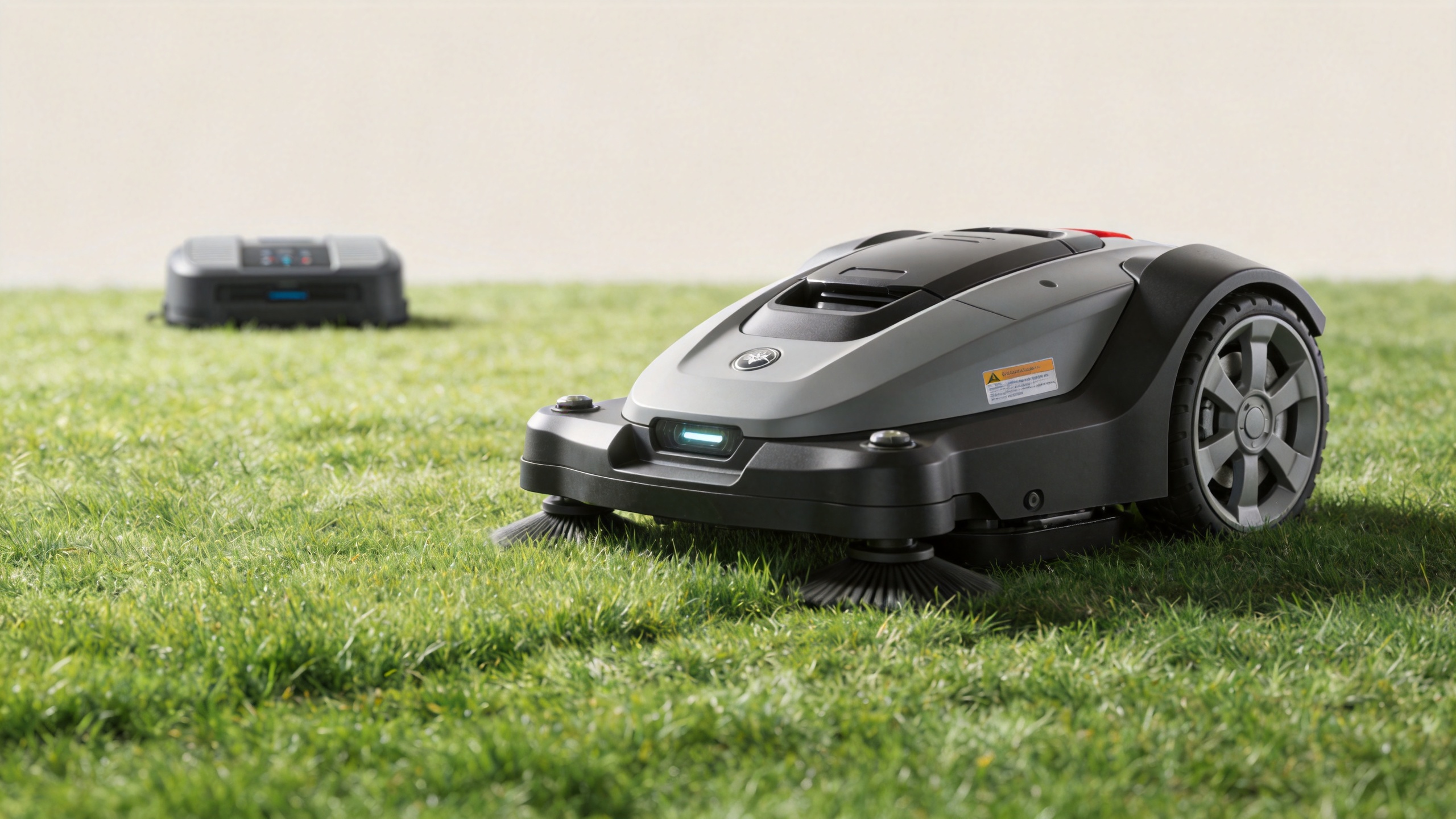
A robot lawnmower avoids those on-site fueling steps. Instead, an electric robot mower returns to a charging point or is recharged from an electrical supply. There is no gasoline tank to refill for each cutting cycle, no exhaust plume during the pass, and no engine oil change associated with a combustion powertrain. That is why the operational comparison often favors the battery option even before a full lifecycle assessment is made.
Electricity still has an emissions footprint
The careful answer is not that a robot lawnmower is emission-free in every sense. Its electricity must be generated somewhere, batteries require materials and manufacturing, and the machine eventually needs repair, recycling, or disposal. The carbon intensity of charging electricity can differ considerably by region and tariff period. A grid supplied largely by lower-carbon generation may strengthen the climate advantage; a more fossil-intensive grid can narrow it.
That boundary is important because “zero emissions” and “zero tailpipe emissions” are not interchangeable. For an electric robot mower, the accurate operational claim is no direct exhaust while mowing. Its total environmental performance depends on electricity, product durability, battery care, transport, and end-of-life handling. A credible comparison should make that distinction rather than promise a fixed percentage reduction without verified product and energy data.
Automation can reduce unnecessary operating time
Power source is the main reason a battery robot lawnmower can lower direct emissions, but operation also matters. A properly scheduled machine can cut smaller amounts of growth at regular intervals instead of relying on a longer, fuel-intensive catch-up session. Boundary planning, obstacle management, and a realistic cutting schedule help the unit work only when it has a defined task.
Automation is not a guarantee of lower total energy use. A poorly mapped area, repeated failed routes, unsuitable grass conditions, or excessive standby time can dilute the benefit. In other words, efficiency should be checked in the actual site context. Before selecting an electric robot mower, document the lawn area, slopes, narrow passages, tree roots, wet zones, and expected mowing frequency. Those details affect whether the machine can complete work predictably rather than consume energy correcting avoidable errors.
Maintenance changes the comparison too
Petrol versions typically need fuel-system attention, engine oil service, spark-plug checks, and exhaust-related maintenance in addition to normal blade and deck care. A battery robot lawnmower still needs blades, wheels, sensors, cleaning, and battery-health checks, but it removes several combustion-engine service requirements. Fewer fuel-handling tasks may reduce the chance of spills and makes it easier to keep routine maintenance focused on cutting quality and safe operation.
That said, battery longevity is part of the environmental equation. Store the mower according to the manufacturer’s instructions, avoid unnecessary deep discharge where guidance advises otherwise, and use an appropriate recycling channel when the battery reaches end of service. Extending useful life can spread manufacturing impacts over more mowing seasons.
How to make the lower-emission choice more credible
When comparing a robot lawnmower with a petrol alternative, ask for information that can be checked rather than relying on broad marketing language:
- What is the expected operating area and charging pattern for the specific site?
- What electricity source and charging schedule will be used?
- What battery-care, replacement, and recycling guidance is available?
- How will slopes, obstacles, wet ground, and safety boundaries be managed?
- Which maintenance tasks are required over the expected service life?
These questions turn an emissions claim into a practical operating plan. They also keep the decision grounded: an electric robot mower is not automatically the right fit for every terrain or maintenance program, but where it can operate reliably, eliminating on-site petrol combustion is a clear advantage.
Bottom line
An electric robot lawnmower generally produces lower direct emissions than a petrol version because it cuts grass without burning gasoline at the point of use. It also avoids fuel handling and the localized exhaust associated with small engines. The full climate comparison remains conditional on the electricity mix, battery lifecycle, manufacturing, and machine longevity. For buyers who want a sound decision, a sound approach is to verify those conditions, plan the work area carefully, and describe the benefit accurately: lower operating emissions, not an unsupported promise of zero total impact.