EN
EN
What Intelligent Functions Does Professional robotic lawn mower Integrate
A professional robot lawnmower is not simply a mower with a battery and a timer. For grounds teams, contractors, campuses, and property managers, it is a managed work system: it senses conditions, follows a planned route, records work, and responds when its operating limits are reached. The useful question is not which feature has the most impressive label. It is whether the functions of a professional robotic lawn mower fit the site, the grass-growth pattern, the crew’s supervision plan, and the safety rules used on that property.
From a field-operations perspective, intelligent functions should reduce routine walking and repetitive cutting without creating blind spots in accountability. A capable robot lawnmower can support consistency, but people still define the work area, inspect hazards, maintain the machine, and decide when conditions make autonomous work inappropriate.
1. Mapping and boundary intelligence
Every reliable robot lawnmower needs a clear understanding of its permitted work zone. Depending on the machine and installation, that can involve physical boundary wire, GNSS positioning, vision, LiDAR, or a combination of technologies. The practical purpose is the same: keep the mower in the intended turf area while recognizing passages, no-go zones, charging access, and edges.
For a professional robotic lawn mower, mapping should be treated as an operational asset rather than a one-time setup task. Grounds change after landscaping, drainage work, seasonal displays, or access changes. A good workflow lets the operator update zones, define narrow corridors, and separate lawns with different cutting priorities. Before deployment, test boundary behavior near walls, water, drop-offs, public paths, and places where satellite visibility or camera views may be compromised.
2. Navigation, route planning, and coverage control
Once the work area is known, a robot lawnmower needs to decide where to travel. Basic systems may use randomized movement, while more advanced systems plan systematic coverage, return to missed areas, and optimize travel to a dock. Neither approach is automatically right for every property. The important check is whether the machine achieves acceptable coverage without repeatedly compacting the same route or leaving difficult edges untouched.
Intelligent route planning can also divide a site into work zones. A robot lawnmower may mow a high-visibility entrance more often than a low-traffic perimeter, or avoid a sports field during booked hours. This lets a professional team align cutting frequency with grass growth and site use rather than applying one schedule everywhere. Ask to see how the machine handles interrupted tasks, rain delays, low battery, and a route blocked by temporary equipment.
3. Obstacle detection and safety response
Obstacle sensing is one of the most important intelligent functions in a robot lawnmower. Sensors can detect objects, resistance, lift, tilt, wheel slip, or changes in the surroundings. On a professional site, the response matters as much as the detection method: should the mower slow, stop, reroute, send an alert, or wait for inspection?
Do not assume that obstacle avoidance makes a professional robotic lawn mower safe to run without site controls. Children, pets, pedestrians, loose material, wet slopes, and changing work areas require a risk assessment. Battery-powered robotic-lawnmower safety standards such as IEC 60335-2-107 address significant hazards associated with these machines and peripherals. Buyers should request model-specific safety documentation where applicable, then verify how emergency stopping, blade stopping, lift detection, and restricted-area controls work on the actual site.
4. Slope, traction, and surface-condition awareness
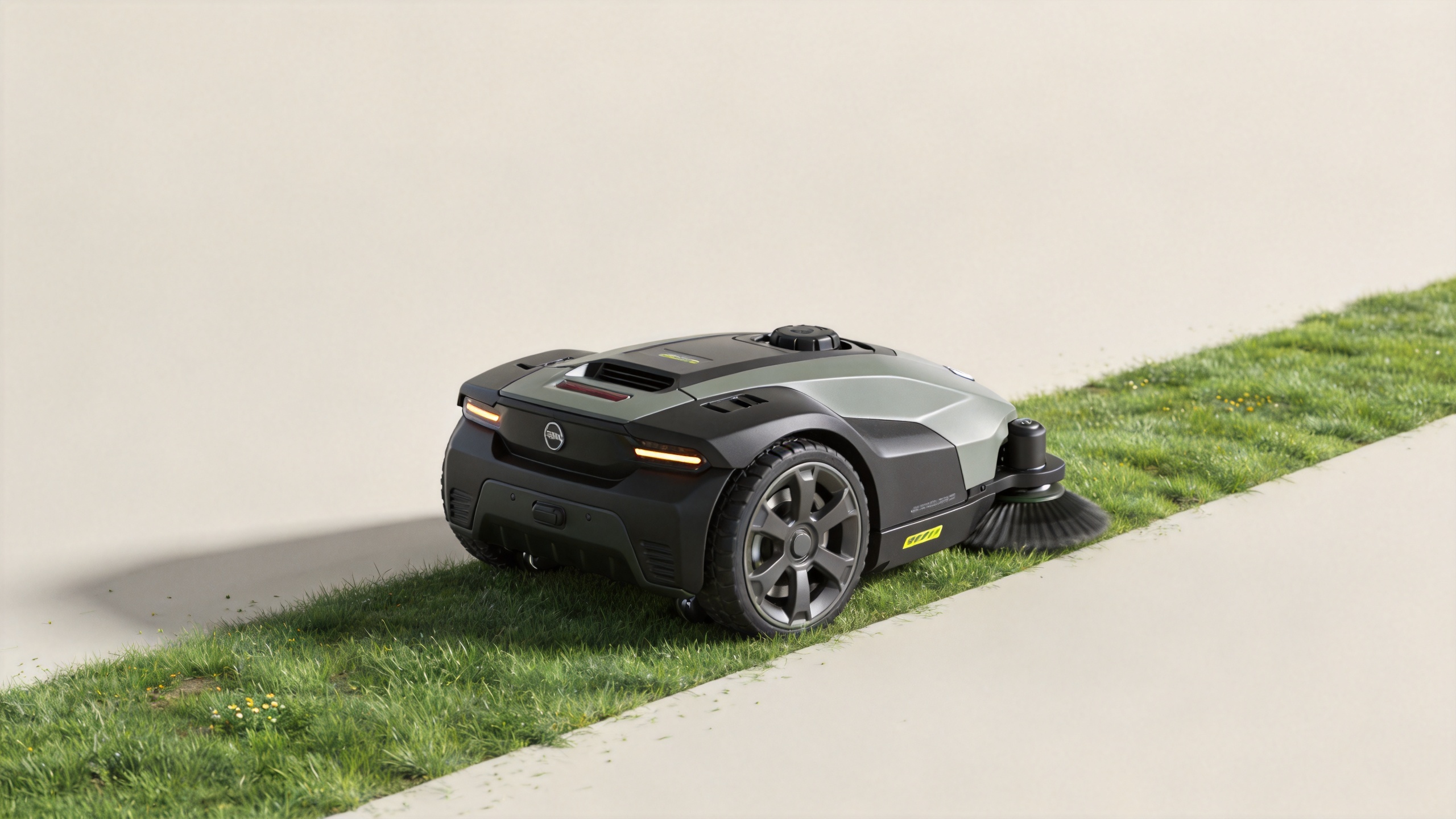
A robot lawnmower may use tilt sensors, wheel-speed feedback, traction monitoring, or terrain data to recognize a condition that affects stability or cut quality. These functions are valuable, but they do not turn every slope into a suitable mowing area. Surface moisture, grass type, ruts, loose debris, and the direction of travel can change the risk even when a published maximum slope sounds adequate.
For professional planning, test a robot lawnmower under representative conditions rather than relying only on a showroom demonstration. Establish stop rules for rain, poor traction, frozen ground, or pedestrian activity. If the mower reports repeated wheel slip or a route failure, use that information to adjust the map, schedule, or site preparation—not merely to restart the task.
5. Cutting management and grass-health scheduling
The intelligence of a robot lawnmower also appears in how it manages cutting. Scheduled operation, zone-specific frequency, adjustable cutting height, and weather-aware pauses can help teams maintain a more even appearance with smaller, more frequent cuts. Frequent light trimming is often closer to the intended operating pattern than asking a robot to recover an overgrown lawn in one pass.
A professional robotic lawn mower should therefore be matched to the maintenance plan. Define the desired turf appearance, expected growth peaks, access windows, and manual follow-up for edges or seasonal heavy growth. Review blade condition and deck cleanliness as part of the schedule; intelligent planning cannot compensate for dull blades or accumulated debris.
6. Connectivity, reporting, and remote supervision
Connected control is useful when it gives the team actionable information. A robot lawnmower may provide app access, status alerts, location information, task history, battery state, or fault notifications. For a large property or multi-site contractor, these functions can support better dispatching: an operator sees a stopped machine, understands the reported condition, and decides whether remote recovery is appropriate or an inspection is required.
However, remote access should not substitute for a documented supervision process. Confirm who receives alerts, what happens after an emergency stop, how access is authenticated, and whether the team can retrieve service records. A robot lawnmower is most useful when its digital records improve decisions rather than create more notifications.
7. Charging and energy management
Automatic return-to-charge is a core function of many robot systems. A robot lawnmower can monitor battery level, navigate to a dock, recharge, and resume a task according to its programming. In a professional environment, assess the entire energy workflow: dock placement, electrical protection, drainage, access for cleaning, and the time available between scheduled tasks.
Check what the robot lawnmower reports when it cannot reach the dock, when charging is interrupted, or when a planned route becomes unavailable. Those exception messages are often more informative than the normal operating screen.
A practical evaluation checklist
- Can the robot lawnmower map all required zones and exclude hazards reliably?
- Does its navigation match the property layout, turf condition, and desired coverage standard?
- Are obstacle, lift, tilt, stop, and restart behaviors demonstrated for the actual site?
- Can the team define weather, slope, and pedestrian-related operating limits?
- Do alerts, reports, and service records support a named operator’s workflow?
- Is there a realistic plan for manual edging, heavy growth, blade service, and seasonal changes?
The value is in the operating system, not one feature
A professional robotic lawn mower integrates mapping, navigation, sensing, cutting control, connectivity, and charging so that routine mowing can be planned more consistently. The right choice is not necessarily the machine with the longest feature list. It is the robot lawnmower whose intelligent functions can be verified against the terrain, safety plan, maintenance capacity, and quality standard of the property. Start with a site survey and a supervised trial, document the exceptions you expect, and make the final decision only after the system proves it can work within those limits.