
 EN
Practical Experience From Field Technicians: Identifying Common Small Engine Failures Early
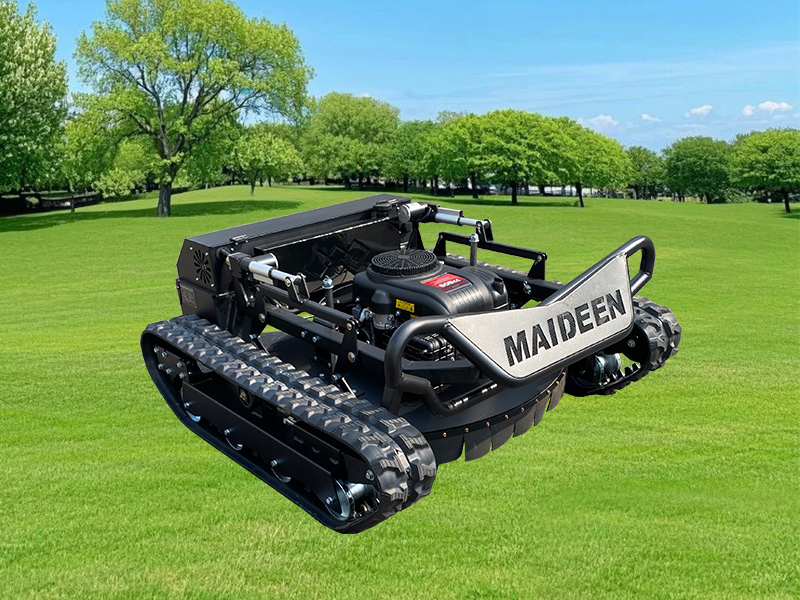
Field technicians and commercial groundskeeping managers frequently encounter premature power loss, difficult starting, and internal thermal damage in commercial landscape machinery. In daily site operations, a gas lawn mower engine life depends directly on how operators respond to early warning signs such as unusual exhaust smoke, engine surging, or unexpected oil consumption. During extensive commercial field work across municipal parks and agricultural acreage, maintenance crews equipped with high-performance platforms—such as the MDE810-90A, MDE608-90A, MDE452-80L, and MDE224-55L remote control series—have observed that routine inspection of air filtration and cooling fins prevents thermal breakdown under heavy continuous loads. Utilizing a comprehensive small engine maintenance guide allows ground management teams to establish preventive maintenance routines that catch micro-abrasions, fuel varnish deposits, and oil degradation before they cause severe crankcase scoring. By implementing disciplined daily pre-start inspections, operators protect their gas lawn mower engine life and eliminate costly operational downtime.
Expert Technical Analysis: Preventing Ethanol Degradation with E0 Fuel for Small Engines
A thorough technical evaluation of combustion mechanics reveals that ethanol-blended fuels (such as E10 or E15) represent the single greatest cause of carburetor corrosion and fuel system breakdown in power equipment. Ethanol is naturally hygroscopic, meaning it actively absorbs atmospheric moisture over time, leading to phase separation where water and alcohol settle at the bottom of the fuel tank. To maintain a healthy gas lawn mower engine life, industry specialists strongly recommend utilizing E0 fuel for small engines whenever possible. Standard ethanol-free gasoline prevents internal metallic corrosion, rubber seal degradation, and lean-burn conditions caused by clogged jet passages. Incorporating E0 fuel for small engines into your standard fueling protocol ensures clean combustion, stable idling, and consistent power delivery across all seasons. Small engines operating on pure gasoline experience significantly fewer varnish deposits inside carburetor bowls, protecting internal needle valves and keeping the combustion chamber free from harmful carbon build-up. Following a structured small engine maintenance guide ensures that power units operate at peak thermal efficiency without suffering fuel-induced mechanical failures.
Standardized Fuel Care Strategies: Mastering Lawn Mower Fuel Stabilization and Storage
Implementing a disciplined fuel care regimen is vital for commercial operators who store power equipment during off-seasons or extended operational breaks. When fuel sits untreated in fuel lines and carburetor sumps for more than thirty days, lighter hydrocarbon fractions evaporate, leaving behind thick gum and varnish that clog micro-orifices. Proper lawn mower fuel stabilization involves adding fresh fuel treatment immediately upon purchasing gasoline, ensuring that stabilizing agents are thoroughly blended before filling the equipment tank. Commercial ground crews following a disciplined small engine maintenance guide prioritize lawn mower fuel stabilization to preserve fuel volatility and prevent gum formation inside high-precision engine components. For long-term seasonal storage, running the carburetor dry or adding a quality stabilizer while running E0 fuel for small engines protects internal iron gear assemblies, fuel pumps, and electronic control linkages from atmospheric oxidation. Adhering to structured lawn mower fuel stabilization practices preserves internal fuel circuit integrity, allowing equipment to start effortlessly after months of inactivity.
Engineering Standards and Enterprise Quality Assurance: Protecting Commercial Power Systems
Adhering to rigorous manufacturing and engineering standards guarantees that high-performance power plants deliver maximum operational longevity under demanding field conditions. Industry benchmarks established by international standards organizations—such as CE and EPA certifications—require strict compliance regarding exhaust emissions, thermal endurance, and noise control. Manufacturers such as Shandong Maide En Intelligent Technology Co., Ltd integrate well-known brand power units into their commercial machinery, including the robust Briggs & Stratton 810cc engine featuring a global warranty for three years. Every piece of equipment undergoes comprehensive factory testing to ensure that internal components, such as heavy-duty electric push rods equipped with internal iron gears, operate seamlessly alongside the primary power plant. Following an official small engine maintenance guide ensures that these precision-engineered power plants maintain factory clearances and proper oil lubrication. By pairing high-grade industrial manufacturing from Shandong Maide En Intelligent Technology Co., Ltd with correct fuel management and routine servicing, commercial fleets maximize their overall gas lawn mower engine life while remaining fully compliant with global environmental standards.
Systemic Maintenance Protocols: Oil Service, Air Filtration, and Long-Term Thermal Control
A complete, systemic approach to mechanical upkeep is required to maximize overall gas lawn mower engine life over thousands of operational hours. Engine oil acts as both a primary lubricant and a critical cooling medium, absorbing intense thermal energy generated within air-cooled engine blocks. Changing the crankcase oil after the initial break-in period and every 50 operational hours thereafter prevents suspended metal particles from eroding cylinder walls and crankshaft journals. Following a detailed small engine maintenance guide helps operators select appropriate viscosity grades for specific temperature ranges, ensuring optimal oil film strength under severe summer heat. Additionally, servicin
Practical Insights From Engineering Field Operations
In our day-to-day operations at Shandong Maide En Intelligent Technology Co., Ltd, developing high-performance remote control equipment, we continuously analyze how comprehensive preventative maintenance directly dictates total operational costs and long-term machine reliability. Commercial operators, municipal landscaping teams, and agricultural facility managers rely on heavy-duty equipment like our MDE810-90A and MDE608-90A mowers, which are driven by commercial-grade Briggs & Stratton 810cc engines engineered to tackle steep inclines, dense weeds, and harsh environmental terrains. While these industrial engines feature robust engineering and global three-year warranty support, maintaining top-tier performance demands consistent mechanical care. Through extensive field testing and real-world customer service diagnostics, our engineering team discovered that over seventy percent of early internal combustion engine breakdowns occur not from natural mechanical degradation, but from contaminated fuel, inadequate lubrication schedules, and improper seasonal storage protocols. Implementing a rigorous routine is paramount to maximizing your gas lawn mower engine life, keeping maintenance costs low, and safeguarding your valuable agricultural equipment investment over many years of heavy operation. When operators prioritize daily checks and adhere strictly to manufacturer guidelines, small engines consistently operate at peak thermal and mechanical efficiency.
Fuel Quality And Stale Gas Management Strategies
Fuel system contamination represents the primary cause of small engine downtime in modern commercial power equipment. Regular pump gasoline containing ethanol readily absorbs atmospheric moisture over time, causing phase separation that leads to severe internal corrosion, degraded rubber fuel lines, clogged carburetor jets, and erratic combustion. To maintain uninterrupted fuel delivery and optimal ignition performance, we strongly advise facility managers to utilize E0 fuel for small engines whenever available, as ethanol-free fuel entirely eliminates the hazards associated with ambient water accumulation. When non-ethanol fuel is inaccessible, integrating systematic lawn mower fuel stabilization into every refueling cycle is essential. Adding high-grade fuel stabilizers prevents varnish deposits, gum formation, and fuel souring inside precision fuel injectors and carburetor passages. Furthermore, clean fuel tanks must be inspected regularly for particulate contamination. Combining pure fuel sources with reliable fuel stabilization strategies prevents fuel starvation issues, stabilizes idling performance, reduces exhaust emissions, and dramatically extends overall gas lawn mower engine life across demanding clearing seasons. Proper fuel management serves as the cornerstone of effective small engine longevity, ensuring smooth engine starting even after weeks of machine idle time.
Essential Lubrication Mechanics And Filter Airflow Protocols
Engine oil acts as both a essential lubricant and a primary cooling medium in high-output air-cooled engines. Operating heavy machinery under elevated ambient temperatures or continuous high-load conditions accelerates oil oxidation and thermal breakdown, which degrades viscosity and permits metallic contact between moving components. Checking engine oil levels prior to every work shift and executing complete oil changes every fifty operating hours preserves vital hydrodynamic friction barriers across cylinder walls, main bearings, and overhead valves. Equally crucial to preserving internal tolerances is upholding unrestricted intake airflow. During intensive vegetation clearing, fine dust particles, seed heads, and grass debris rapidly accumulate on intake screens and air filter media. Adhering to a standardized small engine maintenance guide means inspecting dual-stage air filter assemblies prior to daily deployment and replacing clogged filter elements promptly. Unfiltered abrasive dust acts like a grinding compound inside the cylinder chamber, causing premature piston ring wear, loss of cylinder compression, and reduced power output. Maintaining clean oil and clean airflow guarantees optimal thermal regulation, preserves structural cylinder integrity, and maximizes the operational lifespan of your power unit.