EN
EN
Why Diesel Commercial Mowers Are Preferred for Large Green Projects
For a large park, estate, campus, roadside program, or contracted grounds portfolio, mower selection is rarely about finding the highest headline horsepower. It is about whether the machine can support a repeatable work plan. That is why diesel lawn mowers remain a serious option for teams managing long hours, wide mowing zones, and changing vegetation. The appeal is not automatic: terrain, access, operator training, maintenance capacity, and local fuel handling rules still matter. But where the work is continuous and the equipment is expected to carry a commercial workload, diesel can be a practical fit.
From a grounds-management planning perspective, the useful comparison starts with the job rather than the brochure. A site team should map acreage, grass height, slopes, turning areas, transport routes, and the frequency of mowing before comparing diesel lawn mowers. This turns a vague preference into a decision that can be checked against the actual project.
Large projects place a different demand on mowing equipment
Large green projects create a chain of tasks: equipment must arrive on site, cover the working area, handle growth changes, refuel or service without disrupting the schedule, and be ready for the next cycle. A mower that feels adequate on an open, dry demonstration area may be less suitable when grass is dense, the ground is uneven, or work continues for several hours. This is the context in which buyers often consider diesel lawn mowers.
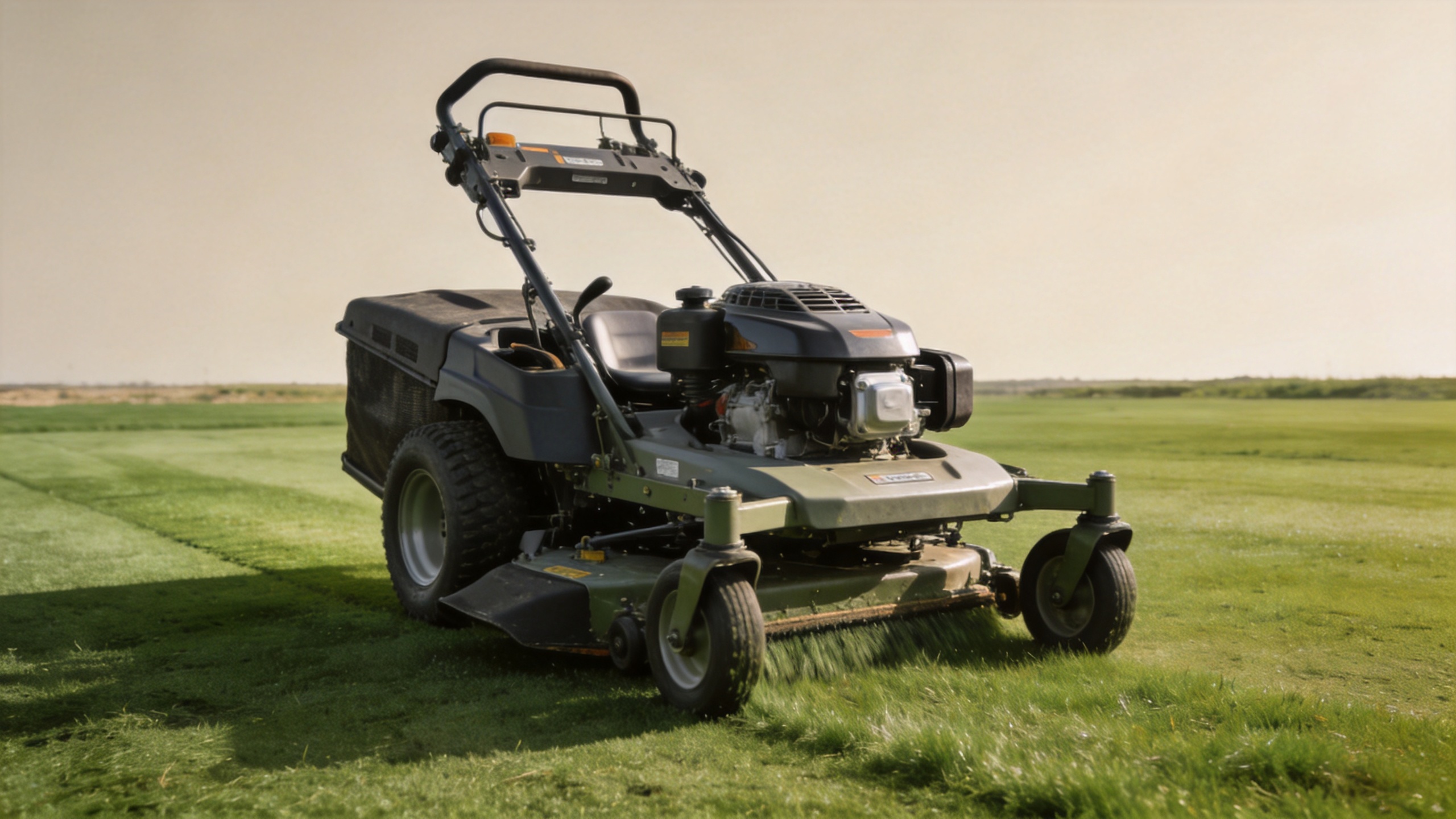
Commercial search results commonly highlight diesel zero-turn models with 60- or 72-inch decks, hydrostatic drives, and heavy-duty positioning. Those details are useful prompts, not universal recommendations. A wider deck can increase coverage on open ground, yet it also needs enough gate clearance, turning room, and a route that does not leave awkward narrow sections behind. The right diesel lawn mowers are the machines that fit both the main acreage and the operational edges of the property.
Why diesel power fits sustained commercial mowing
Torque should be considered in working conditions
Diesel engines are often selected because buyers expect strong low-speed pulling performance in demanding work. For a commercial crew, the point is not to claim that every diesel mower will cut every condition better. The point is to compare how the engine, deck, drive system, and ground conditions work together. When grass is taller, vegetation is denser, or the route includes gradual rises, diesel lawn mowers may offer a powertrain profile worth evaluating for sustained operation.
That comparison should include the manufacturer’s approved operating guidance, not just peak engine figures. Ask how the mower is intended to be used under load, what operating limits apply, and how the deck and transmission are matched to the engine. It is more useful to place a power number back into the site conditions than to treat it as a stand-alone result.
Commercial construction supports a planned duty cycle
Many diesel commercial mowers are marketed for heavy-duty use because their purchasers expect frequent operation and a structured maintenance routine. In practice, durability depends on the whole system: the quality of daily checks, clean cooling paths, timely fluid and filter service, correct storage, and access to replacement parts. Choosing diesel lawn mowers therefore should include a conversation about service points and support, not only engine type.
This is especially important for property managers who need equipment availability across a season. A mower that is straightforward for the team to inspect and service may be more valuable than a machine with a feature list that cannot be supported locally. Before purchase, request the maintenance schedule, parts identification process, warranty conditions, and the route for obtaining technical help.
Coverage, route design, and operator workload
For broad, repeatable mowing zones, diesel lawn mowers can be paired with deck sizes and travel patterns that suit the job. However, coverage is a workflow issue, not simply a deck-width issue. Divide the property into open areas, obstacle-dense areas, slopes, wet-prone sections, and access corridors. Then decide whether one large machine, a mixed fleet, or a separate trimming plan makes more sense.
Route planning can reduce unnecessary overlap and help the crew identify where a wide machine is useful. It should also expose where it is not: tree lines, drainage channels, curbs, fences, and irregular boundaries can change the preferred setup. If a project includes remote-control mowing equipment, visibility, exclusion zones, and the instructions supplied for the unit must be reviewed before work begins. Efficiency matters, but site inspection and safe operating rules cannot be skipped.
The cost question is broader than fuel price
Buyers sometimes frame the choice as diesel versus gasoline based on the price of fuel alone. For a commercial project, that is too narrow. Compare the initial configuration, routine service items, downtime risk, parts availability, transport arrangements, operator familiarity, and the workload the mower must cover. Diesel lawn mowers can make sense when their configuration and service plan align with the project’s work rhythm; they are not automatically the lowest-cost answer for every smaller or intermittent task.
A practical review separates required features from optional features. Required items might include a suitable deck configuration, safe access to the work area, a supportable maintenance plan, and operating controls the team can use correctly. Optional items should be evaluated only after the non-negotiable conditions are clear. This helps procurement teams avoid paying for capability that does not improve the actual mowing route.
Questions to ask before specifying diesel lawn mowers
- What acreage, vegetation density, and mowing frequency define the normal workload?
- Which parts of the site are open enough to benefit from the planned deck width?
- Are there slopes, soft ground, drainage edges, trees, or narrow access points that limit the machine?
- What daily checks, scheduled service, parts support, and operator training will be available?
- What documentation is needed to confirm the proposed configuration is suitable for the site?
These questions also keep the discussion evidence-based. Rather than assuming a given model will deliver a particular saving, ask the supplier to clarify the configuration, approved use conditions, maintenance requirements, and available documentation. For buyers evaluating diesel commercial mowers, that verification is part of the investment decision.
When diesel is not the default answer
Diesel lawn mowers are usually most compelling where long work periods, regular commercial demand, and a planned maintenance process are present. They may be less appropriate for small, irregular areas, projects with limited service support, or sites where access and maneuverability matter more than sustained coverage. A mixed equipment plan may be a better solution when the property combines expansive lawns with tight landscaped zones.
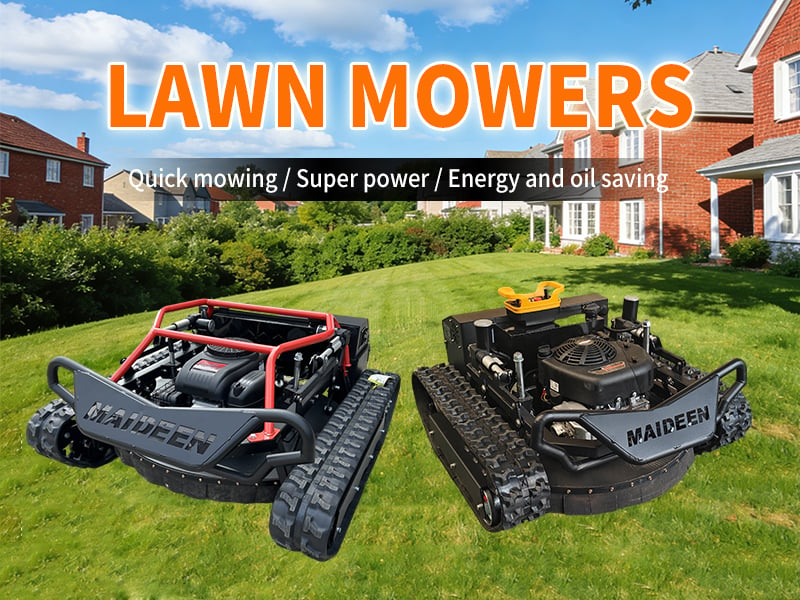
The final choice should follow a site review. List the terrain, grass conditions, required output, transport constraints, and maintenance responsibilities, then use those facts to compare diesel lawn mowers with the alternatives. Shandong Maide En Intelligent Technology Co., Ltd. focuses on landscaping and agricultural machinery themes, including remote-control lawnmower applications. For a project-specific discussion, share the work area, slope conditions, vegetation profile, and intended operating schedule so the necessary configuration can be assessed against the real job.