
 EN
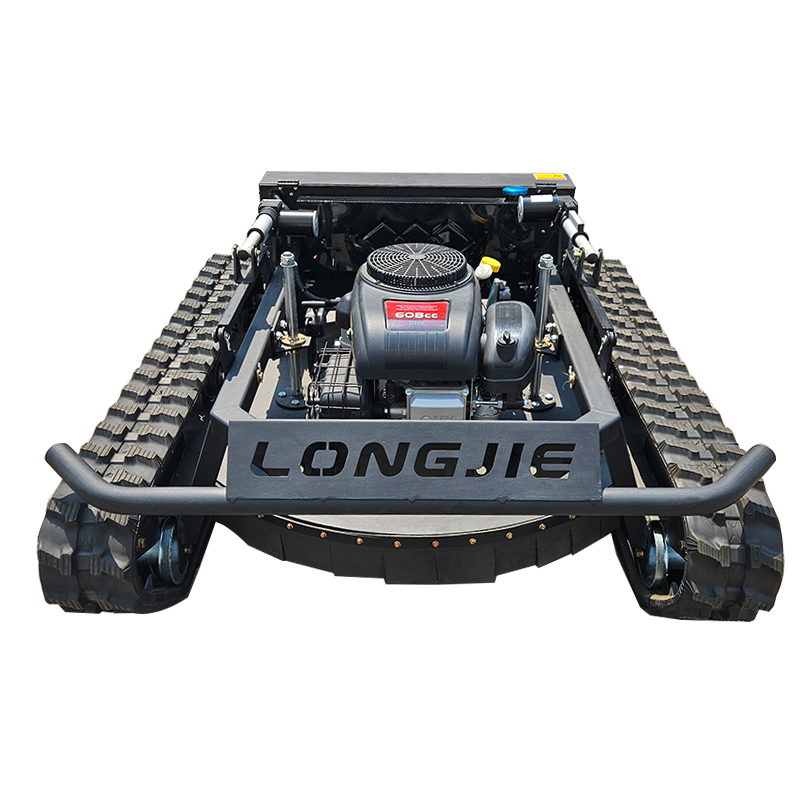
Incoming Material & Component Quality Control
Incoming Quality Control (IQC) prevents defective parts from entering assembly—especially critical for remote control lawn mowers, where safety hinges on the reliability of the engine, radio system, and cutting deck.
Verification of Critical Subassemblies: Engine, Radio Control System, and Cutting Deck
Each critical subassembly undergoes inspection against a defined checklist before release to production. Engines or electric drive units are subjected to no-load operation, torque verification, and leak detection. Radio control systems are paired and tested for frequency stability, latency, signal strength, and fail-safe response. Cutting decks are evaluated for flatness, blade tip runout, spindle bearing play, and guard retention. Safety-critical components receive 100% inspection; cosmetic or non-safety items may follow statistically valid sampling plans. This gate ensures only conforming components proceed to assembly.
| Subassembly | Key Inspection Points | Typical Method |
|---|---|---|
| Engine or drive motor | Torque, vibration, thermal response | Bench test, tachometer, thermal camera |
| Radio control system | Pairing, frequency, latency, fail-safe | Receiver test, spectrum analyzer |
| Cutting deck | Flatness, blade runout, guard fit | CMM, dial indicator, go/no-go gauge |
Supplier Audits and Traceability Protocols for Remote Control Lawn Mower Parts
Suppliers are evaluated through scheduled audits covering process capability, preventive maintenance records, and corrective action effectiveness. Increasingly, manufacturers adopt digital supplier scorecards and automated batch release in 2025 to reduce manual error. Every part lot carries traceable identifiers—including lot numbers, date codes, and certificates of conformance—that link engines, radio modules, and cutting decks to supplier batch data and incoming inspection results. This end-to-end traceability enables rapid containment or targeted recall if field failures occur. High-risk suppliers undergo more frequent on-site audits; lower-risk partners may be assessed via desk audits and quarterly performance reviews. The objective is proactive variation control—not reactive correction.
In-Process Quality Assurance During Remote Control Lawn Mower Assembly
Inline quality checks during assembly isolate defects early—before they compound downstream. For remote control lawn mowers, this includes calibrated mechanical validation, electrical continuity verification, and functional safety testing at each workstation.
Precision Fit and Functional Checks: Fasteners, Wiring Harnesses, and Safety Interlocks
Critical fasteners are tightened using calibrated torque tools aligned to engineering specifications for grade, plating, and joint type. Loose deck bolts or drive mounts pose serious vibration or blade-contact risks, so presence, angle, and seating are verified—cross-threaded or missing hardware triggers immediate rejection. Wiring harness stations use continuity testers and pull-force gauges to confirm connector engagement, terminal crimp integrity, and strain-relief placement. Safety interlocks—including seat, brake, blade-engagement, and remote emergency-stop circuits—are functionally exercised to verify opening within specified response windows. Results are logged by serial number or batch, enabling full traceability. Inline vision systems compare real-time connector orientation and wire routing against digital work instructions. Operators receive pass/fail signals from station controllers before advancing the unit; failed assemblies are quarantined for rework. This closed-loop discipline contains defects locally and prevents minor misalignments from escalating into field recalls.
Dynamic Balancing and Vibration Testing for Motorized Cutting Systems
Once the cutting deck and motor are assembled, dynamic balancing verifies the rotating blade assembly at operating speed. Accelerometers mounted on the deck capture multi-axis vibration data. Excessive imbalance is corrected by selective mass removal or re-indexing the blade adapter. Vibration thresholds are set to protect bearings, prevent fatigue cracks, and ensure stable remote control responsiveness—particularly important for unattended or slope-based operation, where vibration-induced looseness could compromise blade retention. Test data is stored for correlation with warranty returns and field telemetry. Units exceeding limits are automatically rejected and routed to rework. Manufacturers often align tolerances with bearing life models and real-world usage patterns to deliver smooth, quiet, long-life performance.
End-of-Line Functional Validation for Remote Operation
Real-World Remote Control Lawn Mower Testing: Range, Latency, Signal Stability, and Obstacle Response
Before shipment, remote control lawn mowers undergo end-of-line testing that replicates real-world operator conditions. These tests validate integration between the radio link, control logic, and safety systems under realistic interference and distance scenarios. Command latency—from transmitter input to drive or blade actuation—is measured against tight acceptance windows to detect delayed braking or steering. Signal stability is assessed by logging packet loss and signal-to-noise ratio while the mower navigates preset paths near metallic structures, trees, and wet grass. Obstacle response tests activate emergency stops and proximity sensors at varying approach speeds to verify stopping distance and safe restart behavior. Range is validated in both open-field and partially obstructed environments to confirm reliable control up to the published maximum operating distance. Collectively, these checks mitigate risks of runaway operation or unresponsive commands post-delivery.
Cutting Performance Benchmarking Under Load and Variable Terrain Simulations
End-of-line validation also evaluates cutting performance beyond ideal conditions. Mowers are tested on dynamometer-style turf beds or adjustable incline simulators to load the cutting deck while monitoring blade speed, current draw, and deck vibration. Tall, wet, and dense grass strips assess cut consistency and discharge flow without stalling. Variable terrain simulations—including ramps, side slopes, and rough ground—evaluate traction, deck height stability, and protection against scalping. Data confirms the deck maintains set height and avoids overloading drive motors. Passing units must meet predefined thresholds for cut evenness, runtime temperature rise, and motor recovery after peak load. This stress-testing uncovers intermittent faults that only manifest under real lawn conditions—boosting first-use reliability and reducing early-life failures.
Certification, Compliance, and Continuous Improvement
Certification provides external validation that a remote control lawn mower meets mandatory safety, electromagnetic compatibility (EMC), and radio performance requirements. Manufacturers align design and production with ISO 9001:2015 for quality management, ISO 5395 for garden equipment safety, and ISO 12100 for systematic risk assessment. Regional radio standards include FCC Part 15 in North America and the EU Radio Equipment Directive 2014/53/EU. These certifications require documented design controls, consistent production processes, and periodic factory surveillance—not just one-time approval.
| Compliance Area | Typical Standard or Requirement | What It Verifies |
|---|---|---|
| Quality management | ISO 9001:2015 | Process control, traceability, and corrective action |
| Mechanical safety | ISO 5395 / ISO 12100 | Cutting blade guarding, stability, and interlock logic |
| Radio frequency and EMC | FCC Part 15 / EU RED 2014/53/EU | Emission limits, transmitter power, and interference resistance |
Continuous improvement closes the loop between field performance and manufacturing control. Warranty claims, remote diagnostic logs, dealer service reports, and customer complaints feed into failure mode and effects analysis (FMEA) reviews and supplier scorecards. ISO 9001:2015 mandates documented corrective actions and formal management review—driving teams to trace every failure to its root cause: component batch, assembly step, or software version. Over time, this disciplined feedback loop reduces repeat defects, improves firmware robustness, and strengthens supplier accountability—without waiting for regulatory action or large-scale recalls.
FAQ
What is Incoming Quality Control (IQC)?
Incoming Quality Control ensures that defective or non-compliant components do not proceed to the assembly line. This is achieved by thoroughly inspecting critical subassemblies and other parts before they are used in the production process.
How are safety-critical components inspected?
Safety-critical components undergo 100% inspection to ensure they meet strict manufacturing and quality standards, while cosmetic or non-safety items may follow statistically valid sampling plans.
What is the significance of supplier audits in manufacturing?
Supplier audits help evaluate process capability, corrective measures, and preventive maintenance to maintain consistent quality. Digital scorecards and traceable identifiers are also used for streamlined monitoring and easy tracking of parts.
How are remote control lawn mowers tested for real-world functionality?
These mowers are tested for range, signal stability, command latency, obstacle response, and cutting performance under real-world conditions, including variable terrain simulations, to ensure their reliability and safety.
What certifications do remote control lawn mowers need to comply with?
Manufacturers must ensure adherence to standards such as ISO 9001:2015, ISO 5395, ISO 12100, and regional radio or EMC regulations like FCC Part 15 and the EU RED 2014/53/EU for quality, safety, and compliance.