EN
EN
Why Self mower robot Is Popular In Villa Landscape Maintenance
Villa grounds are rarely one open rectangle of grass. They may have a front lawn, side passages, ornamental beds, shaded corners, pool surrounds, and slopes that require frequent attention. That is why interest in a robot lawnmower has grown among villa owners, estate managers, and landscape service teams. A self mower robot can make routine cutting more predictable, but its value comes from matching the machine to the site rather than expecting automation to solve every maintenance issue.
From a purchasing perspective, the useful question is not simply whether a robot lawnmower is convenient. It is whether the property has clear work zones, safe operating boundaries, a realistic maintenance routine, and a person who can inspect the site. When those conditions are in place, a robot lawnmower can help turn recurring grass care into a planned process instead of a last-minute task.
Villa landscapes reward consistency, not occasional heavy cutting
Lawns around villas often matter because they frame entrances, outdoor seating, paths, and views from the home. A conventional mowing visit may leave grass longer between appointments, then remove more material in one pass. A robot lawnmower supports a different rhythm: shorter, more frequent cuts that can keep the visible turf area looking more even when the property is suitable for automated work.
This does not mean every garden needs a robot lawnmower. Thick debris, unmarked drops, loose irrigation parts, children’s play areas, and changing construction work can interrupt an automated schedule. Still, for a stable lawn zone, a self mower robot gives a property manager a repeatable baseline. Staff can focus their time on edging, pruning, beds, irrigation checks, and the visual details that a mower does not handle.
The strongest appeal is labor planning
A robot lawnmower is popular in villa maintenance because routine mowing can be scheduled around other landscape work. It does not eliminate supervision or site preparation, but it can reduce the need to assign a person to the same open turf area each time grass needs attention. For properties with several recurring tasks, that planning benefit can be more valuable than a headline feature.
Think of the job in three parts: preparation, mowing, and review. During preparation, a team checks access routes, gates, obstacles, wet patches, and the condition of the cutting area. During mowing, the robot lawnmower works only within the approved zone and schedule. During review, a person checks the result, clears buildup where needed, and confirms that the next operating window is still appropriate. This task-based approach is more useful than comparing machines by a single specification.
Complex villa layouts make site assessment essential
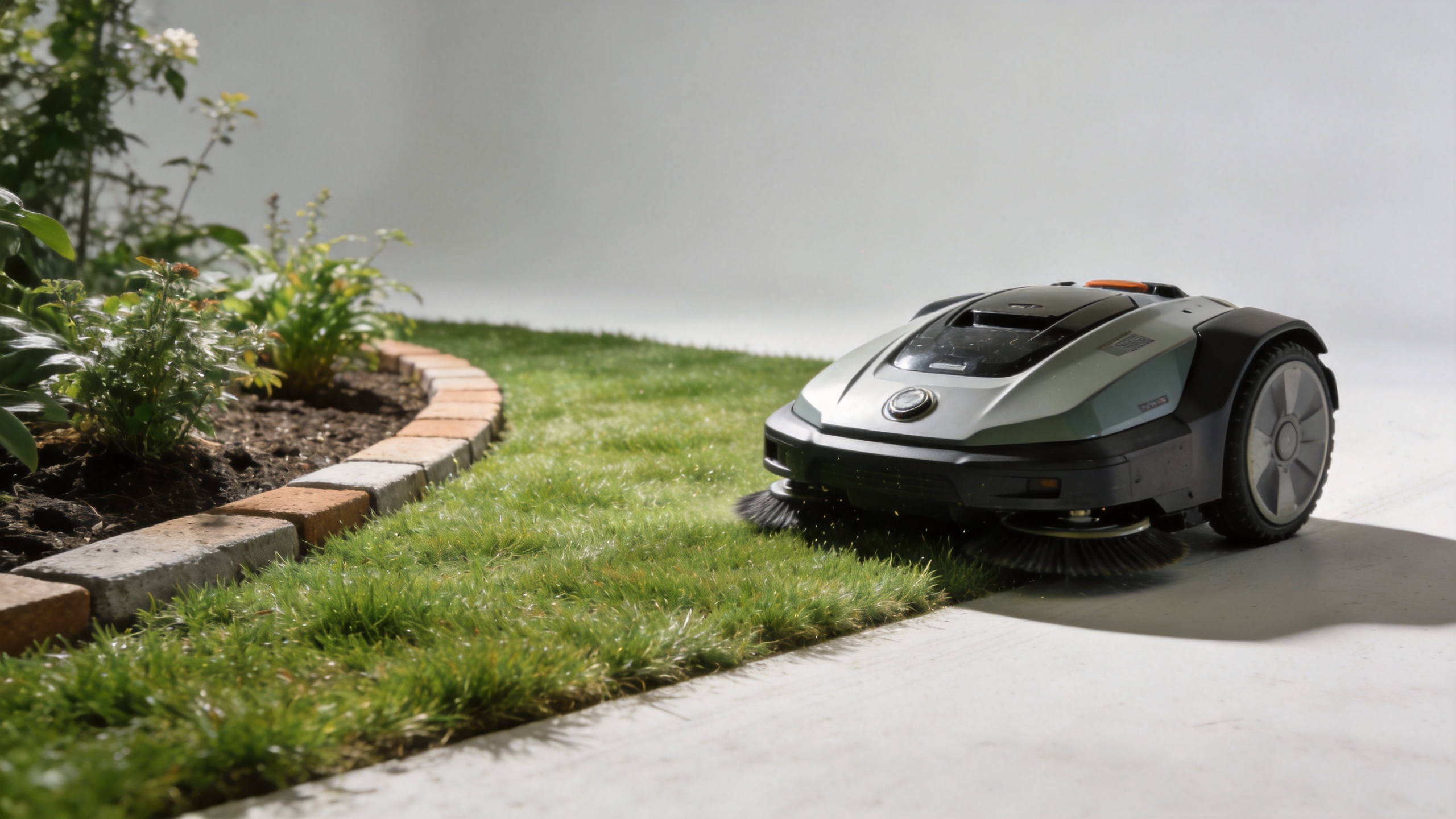
The right self mower robot must fit the lawn, not just the total size of the property. A villa may include narrow passages, disconnected turf sections, decorative borders, tree roots, furniture, and changes in grade. Before selecting a robot lawnmower, map the areas that can be safely maintained and separate them from areas that still need hand tools or conventional equipment.
- Access and boundaries: Confirm whether the mower can enter each approved lawn section without crossing a driveway, public path, water feature, or unprotected edge.
- Terrain and traction: Record slopes, uneven ground, wet zones, exposed roots, and loose material. A robot lawnmower should be evaluated for the actual ground condition, not a flat-lawn assumption.
- Obstacles and seasonal change: Patio furniture, toys, fallen branches, seasonal planters, and temporary decorations can change a route quickly.
- Charging and storage: Plan a protected location that fits the property’s power and access arrangements, following the equipment instructions.
Current buyer guidance commonly focuses on navigation, cut quality, slope handling, and reliability. For a villa, these topics should be converted into a site checklist. A robot lawnmower that suits one open lawn may not suit a property with multiple isolated zones or frequently changing obstacles.
Quiet, scheduled operation can suit residential routines
Many villa owners care about when work happens as much as how it happens. A robot lawnmower can be scheduled for suitable periods, helping the maintenance plan fit around residents, guests, and other grounds work. That can be attractive where frequent conventional mowing would create repeated interruptions. The benefit is conditional, however: local rules, neighbor expectations, weather, and the manufacturer’s operating instructions should guide the schedule.
A self mower robot is also appealing because it supports a more regular visual standard without asking a gardener to revisit the same turf on every cycle. The landscape team can reserve manual work for areas where judgment matters most, such as trimming around planting beds or responding to a patch of stressed grass.
Safety belongs at the start of the buying decision
Automation does not remove responsibility for the site. Before discussing efficiency, buyers should confirm that the intended robot lawnmower has a clear operating area, that users understand the controls, and that children, pets, visitors, and maintenance workers are considered in the daily routine. Follow the product manual, applicable local requirements, and the supplier’s instructions for setup, inspection, cleaning, and storage.
For procurement review, ask which safety documentation is relevant to the target market. IEC 60335-2-107 is a product-specific safety standard for robotic battery-powered electrical lawn mowers, while ANSI/OPEI 60335-2-107 is an example of a related U.S. market reference. These references are useful questions for a supplier; they are not proof that a particular robot lawnmower is certified. Buyers should request current documentation for the exact model and destination market.
How to evaluate a robot lawnmower for a villa
- Walk the route first. Mark lawn sections, edges, gates, slopes, drainage points, and places where people regularly pass.
- Define the maintenance objective. Decide which turf areas need frequent presentation-quality cutting and which remain manual zones.
- Check operating constraints. Compare the robot lawnmower only against the terrain, boundary, weather, and access conditions documented for the property.
- Plan the human routine. Assign who checks the self mower robot before operation, who handles seasonal adjustments, and who responds when the route changes.
- Review support and documentation. Include training, parts availability, service communication, and safety records in the purchase discussion.
Why the category continues to attract villa managers
A robot lawnmower is popular because it addresses a recurring maintenance task with a repeatable workflow. On a well-prepared villa site, it can support regular cutting, more deliberate labor allocation, and a lawn-care schedule that is easier to coordinate. The self mower robot becomes especially practical when the property’s lawn zones, seasonal changes, and safety rules have already been mapped.
A sound decision is not based on automation alone. Ask whether the robot lawnmower fits the actual routes, terrain, boundary controls, and maintenance team. When those answers are clear, a robot lawnmower can be a useful part of villa landscape maintenance rather than an unattended substitute for professional judgment.