EN
EN
How To Store Gas powered lawnmower During Off Season
Putting away gasoline lawn mowers is more than finding an empty corner of the shed. A careful off-season routine protects the fuel system, reduces corrosion, and makes the first cut of spring less uncertain. As with any engine-driven tool, start with the owner’s manual for your exact model; it overrides a general checklist whenever its fuel, oil, storage, or safety instructions differ.
For a walk-behind gas powered lawnmower, the most useful approach is simple: prepare the machine, choose the correct fuel procedure, store it in a dry place, and inspect it before putting it back to work. The same sequence suits many gasoline lawn mowers, but riding mowers and commercial equipment may have additional battery, filter, and service requirements.
Why off-season storage matters for gasoline lawn mowers
Grass clippings hold moisture against metal. Old fuel can create starting and fuel-system problems. Dust, fertilizer residue, and a damp floor can all work against a machine that will sit unused for weeks or months. That does not mean every gas powered lawnmower needs the same treatment. Fuel-system instructions vary by engine and by local fuel availability, so choose one manufacturer-approved approach rather than combining several pieces of advice.
Good storage also makes maintenance easier to plan. Instead of discovering a dull blade, a loose fastener, or an overdue oil check on the first warm weekend, owners of gasoline lawn mowers can identify those jobs while there is no pressure to mow. In practice, the storage routine is a short handoff between the last mowing day and the next season.
1. Cool, disconnect, and clean before you store
Park the mower on level ground outdoors or in a well-ventilated work area. Turn the engine off, allow hot parts to cool, and remove the ignition key if the model has one. On many walk-behind gasoline lawn mowers, disconnecting the spark-plug wire after the engine is cool helps prevent an unintended start while you clean or inspect the unit. Follow the manual’s instructions for your mower before touching the blade area.
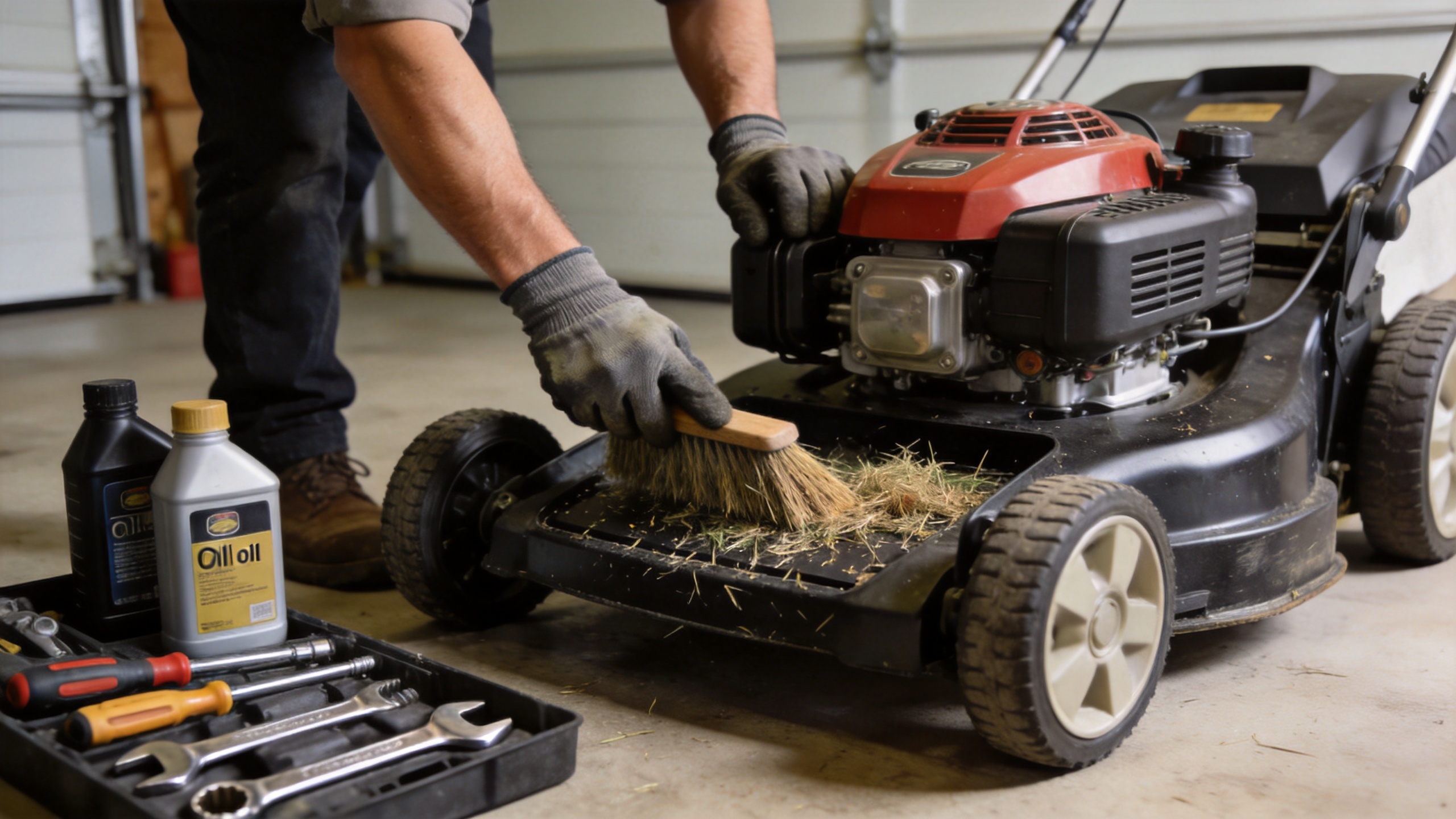
Brush or scrape away accumulated grass from the deck, wheels, discharge area, and cooling surfaces. Do not wash a hot engine. If you use water on the deck, dry the machine thoroughly afterward. Look for stuck debris, cracked guards, missing fasteners, and damage around cables or controls. It is tempting to postpone a small repair, but a clean gas powered lawnmower makes an issue easier to see and discuss with a qualified service technician.
2. Make a fuel plan that fits your engine manual
Fuel is the storage decision that deserves the most care for gasoline lawn mowers. Some manufacturers specify treated fresh fuel for storage, while others may specify running the fuel system dry or another procedure for a particular engine. A fuel stabilizer is commonly used with fresh gasoline when the manufacturer permits it, but the product dose and run time must follow both labels. Do not assume that draining, filling, or treating fuel is interchangeable.
Before choosing, check the owner’s manual, the fuel cap or engine label, and the expected storage length. If the manual calls for stabilized fuel, add the correct amount to fresh fuel and run the engine only as directed so treated fuel reaches the appropriate parts of the system. If it calls for a dry fuel system, follow its shutdown method carefully. This one decision can have more impact on spring starting than cosmetic cleaning for many gasoline lawn mowers.
3. Review oil, filters, blade, and spark plug
Off-season storage is a useful time to review scheduled service. Check the oil level and condition according to the maintenance schedule. Depending on the machine and its service interval, the manual may call for an oil change, an air-filter check, or inspection of the fuel filter and spark plug. Briggs & Stratton winter-storage guidance, for example, discusses checking oil and inspecting fuel and ignition components; that is a reminder to verify the schedule for your exact engine, not a universal replacement rule.
With the spark plug wire still safely managed, inspect the blade only by the method the manufacturer allows. Wear sturdy gloves and have a qualified service provider sharpen, balance, or replace a blade if necessary. A dull or damaged blade should not be ignored simply because a gas powered lawnmower is being stored. Record any part numbers or service questions now, while the issue is visible.
4. Protect the battery and controls
For battery-start gasoline lawn mowers, review the manual’s battery-storage instructions. Some batteries can remain installed with periodic charging; others should be disconnected or maintained with an approved charger. Avoid connecting a charger in a wet area or using a damaged cord. Wipe control surfaces dry, inspect cables for obvious wear, and lubricate only the points and products named in the manual.
Do not cover a machine with a non-breathable material if moisture may be trapped beneath it. A breathable cover can keep dust off a clean, dry gas powered lawnmower; it cannot correct a wet storage space. Keep fuel, ignition sources, and charging equipment managed according to local safety rules.
5. Choose a dry, stable storage location
Store gasoline lawn mowers on a firm, dry surface away from open flames, pilot lights, sparks, and areas used for fuel transfer. Keep the mower out of the weather and where children or unauthorized users cannot access it. Avoid placing it directly on soil or a persistently damp floor. If storage space is tight, do not tilt or hang the machine in a way the manufacturer prohibits; oil and fuel can move into places they should not be.
Before closing the shed or garage, make a quick note of the date, fuel procedure used, maintenance completed, and parts still needed. That small record prevents guesswork later. It also helps anyone else responsible for the gas powered lawnmower understand what has already been checked.
6. Use a spring restart checklist
When mowing season returns, resist the urge to pull the starter immediately. Move gasoline lawn mowers to a safe outdoor area, inspect for leaks or rodent damage, reconnect the spark-plug wire or battery as instructed, and check the oil level. Confirm that guards, cables, and controls are intact. Add or replace fuel only as the manual directs, then start the engine with the mower on stable ground and people clear of the blade area.
For gasoline lawn mowers that will not start, do not keep cranking until the battery is flat or force repairs beyond your experience. Recheck the stored-fuel procedure, the controls, and the owner’s troubleshooting steps, then contact a qualified technician if the problem persists.
A practical storage checklist
- Read the model-specific storage section before working on gasoline lawn mowers.
- Let the engine cool and manage ignition safely.
- Remove grass, dirt, and moisture from the deck and exterior.
- Use only the fuel approach specified for the engine.
- Check scheduled oil, filter, blade, spark-plug, and battery maintenance.
- Store the mower dry, stable, secure, and away from ignition sources.
- Write down the date and work completed for a smoother spring restart.
A well-prepared gas powered lawnmower may still require maintenance, but careful storage reduces preventable uncertainty. Keep the routine practical, follow the manufacturer’s limits, and arrange professional service whenever a repair or safety question falls outside the manual.