
 EN
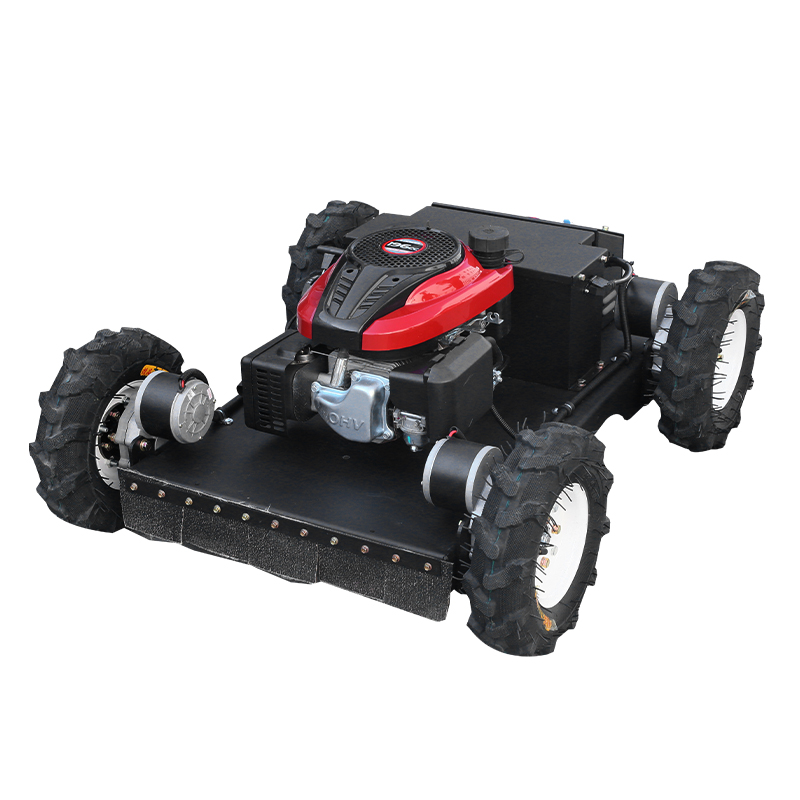
End-to-End OEM Manufacturing for Remote Control Lawn Mower Platforms
Prototyping, Tooling, and Mass Production with Lean Scalability (5K–50K Units/Year)
A full-service OEM program for remote control lawn mowers begins with rapid prototyping—using CNC-machined chassis and drivetrain components validated to ±0.1 mm tolerances, aligning with 2024 industry precision benchmarks. Tooling follows with modular fixtures designed to support both pilot runs and high-volume assembly without redesign. Lean scalability is built in from the start: a 5,000-unit launch batch can scale to 50,000 units annually without re-qualifying the main frame. Robotic welding, standardized work cells, and consistent torque protocols preserve joint integrity and cycle time across volumes. Integrated quality gates—incoming material inspection, in-process audits, and final run-off testing—minimize rework and maintain predictable lead times.
| Production Phase | Typical Output | Key Controls |
|---|---|---|
| Prototyping | 5–20 units | CNC tolerance checks, field trial feedback |
| Tooling | 1–3 sets | Modular fixture validation, capability analysis |
| Mass production | 5K–50K units/year | Robotic welding, torque audits, end-of-line run-off |
Global Compliance Assurance: UL, CE, FCC, and RoHS Certification Support
Before entering regional markets, remote control lawn mowers must meet jurisdiction-specific safety, emissions, and environmental standards. A qualified OEM partner provides end-to-end certification support—including design review, pre-compliance testing, and submission-ready documentation—for UL (North America), CE (EU), FCC Part 15 (RF emissions), and RoHS (hazardous substance restrictions). UL evaluation focuses on electrical insulation, battery charging systems, and blade-stop response to remote commands. CE marking requires conformity with the Machinery Directive (EN ISO 12100), EMC Directive (2014/30/EU), and Radio Equipment Directive (2014/53/EU), given the intentional RF radiator in the remote system. FCC testing confirms emissions remain within legal limits, while RoHS documentation verifies lead, mercury, cadmium, and other restricted substances fall below threshold levels. This integrated compliance strategy avoids late-stage re-engineering and accelerates time-to-market across geographies.
Integrated R&D and Platform Development for Remote Control Lawn Mower Innovation
A successful remote control lawn mower OEM program hinges on platform-first R&D—not product-first development. A modular architecture reduces re-engineering costs and enables brands to launch manual, remote-operated, and autonomous variants from one validated core design.
Dual-Mode Platform Architecture: Seamless Integration of Remote Control and Autonomous Capabilities
The most efficient path to market uses a dual-mode platform where remote control and autonomous functionality share foundational hardware: a common chassis, drive motors, cutting deck, and safety controller. The remote module employs encrypted RF, Bluetooth, or 4G connectivity for low-latency command transmission—steering, speed, blade activation, and emergency stop. The autonomous layer adds RTK GPS, lidar, ultrasonic sensors, and an IMU for boundary mapping, obstacle detection, and path planning. Both modes operate through a unified electronic control unit (ECU) on a shared CAN bus. This allows brands to introduce a remote-only model first, then add autonomy via software updates or field-installable sensor kits—without altering motor controllers or safety logic. As a result, EMC, thermal, and IP-rated ingress protection tests apply once, not per mode. Safety remains consistent: manual override stays active even during autonomous operation, and tilt sensors, bumper switches, and lift detection trigger immediate blade stop in either mode. Over-the-air (OTA) updates further enable continuous improvement—refining navigation algorithms or adding geo-fence behaviors without hardware changes.
Regional Adaptation Engineering: Blade Safety, Battery Chemistry (LiFePO₄ vs. NMC), and Noise Compliance (NA vs. EU)
Regional adaptation engineering ensures compliance without mechanical overhauls. Blade safety requirements differ significantly: North American standards emphasize operator-presence-linked blade-stop mechanisms and remote emergency cutoffs; the EU applies kinetic energy thresholds and guard geometry rules under EN ISO 12100. These can be met through calibrated tip speed, stop-time tuning, and baffle adjustments—all within the same deck structure.
Battery chemistry selection also responds to regional priorities. LiFePO₄ offers superior thermal stability and longer cycle life—ideal for high-temperature climates and commercial fleets requiring durability. NMC delivers higher energy density, supporting extended runtime in compact packs—valuable in residential markets prioritizing runtime and portability—but demands more sophisticated battery management.
| Factor | LiFePO₄ | NMC |
|---|---|---|
| Thermal stability | Higher | Moderate |
| Cycle life | Longer | Shorter |
| Energy density | Lower | Higher |
| Cold-weather range | Moderate | Better |
| BMS complexity | Lower | Higher |
Noise compliance presents another key regional variable. EU residential zones often enforce stricter sound power limits (e.g., ≤95 dB(A) at 7 m) than many North American suburban ordinances. OEM partners address this through adjustable blade speed profiles, optimized deck insulation, and refined motor control algorithms—ensuring a single platform meets both NA and EU acoustic standards without structural redesign.
Modular Customization to Differentiate Remote Control Lawn Mower Offerings Globally
Field-Configurable Add-Ons: Auto-Dumping, Leaf Vacuum, GPS-Guided Boundary Mapping, and Terrain-Aware Throttling
Modular customization transforms a single platform into regionally relevant solutions—without compromising manufacturing efficiency or service logistics. Field-configurable add-ons let distributors tailor functionality to local needs while maintaining shared parts, training, and repair workflows. Auto-dumping kits support slope maintenance and debris removal on large properties, allowing operators to unload clippings remotely—enhancing safety and productivity. Leaf vacuum attachments extend seasonal utility in autumn-heavy markets, converting the mower into a collection tool with minimal integration effort. GPS-guided boundary mapping enables repeatable, precise mowing along property lines—reducing overlap and missed strips—and supports stored mapping profiles for recurring commercial contracts. Terrain-aware throttling dynamically adjusts blade speed and traction based on real-time slope angle or surface resistance, protecting drivetrain components and optimizing battery use on uneven terrain. These modules can be factory-installed or dealer-fitted, offering brands flexibility in go-to-market timing and cost structure. By anchoring differentiation in software-defined and plug-in capabilities—not mechanical divergence—global distributors achieve faster quoting, stronger aftermarket margins, and deeper customer retention through targeted, pain-point-driven upgrades.
FAQ
What does the OEM program for remote control lawn mowers involve?
The OEM program includes rapid prototyping, tooling development, mass production, and scalable manufacturing. It ensures precision engineering, integrated quality controls, and lean scalability from initial batches to large-scale production.
How does the program ensure global compliance?
The program supports UL, CE, FCC, and RoHS certifications for jurisdiction-specific safety, emissions, and environmental standards, preventing late-stage re-engineering and facilitating faster market entry.
What is the advantage of a dual-mode platform architecture?
The dual-mode platform integrates remote and autonomous capabilities using shared hardware and software layers. This reduces re-engineering costs, ensures safety consistency, and allows for future module upgrades without significant structural changes.
How does regional adaptation engineering address compliance?
Regional adaptation includes blade safety optimization, battery chemistry choices like LiFePO₄ and NMC, and noise compliance through design adjustments to meet specific market requirements.
What are examples of modular customization for remote control lawn mowers?
Modular add-ons include auto-dumping kits, leaf vacuums, GPS-guided boundary mapping, and terrain-aware throttling, enabling customization without compromising manufacturing efficiency.
Table of Contents
- End-to-End OEM Manufacturing for Remote Control Lawn Mower Platforms
- Integrated R&D and Platform Development for Remote Control Lawn Mower Innovation
- Modular Customization to Differentiate Remote Control Lawn Mower Offerings Globally
-
FAQ
- What does the OEM program for remote control lawn mowers involve?
- How does the program ensure global compliance?
- What is the advantage of a dual-mode platform architecture?
- How does regional adaptation engineering address compliance?
- What are examples of modular customization for remote control lawn mowers?