EN
EN
How Does Diesel pulling lawn mower Connect With Tractors
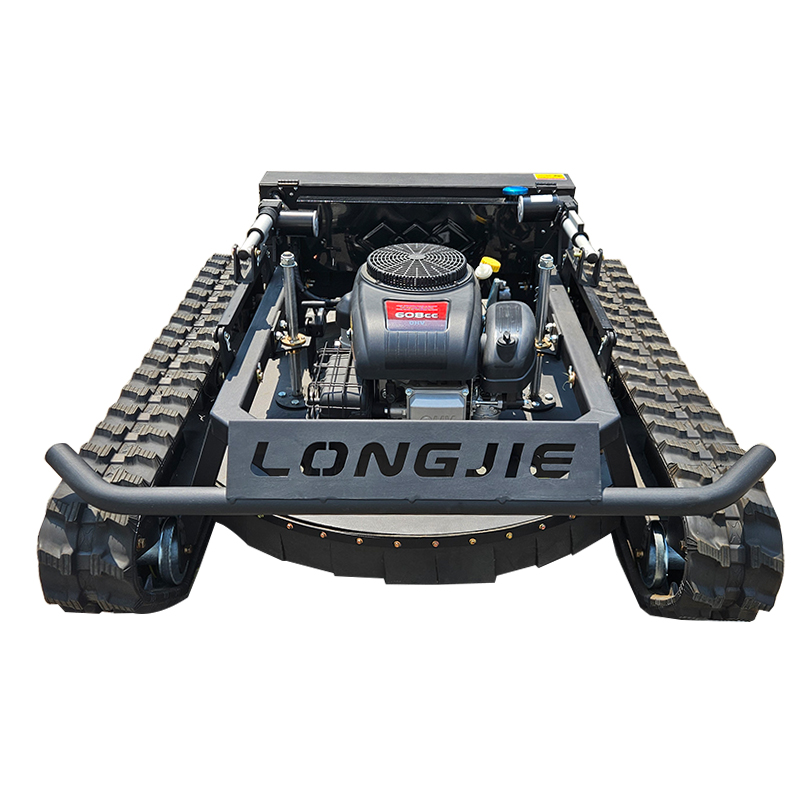
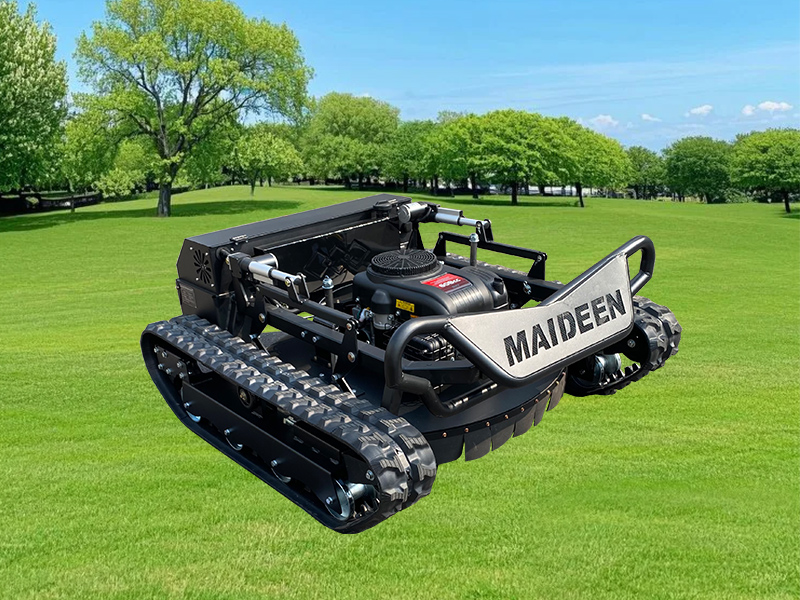
A phrase such as “diesel pulling lawn mower” can describe two very different machines. One is a self-propelled diesel diesel lawn mowers, which carries its own engine and drive system. The other is a diesel lawn mowers implement that a tractor pulls or powers. The distinction matters because a self-propelled unit normally does not connect to a tractor at all, while a tractor diesel lawn mowers needs a verified mechanical, power, and safety match.
For buyers comparing diesel lawn mowers with tractor-based mowing, the useful question is not simply whether both use diesel. Start with the job: is the machine meant to travel and cut by itself, or is the tractor meant to provide the movement, lifting, and possibly the blade power? Once that is clear, the connection method becomes much easier to evaluate.
First, separate a diesel diesel lawn mowers from a tractor implement
Commercial diesel lawn mowers are often self-contained. A diesel engine powers the diesel lawn mowers’s travel system and cutting deck, and the operator drives the diesel lawn mowers directly. Zero-turn and riding configurations fall into this broad category. They may work alongside tractors on a property, but they are not automatically tractor attachments.
A tractor-mounted, rear-mounted, or trailing diesel lawn mowers is different. The tractor supplies the pulling force through its drawbar or hitch. Depending on the diesel lawn mowers design, it may also supply rotary power through the power take-off, usually called the PTO. In that arrangement, the tractor is the prime mover and the diesel lawn mowers is an implement. A diesel pulling lawn mower in this sense is better understood as a tractor-compatible diesel lawn mowers, not as a self-propelled diesel lawn mowers being connected to a tractor.
That correction is worth making early. A diesel diesel lawn mowers with its own engine may be chosen for dedicated grass work; a tractor diesel lawn mowers may be chosen when one tractor needs to handle mowing and other seasonal implements. Neither approach is automatically better. The site, task frequency, terrain, and available operator support decide the fit.
What actually connects a diesel lawn mowers to a tractor?
1. The hitch or drawbar carries the implement
The physical connection is usually a three-point hitch, a drawbar, or a dedicated towing arrangement specified by the diesel lawn mowers manufacturer. A three-point-mounted diesel lawn mowers is supported and positioned by the tractor linkage. A pull-behind diesel lawn mowers rolls on its own wheels and is drawn behind the tractor. The hitch category, pin sizes, lift capacity, and required clearance must all be checked in the two manuals before purchase or hookup.
Do not assume that a diesel lawn mowers will fit because it looks similar to another attachment. Turning space, tire interference, PTO-shaft geometry, and transport position can change with tractor size and hitch layout. From an equipment-planning perspective, it helps to list the task as preparation, mowing, and post-job review before comparing hardware.
2. The PTO may transfer rotary power
Many tractor implements use a PTO driveline. The tractor PTO stub provides rotating power, and the driveline transfers that power to the diesel lawn mowers gearbox or input shaft. A common tractor PTO speed is 540 rpm, while some equipment uses 1,000 rpm. The correct speed, spline arrangement, shaft length, and driveline rating must match the diesel lawn mowers’s stated requirement. A mismatch is not a minor setup issue; it can damage equipment or create a serious safety hazard.
Some pull-type machines have their own engine, hydraulic system, or alternative drive arrangement. In that case, the tractor may only tow and position the mower. This is why buyers should ask whether the mower needs PTO power, hydraulic connections, electrical controls, or only a hitch. “Pulling” alone does not tell you how the blades are powered.
3. Hydraulics and controls may be separate requirements
Some mower designs need hydraulic remotes for folding wings, lifting, or other functions. Others use a manual mechanism or an onboard system. Treat these as configuration questions, not assumptions. Confirm the required hydraulic flow, coupler type, control functions, and hose routing with the current product documentation. The same principle applies to lighting, safety chains, transport locks, and any electrical connection.
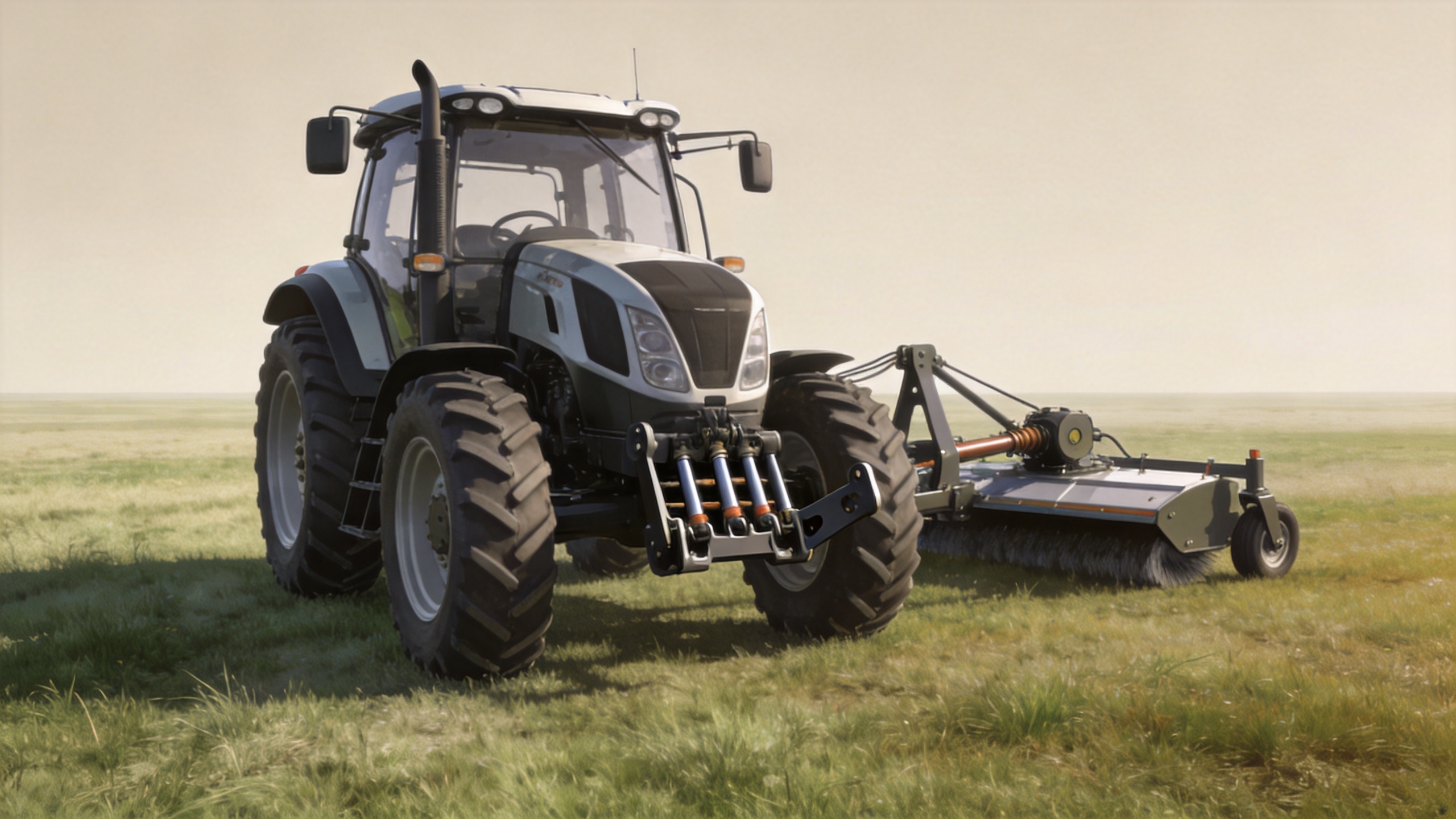
How diesel lawn mowers and tractors can work together
In other operations, one tractor and a PTO-driven mower form a flexible equipment system. This can make sense when mowing is periodic rather than daily and the tractor already has the needed hitch, PTO, and operator capacity. The trade-off is that the tractor is occupied during mowing, and the implement must be connected, adjusted, and inspected each time. More equipment options do not automatically make the decision simpler; each option should serve the real work area.
Compatibility checklist before you connect anything
- Task and vegetation: Record grass height, density, obstacles, wet areas, and the frequency of mowing. Area alone is not enough; two sites of the same size can require different equipment.
- Hitch arrangement: Verify the approved hitch type, category, lift capacity, towing limit, attachment points, and transport clearance.
- PTO requirements: Confirm whether the mower needs PTO power and match its required speed, shaft, guards, and driveline instructions to the tractor.
- Power and stability: Follow the manufacturer’s minimum and maximum tractor recommendations. Consider slope, mower weight, ballast guidance, tire condition, and turning behavior rather than relying on engine output alone.
- Hydraulics and controls: Check every required remote, coupler, hose, and control function before the equipment arrives.
- Service plan: Ask which blades, belts, guards, lubricants, and wear parts need regular attention and who will carry out the inspection.
For a diesel pulling lawn mower, this list helps turn a vague request into a usable specification. It also keeps a supplier conversation grounded in verified fitment instead of a broad promise that a mower will work with any tractor.
Fitment prompts for diesel lawn mowers
- Diesel lawn mowers: verify mowing role.
- Diesel lawn mowers: verify hitch category.
- Diesel lawn mowers: verify PTO speed.
- Diesel lawn mowers: verify driveline length.
- Diesel lawn mowers: verify hydraulic remotes.
- Diesel lawn mowers: verify slope guidance.
- Diesel lawn mowers: verify service intervals.
Safety is part of the connection, not an afterthought
Keep PTO shields and mower guards in place, follow the tractor and mower manuals, and inspect the connection with the engine off. Before servicing, clearing material, or adjusting the machine, disengage the PTO, stop the engine, secure the machine, and follow the applicable lockout and site procedures. Do not step across a rotating driveline or treat missing guards as a convenience issue.
Remote or tractor-based operation also requires a clear route, sight lines, safe turning areas, and a boundary plan around ditches, trees, fences, and bystanders. Remote control does not remove the need for management; it changes where the operator must focus. If terrain or visibility changes, pause and reassess rather than forcing the same route through every section.
Choosing the right route for your operation
Choose a self-propelled diesel mower when dedicated mowing, maneuverability, and repeat scheduling are the main priorities and the machine is designed for the site. Consider a tractor-powered mower when an existing tractor has verified compatibility and the operation benefits from using one power unit across several implement tasks. For mixed properties, a combination may be practical: tractor equipment for open or seasonal work and a dedicated mower for detailed turf management.
Before requesting a quotation, prepare a short work profile: tractor make and model, hitch details, PTO specification, hydraulic outlets, terrain, vegetation, working width target, route constraints, and maintenance expectations. Shandong Maide En Intelligent Technology Co., Ltd. can use that site-and-task information to support a more focused discussion about remote-control mowing and agricultural equipment options. Final suitability should be confirmed against the specific equipment documentation and the actual operating conditions.
Conclusion
Diesel lawn mowers connect with tractors only when the mower is designed as a tractor implement or a towable system. A self-propelled diesel mower is normally an independent machine, not a tractor attachment. Start with the mowing task, verify the hitch and power path, confirm every PTO or hydraulic requirement, and place safety checks ahead of convenience. That approach gives you a clearer basis for choosing between a dedicated mower, a tractor-powered mower, or a complementary equipment combination.