EN
EN
What Blade Protection Design for a Remote Control Lawn Mower for Hills?
For a remote control lawn mower working on hills, blade protection is not a cosmetic cover. It is part of a connected safety system that must manage access to rotating parts, thrown debris, sudden stops, uneven ground, and the operator’s changing line of sight. The right design starts with the actual slope, vegetation, route, and local requirements—not with a single brochure feature.
This matters especially for a remote control lawn mower for hills. A machine may travel across a bank, pass close to a ditch, or turn near trees and stones. In each situation, the cutting deck, guard layout, and shutdown logic need to work together. Before comparing models, ask a practical question: what must the blade area prevent, and under what operating conditions?
Start with the hazards of hilly mowing
A remote control lawn mower can help keep an operator away from vegetation and the immediate cutting zone, but remote operation does not remove the need for a controlled work area. Slopes add changes in pitch, traction, debris direction, and visibility. Tall grass can hide rocks, wire, branches, holes, or changes in ground level. A guard that seems adequate on a flat demonstration area may need closer evaluation where the deck approaches uneven ground.
For that reason, blade protection should be reviewed alongside the route. Mark exclusions such as drop-offs, water edges, loose material, bystanders, and places where the operator may lose sight of the machine. If the site includes a steep or wet section, confirm the machine’s approved operating limits and the supplier’s instructions before assigning it to the job.
The cutting deck is the first protective barrier
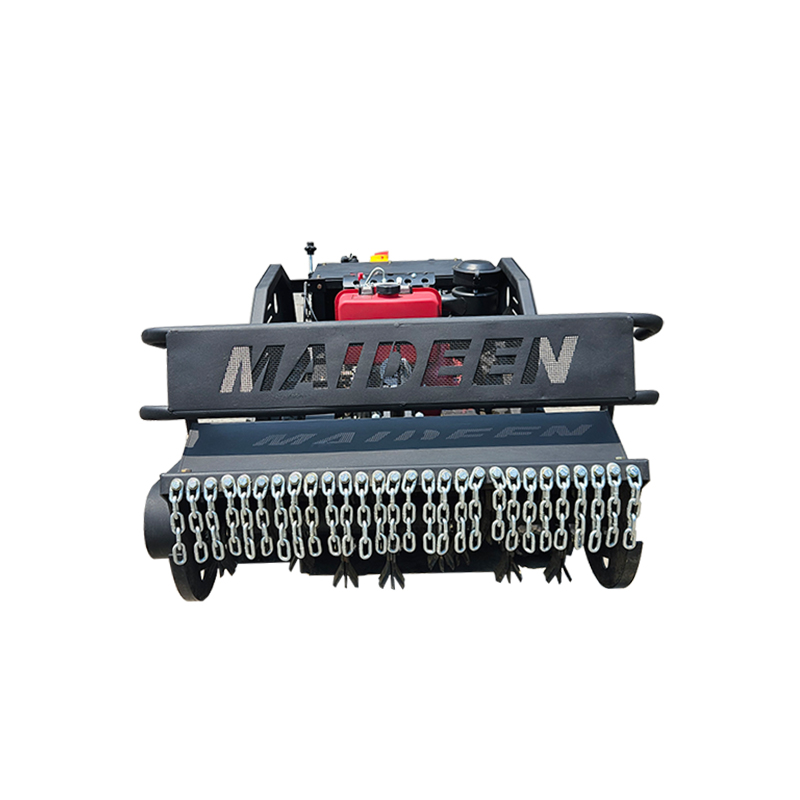
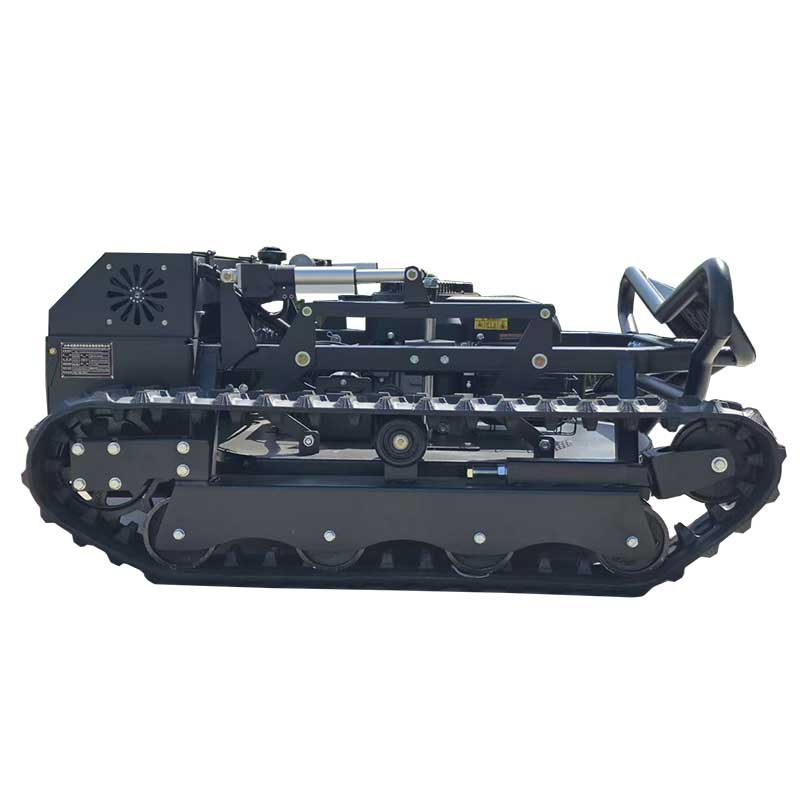
On a remote control lawn mower, the deck or blade housing should enclose the rotating blade path as completely as the intended mowing task allows. Its job is not only to surround the blade; it also helps control access from the sides and above, supports the mounting of other guards, and directs cut material away from people and property.
In general mower-safety references, the blade housing is treated as a protective shield. That is useful language for a buyer’s review, but it is not proof that a particular remote control lawn mower for hills meets any specific standard. Ask for drawings, operating documentation, and the exact configuration being quoted. If a supplier refers to compliance, request the applicable market, model, and supporting documents rather than relying on a broad claim.
Look beyond the deck: skirt, discharge, and debris control
Blade protection is usually a combination of components. A practical review should include:
- Side and front skirts or guards: These help limit access to the blade area and can reduce the path of material leaving the deck. Their clearance needs to suit the ground and vegetation without becoming a snag point.
- Discharge management: Identify where grass, dust, and possible debris are directed. On a slope, the downhill side, nearby paths, vehicles, windows, and people can change the acceptable orientation.
- Deck-edge coverage: Check whether openings created for cutting performance, wheels, or service access are addressed by the designed guard system.
- Fasteners and impact condition: A protective part that is loose, cracked, bent, or missing should be treated as a stop-and-inspect issue, not a minor appearance defect.
It is tempting to assume that a heavier-looking guard is automatically better. In practice, the relevant question is whether the guard arrangement remains secure and effective under the terrain, vegetation, and maintenance routine planned for the machine.
Stopping the blade is as important as shielding it
Physical guards reduce exposure, but they do not make a rotating blade harmless. A remote control lawn mower should also have clear stop logic for normal control release, emergency stop use, and loss of the intended operating condition. One general lawnmower safety reference describes blade brake control that stops a blade within three seconds after the operator-presence control is released. That figure is a useful point for questions, not a substitute for verifying the product’s own design, instructions, and applicable requirements.
For a remote control lawn mower for hills, ask how the cutting function behaves when the machine stops, communication is interrupted, an emergency control is used, or the machine reaches a condition outside its approved operating envelope. Confirm whether traction stopping and blade stopping are separate functions, how the status is indicated to the operator, and what inspection is required before restarting.
Why hill use changes the blade-protection discussion
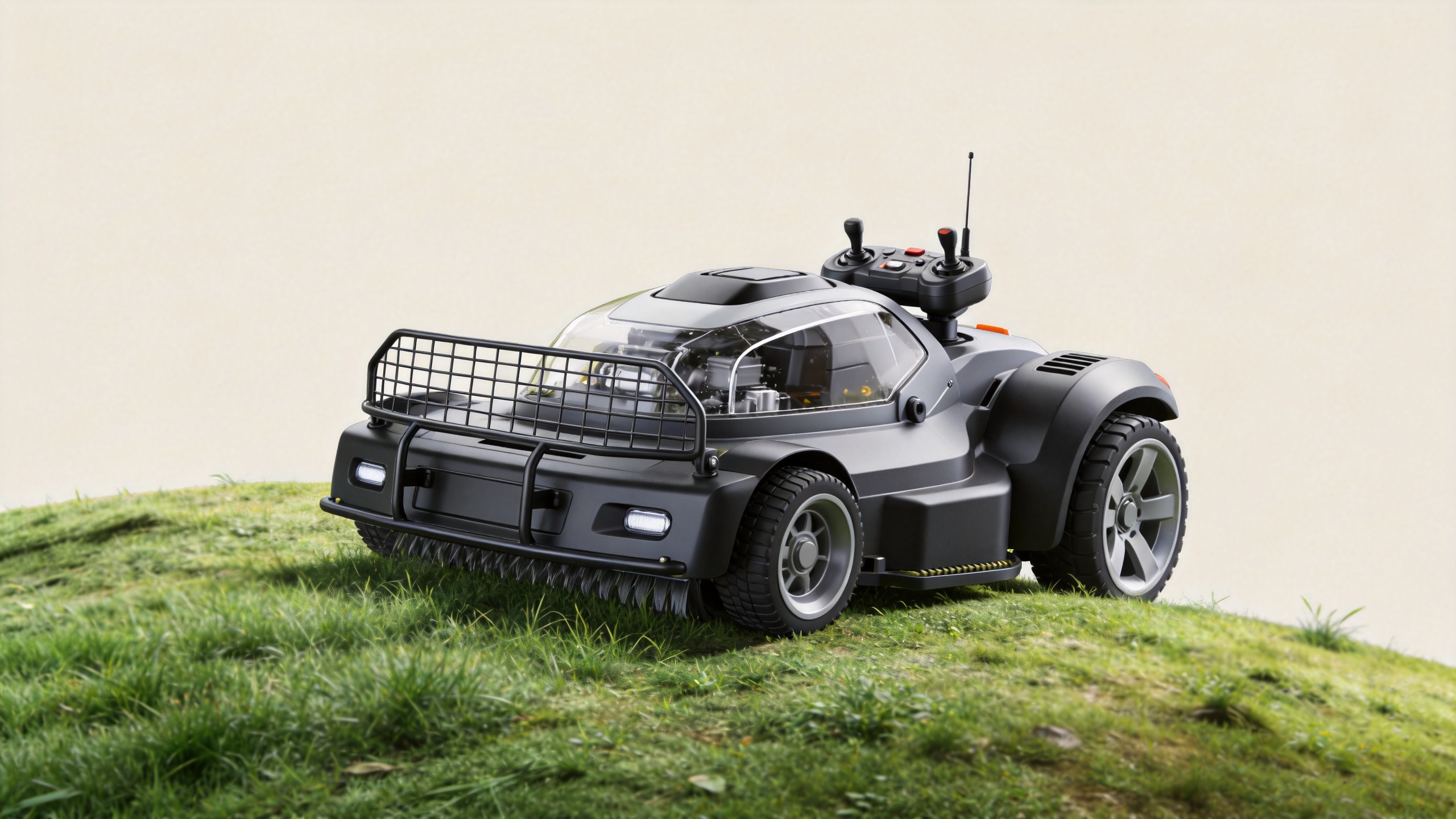
A slope changes more than the angle of the mower. It can alter the relationship between the deck and ground, the direction of discharge, and the consequences of an obstacle strike. A turning maneuver can expose a different deck edge to the downhill side. Dense vegetation can also change what reaches the cutting area. That is why the phrase remote control lawn mower for hills should lead to an application review rather than an assumption that every remote machine suits every bank.
Consider a typical hypothetical maintenance route: a grassy embankment has scattered saplings, an irregular boundary, and a narrow flat area at the bottom. The useful planning sequence is to inspect the route, remove visible loose material where safe to do so, define turning areas, identify excluded zones, and then confirm the machine configuration. The blade guard is one part of that plan; operator position, communication range, surface condition, and local work rules remain important.
A buyer checklist for blade protection design
- Describe the site: Provide slope condition, ground firmness, grass height, hidden-obstacle risk, route width, and nearby assets.
- Request configuration-specific evidence: Ask which deck, blade, guard, skirt, and discharge arrangement applies to the quoted remote control lawn mower.
- Verify operating boundaries: Confirm approved slope, surface, vegetation, weather, and visibility conditions from the manufacturer’s documentation.
- Review stops and interlocks: Ask what happens to travel and blade rotation during emergency stop, signal loss, and abnormal conditions.
- Plan inspections: Include deck condition, guard attachment, blade condition, accumulated debris, and controls in the pre-use routine.
- Set a safe work zone: Keep people, animals, and vulnerable property away from the potential discharge area; adapt the exclusion area to the task and site.
Maintenance keeps protective design effective
Even a well-considered remote control lawn mower design needs regular inspection. Grass buildup can hide damage or affect discharge. Contact with stones, roots, and branches can bend guards or loosen attachment points. Use the manufacturer’s maintenance instructions, isolate the machine before inspection or cleaning, and replace damaged protective components with approved parts. Do not modify a deck opening or remove a guard simply to make clearing material easier unless the manufacturer explicitly provides that procedure.
Questions to send to a supplier
When comparing a remote control lawn mower for hills, make the enquiry specific. Ask for the cutting-deck drawing, guard and discharge details, blade-stop behavior, emergency-stop process, maintenance intervals, recommended inspection points, and documents relevant to the destination market. Also provide photos or a description of the hill, vegetation, route, and obstacles. This creates a more useful technical conversation than asking whether a mower is simply “safe for slopes.”
Final perspective
A suitable blade protection design for a remote control lawn mower is a verified combination of enclosure, access control, debris management, reliable stopping, and disciplined site operation. On hills, those elements must be judged against the real terrain and task. Prioritize the conditions that must be confirmed, then compare the documented configuration—not just a feature list. That approach helps buyers evaluate a remote control lawn mower for hills with safety boundaries and practical work planning in view.