EN
How Does Easy Start Lawn Mower Reduce Starting Failure Rate
An easy start lawn mower can reduce the number of avoidable no-start events by making the fuel, air, spark, and operator-control sequence easier to manage. It does not make a lawn mower immune to maintenance problems. Instead, a well-planned starting system reduces the chance that normal setup errors, inconsistent pulling, or an incorrect control position stop the engine from starting when mowing is due.
From a lawn-equipment technical perspective, the useful question is not simply whether a mower starts with less effort. It is whether the starting routine gives the operator a repeatable way to prepare the machine, start it safely, and notice a problem before it becomes a longer interruption. That distinction matters for homeowners, grounds teams, and buyers comparing an easy start lawn mower with a conventional starting arrangement.
Why Lawn Mower Starting Failures Happen
A lawn mower needs several basics to work together: usable fuel, adequate air flow, a working ignition path, correct controls, and a safe mechanical condition. When any one of those conditions is missing, repeated pull attempts or button presses will not solve the underlying cause. General small-engine troubleshooting guidance commonly identifies stale fuel, dirt, debris, and dirty or disconnected spark plugs as frequent sources of no-start or poor-running complaints.
Starting trouble is often blamed on the operator, but the more accurate view is conditional. A cold engine may need a different setup from a warm engine. A mower that was stored with old fuel may need service rather than more starting force. If the blade area is obstructed or a safety-control condition is not met, the right response is to stop and inspect the equipment according to its manual, not to bypass the interlock.
What “Easy Start” Usually Changes
An easy start lawn mower typically aims to make the normal starting sequence less sensitive to small variations in operator technique. Depending on the model and power system, that can involve a more consistent recoil mechanism, a primer or choke arrangement designed for clearer use, an electric-start function, an automatic choke, or controls that simplify the order of actions. The exact features and their operation must be confirmed in the relevant product documentation.
The benefit is practical: fewer opportunities to use the wrong sequence. Rather than treating the mower as a single pull-and-go tool, think of the process as three stages—preparation, start, and review. This task-based view is more useful than judging a lawn mower only by a convenience label.
Preparation: reduce preventable variables
Before starting an easy start lawn mower, place it on stable ground, clear loose objects from the cutting area, and check that people and pets are outside the intended operating zone. Review the manufacturer’s instructions for fuel, battery, choke, throttle, brake, and blade-control positions. If the mower uses a battery for electric start, check its condition and connections before assuming the engine itself has failed.
Fuel deserves the same attention. Use the fuel type and handling process specified by the manufacturer; do not guess from another machine. If fuel age or contamination is uncertain, treat that as a maintenance question. A convenient start control cannot correct degraded fuel or a blocked fuel path.
Starting: make the sequence repeatable
The central advantage of an easy start lawn mower is repeatability. A clearly defined sequence can help an operator set the required controls, engage the appropriate safety feature, and apply a consistent starting action. On a recoil model, a smoother and more predictable pull can reduce abrupt, uneven attempts. On an electric-start model, the starting action may require less physical effort, but the operator should still follow the specified control sequence and avoid extended cranking.
That repeatability can reduce starting failure rate in two ways. First, it limits errors caused by inconsistent technique. Second, it makes abnormal behavior easier to recognize. If the mower follows the normal sequence but still does not start, the operator has a clearer basis for checking fuel, air filtration, spark-plug condition, battery state, or a service requirement.
Review: distinguish a hard start from a service need
Do not turn repeated failed attempts into a routine. If a lawn mower does not start after the documented procedure, pause before continuing. Check visible items that the manual permits the operator to inspect, such as the fuel condition, air-filter cleanliness, spark-plug lead connection, and battery charge where applicable. For fuel-system, ignition, blade, or safety-interlock work beyond normal user maintenance, use qualified service support.
This review step is important because easy start features are designed to reduce avoidable errors, not to remove operating boundaries. A mower that starts easily one week and resists starting the next may be signaling a maintenance change, storage issue, or component condition that should be addressed.
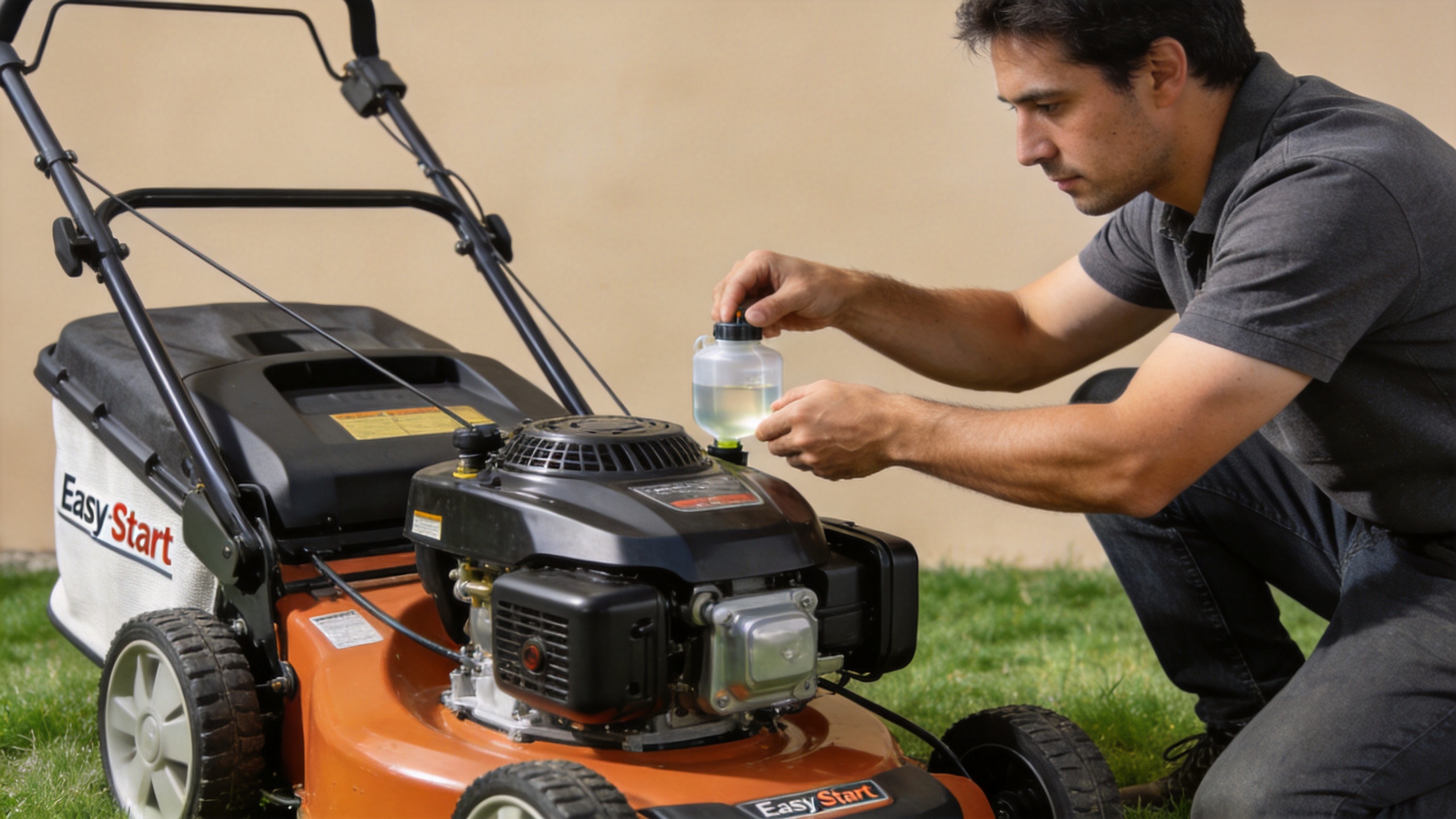
How an Easy Start Lawn Mower Supports Better Routine Care
The easiest way to protect starting reliability is to treat the lawn mower as part of a care routine rather than only a machine used on mowing day. Clean grass and debris from appropriate external areas after use, follow the recommended oil, filter, blade, and storage schedule, and keep the operator’s manual available. For battery-equipped equipment, follow the approved charging and storage guidance instead of leaving the battery unmanaged between seasons.
Maintenance also makes the starting experience more informative. When the machine is routinely checked, a change in starting behavior is easier to isolate. With no baseline, operators may keep trying to start a mower that needs attention. With a baseline, they can compare the current response with the normal sequence and escalate the issue sooner.
What Buyers Should Check Before Choosing a Lawn Mower
Convenience matters, but a starting feature should be evaluated with the full working context. Ask these questions when comparing a lawn mower or an easy start lawn mower:
- What is the documented cold-start and warm-start procedure?
- Which safety controls or interlocks must be engaged before starting?
- Does the design use recoil, electric start, automatic choke, or another system?
- What routine checks are expected from the operator, and which tasks require service support?
- How will storage conditions, mowing frequency, grass debris, and fuel or battery care affect readiness?
- Can the operator safely handle the machine’s weight, control layout, and starting procedure in the actual work area?
These questions shift the decision from a vague promise of easier use to a verifiable operating plan. For commercial or repeated-use situations, it can also be useful to request the current operating instructions and maintenance schedule before committing to a configuration.
Easy Starting Does Not Replace Safe Operation
Efficiency is valuable, but a fast-starting lawn mower is not automatically safer. Inspect the area, respect slopes and uneven ground, keep hands and feet clear of moving parts, and follow all local rules and manufacturer instructions. Do not defeat a safety feature to solve a starting problem. If the equipment indicates an abnormal condition, stop the task and investigate through the approved process.
In short, an easy start lawn mower reduces starting failure rate by standardizing the normal start process and reducing avoidable handling mistakes. Its real value appears when that convenience is combined with fresh fuel or proper battery care, clean air flow, a maintained ignition system, and a disciplined pre-start check. For any lawn mower, those basics remain the foundation of reliable operation.