EN
EN
What Load Capacity Does Remote Control Mower with Tracks Support?
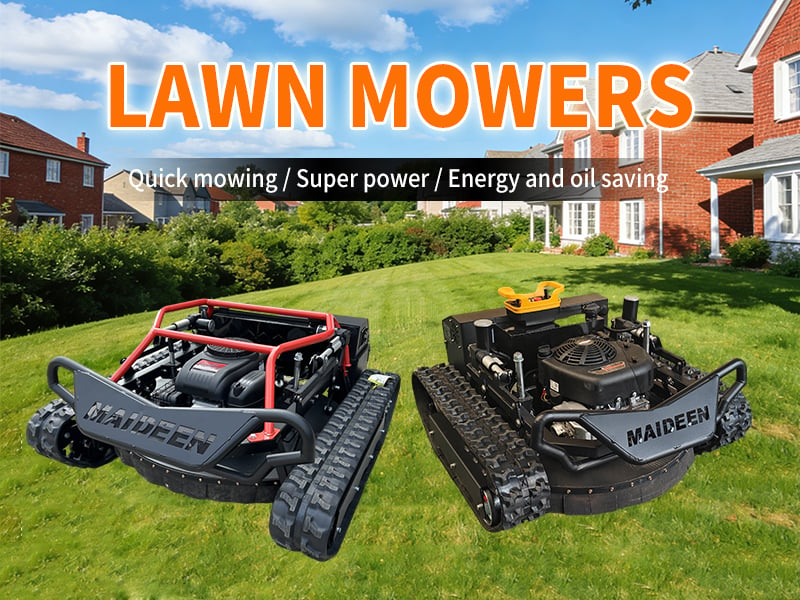
A tracked lawn mower is often chosen for rough ground, embankments, orchards, and overgrown areas where wheels can lose traction. Yet “load capacity” can mean several different things. For a tracked lawn mower, it may refer to machine weight, the amount of material or accessory weight the chassis can carry, the stability margin on a slope, or the load imposed while cutting dense vegetation. Those are not interchangeable ratings.
The most useful answer is therefore not a universal number. A tracked lawn mower supports only the load and operating conditions stated for its exact model and configuration. Track design can improve flotation and traction, but it does not turn every machine into a carrier or make an unapproved attachment safe. Before choosing a remote control mower with tracks, ask for the current specification sheet, approved attachment list, maximum operating slope, and transport instructions.
Start by separating four kinds of “capacity”
When comparing a tracked lawn mower, separate these practical limits before discussing performance:
- Operating weight: the mower’s own ready-to-work mass, sometimes including standard equipment and fluids. It is not a payload rating.
- Payload or carrier rating: a separate limit, if the manufacturer explicitly permits carrying an implement, hopper, or other load.
- Attachment load: the weight and torque demand of a mower deck, flail head, or other approved tool. Compatibility must be confirmed for the exact machine.
- Terrain-limited usable capacity: the reduced margin created by slope, wet ground, ruts, side loading, obstacles, and vegetation density.
This distinction matters because a tracked lawn mower can appear stable on level ground but have much less usable margin on a cross-slope or soft shoulder. A published machine weight can help with trailer planning, but it does not tell you how much additional equipment the unit may carry.
Why tracks help, but do not replace a rated limit
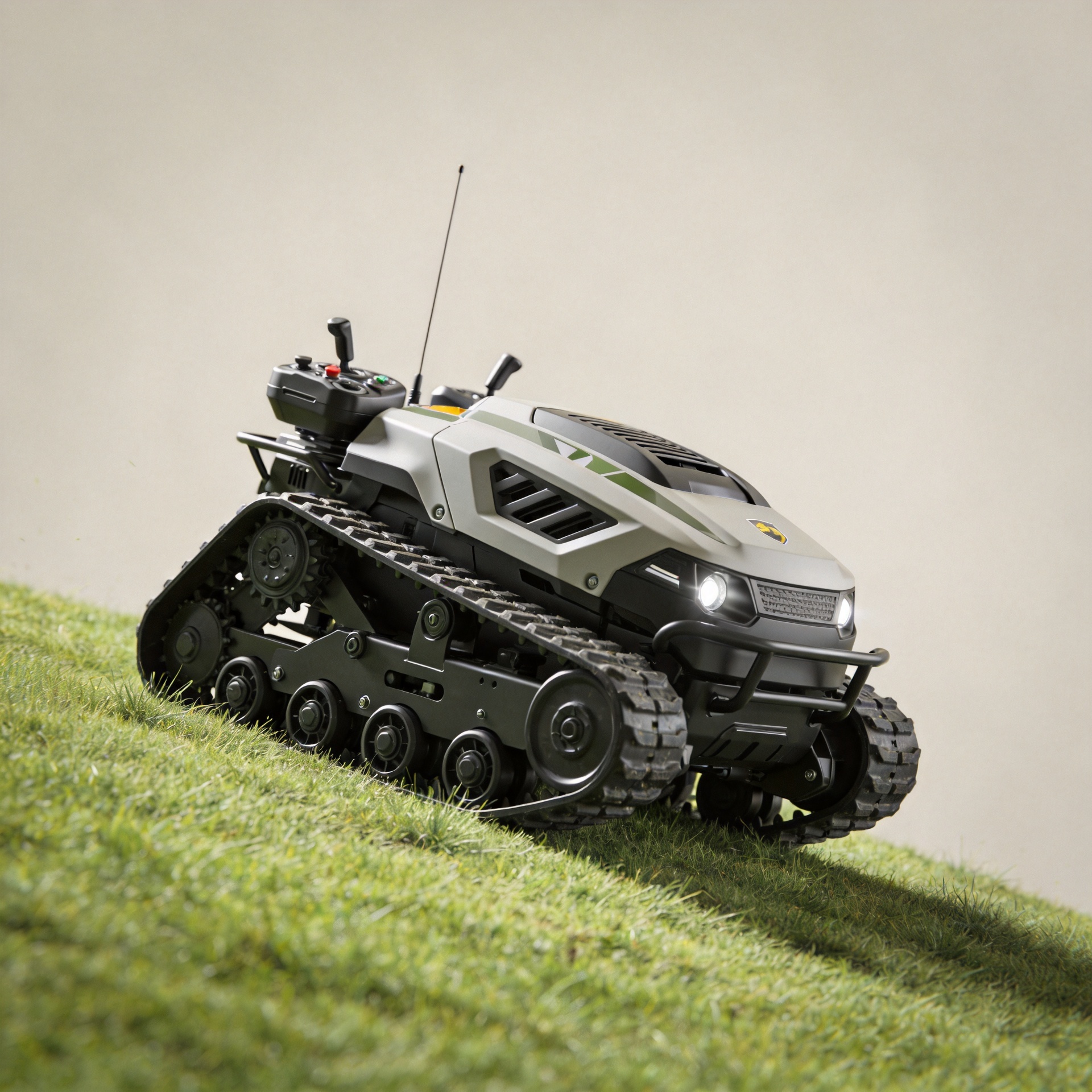
Tracks spread contact over a longer footprint than many wheeled layouts, which can help a tracked lawn mower maintain traction on uneven or soft terrain. A low center of gravity and remote operation may also keep the operator away from a hazardous cutting area. These advantages are relevant, but they do not erase the effects of gravity, surface moisture, abrupt turns, or a raised attachment.
Search results for this category commonly emphasize steep slopes, rough fields, and wet areas. They also show that published specifications vary by model: cutting width, operating weight, ground pressure, engine output, and slope capability may all be listed separately. For that reason, do not infer the capacity of one tracked lawn mower from another machine’s figures. Even similar-looking units can have different track geometry, drive systems, deck options, and approved working envelopes.
What reduces usable capacity in real work?
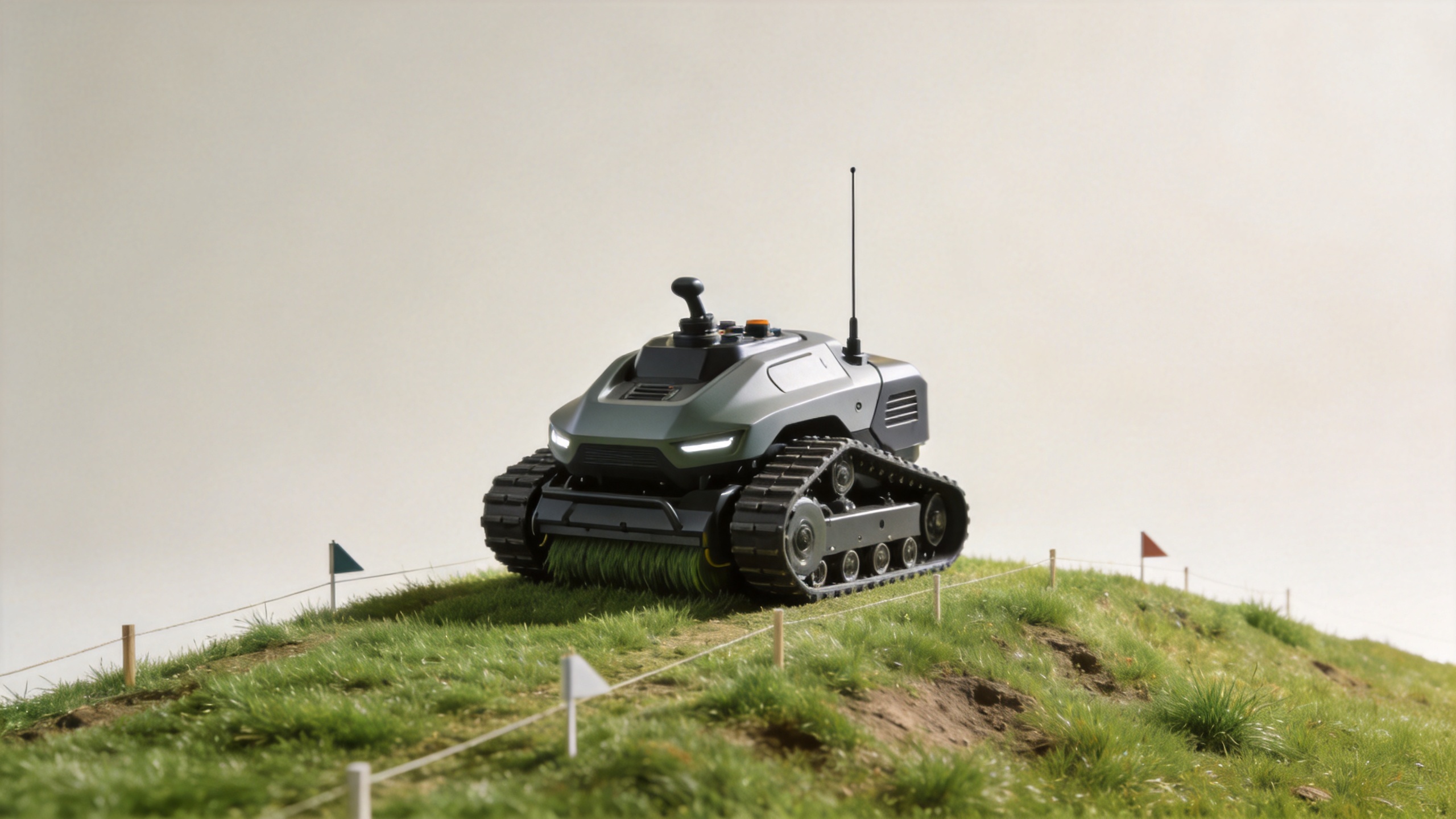
A remote control mower with tracks should be evaluated in its actual work condition, not just on a clean showroom floor. The following factors can reduce the practical margin available to a tracked lawn mower:
- Slope direction and angle. Side-slope travel, a crest, and a sudden transition can affect stability differently. OSHA’s riding-mower guidance says not to exceed manufacturer-specified slope limits; that general rule is useful even though a tracked lawn mower has a different configuration.
- Ground condition. Wet clay, loose gravel, hidden holes, and matted grass change grip and can make steering corrections less predictable.
- Vegetation load. Tall, woody, or tangled growth can raise cutting resistance and demand more from the deck and drive system.
- Added equipment. Guards, tool heads, collection equipment, or custom additions can shift the center of gravity and may fall outside the approved configuration.
- Operating method. Fast turns, sudden reversals, or travel across a slope can create dynamic loads beyond what a stationary inspection suggests.
In other words, a tracked lawn mower should be selected around the hardest recurring condition, not the easiest area of the site. A unit that is comfortable on a dry, level access road may need a different operating plan at the edge of a drainage channel or orchard row.
Use a manufacturer-confirmed checklist
Before ordering a tracked lawn mower, provide the supplier with a simple site brief and request written confirmation of the relevant limits. That conversation is more useful than asking only, “How much can it carry?” Include:
- The steepest measured slope and whether the machine will travel up/down or across it.
- Surface conditions: firm soil, wet grass, loose stone, ruts, roots, or obstacles.
- Vegetation type, typical height, density, and whether woody material is present.
- The intended cutting attachment and every optional item that will stay on the machine.
- Required working hours, route length, turning areas, and access points.
- Trailer, ramp, tie-down, and storage requirements based on the confirmed operating weight.
Ask the supplier to identify the maximum approved operating slope for the stated configuration, any permitted attachment mass, required counterweights or guards, and restrictions for wet or cross-slope work. If a capacity figure is not documented, treat it as unconfirmed rather than assuming that the tracks provide extra allowance.
How to make the final choice
For a tracked lawn mower, capacity is more reliably understood as a system of limits: structure, attachment, terrain, traction, and operating procedure. The right remote control mower with tracks is the one whose documented limits still leave a sensible safety margin for your hardest normal job. Do not add equipment simply because the chassis looks substantial.
Begin with the site, then compare approved configurations. Confirm the exact model documentation, arrange a demonstration under representative ground conditions where possible, and train operators on the manufacturer’s instructions. That approach helps you select a tracked lawn mower for reliable work while keeping assumptions about load capacity out of the decision.