EN
EN
Why Remote Control Slope Lawn Mowers Help Prevent Falls on Hillsides
Atruncus herbarum remote control can make hillside mowing easier to manage because the operator does not need to stand behind, ride on, or walk immediately beside the machine. That distance can reduce direct exposure to a moving mower on uneven ground. It does not, however, make a slope automatically safe. A machina falciatoris per remotum controllo pro colli still depends on terrain assessment, an approved operating angle, surface conditions, equipment condition, and disciplined operation.
The useful question is not simply whether a mower can climb a hill. It is whether the mower, the hillside, and the work plan are suited to one another. For landscaping teams and property managers, that shift—from asking for a single capability to checking the complete work condition—helps prevent avoidable loss-of-control and rollover situations.
Remote Operation Reduces the Operator’s Exposure
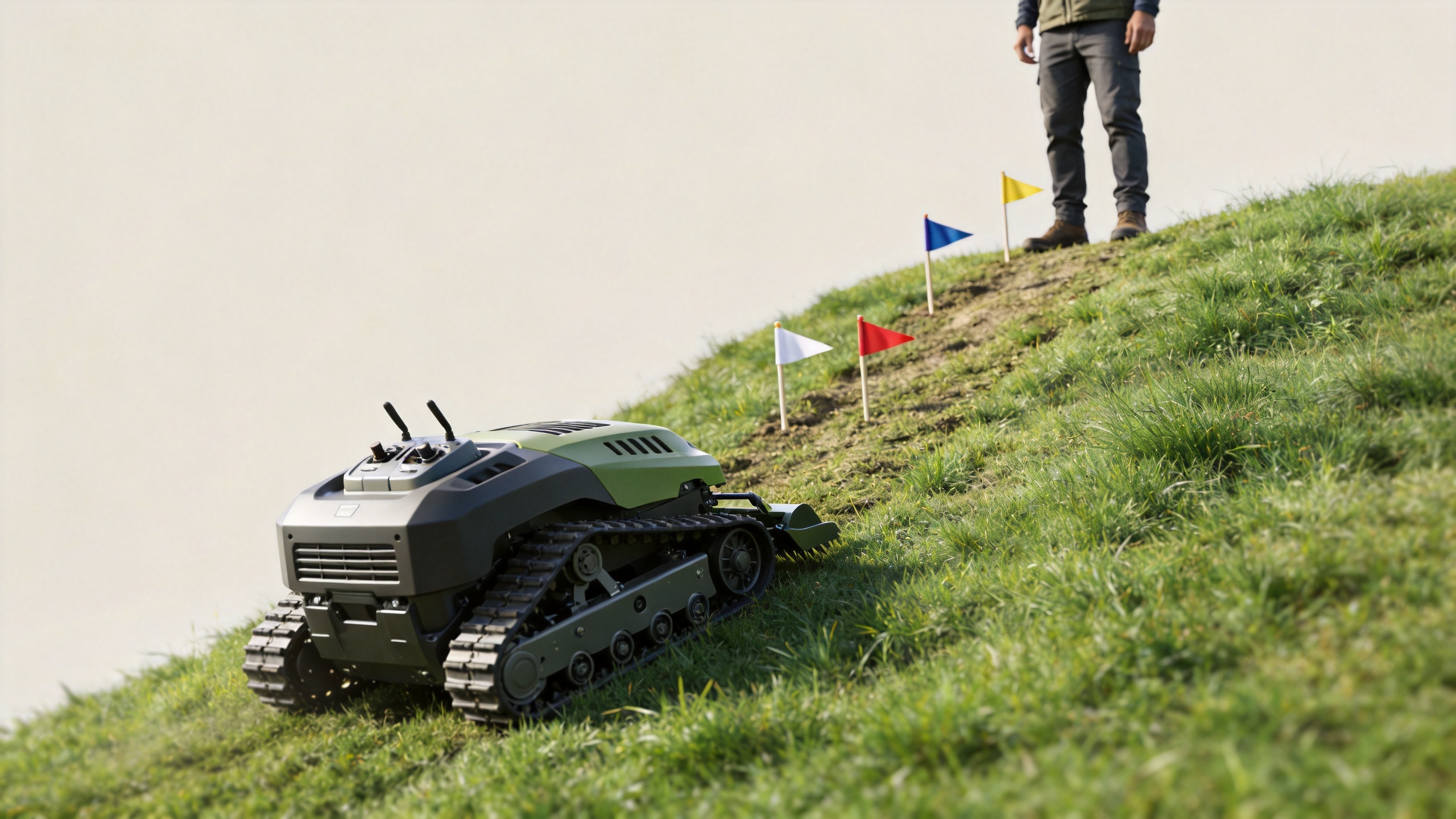
The first safety benefit of a truncus herbarum remote control is position. On a difficult slope, an operator may be able to stand on more stable ground, outside the mower’s immediate travel path and away from its potential downhill route. This can be particularly helpful where footing is affected by loose grass, damp soil, ruts, stones, or hidden changes in grade.
Distantia non est substitutio pro controllo. Operator necesse habet visum clarum de machina, de via intenta, et de area sub ea. Si visus obstruitur a gramine alto, a fruticibus, a culmine, aut a mutatione terreni, tutius est sistere et revalutare quam solummodo in remotum confidere. Positio controllo remoto magis tractabilis est cum operator habet punctum observationis planificatum et nullas personas, animalia, vehicula, aut margines vulnerabiles in via falciatoris.
Stabilitas incipit ab designo falciatoris — et finitur ad locum
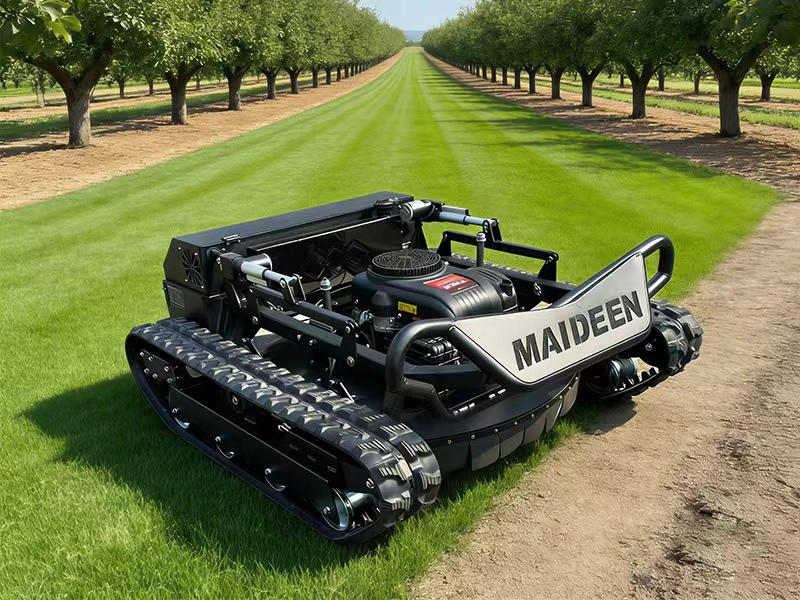
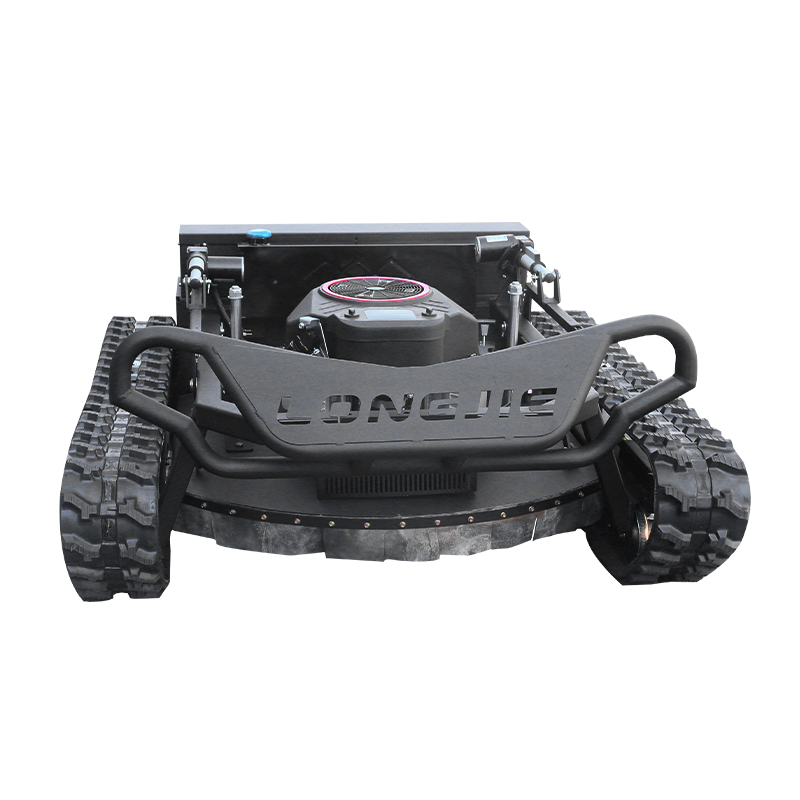
Amachina falciatoris per remotum controllo pro colli potest uti chasside humili, stante lata, traccis reptantium, aut distributione ponderis destinatae ad terram inaequalem. Haec praesidia possunt stabilitatem supportare, sed non constituunt angulum universalem tutum. Ratio penduli approbata in instructionibus fabricantis manet punctum initiale pro quolibet opere.
Condicio superficiei potest mutare eventum etiam cum inclinatio mensurata videtur acceptabilis. Herba madida, lutum, grava mobilis, vegetatio compressa, radices nuda, et eminentiae transversales in declivitate possunt minuere tractionem vel mutare modum quo pondus transferitur. Collis etiam potest continere fossas, canales, marginis retinentes, et abrupta quae sunt magis importantia quam gradus medius. Inspecte totam viam potius quam iudicate locum ex uno puncto commodi.
Ut conservativum referentiam planificandi, directiva OSHA pro falciatoribus sedentibus dicit quod, ubi limites fabricantis non sunt disponibiles, operatores debent aestimare terrenum et vitare declivitates super 15 gradus si nulla alia informatio est disponibilis. Haec non est aestimatio pro omni machina teleoperata. Est monitio ut documentatio specifica machinae obtineatur et sequatur antequam opus incipiat.
Cur Route Planning Est Magis Importans Quam Ascensus Directus
Systema remoti controlus adiuvat operatorum ut deliberatas vias eligant, non autem sequantur lineam festinatam et improvisatam. Antequam falces agas, collem in sectiones tractabiles divide. Puncta ingressus et egressus, directionem itineris quae a praeceptis instrumentorum permittitur, loca conversionis, et zonas exclusionis prope obstacula vel marginem identifica.
Evita conversiones subitas, mutationes repentinas directionis, et cursus ad altam velocitatem prope summitatem aut basim penduli. Si via manœvram requirit quam falx intra documentata præcepta operationis perficere non potest, aliam methodum pro ea sectione utere. Hic est locus ubi truncus herbarum remote control ut pars plani operis, non ut solutio pro omni colli, tractanda est.
Collem ante singulas sessiones inspice
- Sectionem pertinacissimam mensura aut verifica, et cum limite a fabricante dato compara.
- Viam propositam perambula ut foramina, sulcos, radices, saxa, effossiones, et terram mollem invenias.
- Mark ditches, culverts, retaining walls, water, drop-offs, and other boundaries that need a buffer.
- Check whether dew, rain, irrigation, or loose cuttings have changed traction.
- Confirm that the operator can keep the mower in sight through the entire planned pass.
Traction, Cutting Load, and Speed Work Together
Falling or sliding risk is not only about angle. Dense, tall, or wet grass can increase cutting load, while a sudden patch of loose soil can reduce grip. A machina falciatoris per remotum controllo pro colli should therefore be operated at a pace that allows the operator to observe changes in motion and stop before a small problem becomes a recovery problem.
Do not assume that a powerful drive system makes every condition manageable. Cutting height, vegetation density, ground moisture, travel direction, and the condition of tracks or tires all affect how the machine behaves. When any one of these conditions becomes uncertain, reduce the task: stop, inspect, clear the route if appropriate, or select a different piece of equipment.
Operator Controls Still Need a Safe Work System
Remote operation changes the operator’s location, but it does not remove the need for training and site control. Before starting, test the stop function, steering response, communication range, and any emergency controls in a flat, clear area. Keep bystanders out of the work zone and establish a no-entry area below the mower’s possible travel line.
Personal protective equipment and clear communication remain relevant. Safety glasses, hearing protection, suitable footwear, and non-loose clothing can still matter during setup, inspection, and nearby work. If multiple people are involved, one person should have clear responsibility for the remote controls and for deciding when conditions require a stop.
A Practical Pre-Operation Decision Checklist
- Confirm the machine: Review the model-specific slope limit, operating manual, emergency-stop procedure, and maintenance condition.
- Confirm the ground: Check slope angle, traction, obstacles, drainage features, and the stability of the access route.
- Confirm the job: Match cutting height, vegetation condition, travel route, and work speed to the site—not just to a specification sheet.
- Confirm the people: Set a controlled work area, retain sight of the mower, and keep others away from the hillside and runout area.
- Confirm the stop decision: Pause immediately if traction, visibility, machine response, or weather differs from the initial assessment.
Choose a Machine Based on Verified Conditions
Principale praeparatum est unius truncus herbarum remote control on a hillside is that it can help separate the operator from the machine’s immediate working zone while supporting controlled route planning. Its ability to help prevent falls comes from a combination of distance, stable machine design, conservative operating limits, and careful site management.
Before purchasing or assigning a machina falciatoris per remotum controllo pro colli , pete fornire al fornitore l'intervallo di pendenza approvato, la direzione di marcia raccomandata, la configurazione della trazione, la procedura di arresto e la documentazione per il modello effettivo. Quindi confrontate tali risposte con la sezione più ripida del sito, le condizioni della superficie, la vegetazione, i confini e le variazioni stagionali. Una corrispondenza accurata è più preziosa di una promessa generica riguardo alle capacità su pendii.