EN
EN
Why Remote Control Slope Lawn Mowers Help Prevent Falls on Hillsides
A remote control lawn mower can make hillside mowing easier to manage because the operator does not need to stand behind, ride on, or walk immediately beside the machine. That distance can reduce direct exposure to a moving mower on uneven ground. It does not, however, make a slope automatically safe. A remote control slope lawn mower still depends on terrain assessment, an approved operating angle, surface conditions, equipment condition, and disciplined operation.
The useful question is not simply whether a mower can climb a hill. It is whether the mower, the hillside, and the work plan are suited to one another. For landscaping teams and property managers, that shift—from asking for a single capability to checking the complete work condition—helps prevent avoidable loss-of-control and rollover situations.
Remote Operation Reduces the Operator’s Exposure
The first safety benefit of a remote control lawn mower is position. On a difficult slope, an operator may be able to stand on more stable ground, outside the mower’s immediate travel path and away from its potential downhill route. This can be particularly helpful where footing is affected by loose grass, damp soil, ruts, stones, or hidden changes in grade.
Distance is not a substitute for control. The operator still needs a clear view of the machine, the intended route, and the area below it. If visibility is blocked by tall grass, brush, a crest, or a change in terrain, stopping and reassessing is safer than relying on the remote alone. A remote-control position is more manageable when the operator has a planned observation point and no people, animals, vehicles, or vulnerable edges in the mower’s path.
Stability Starts With the Mower’s Design—and Ends With the Site
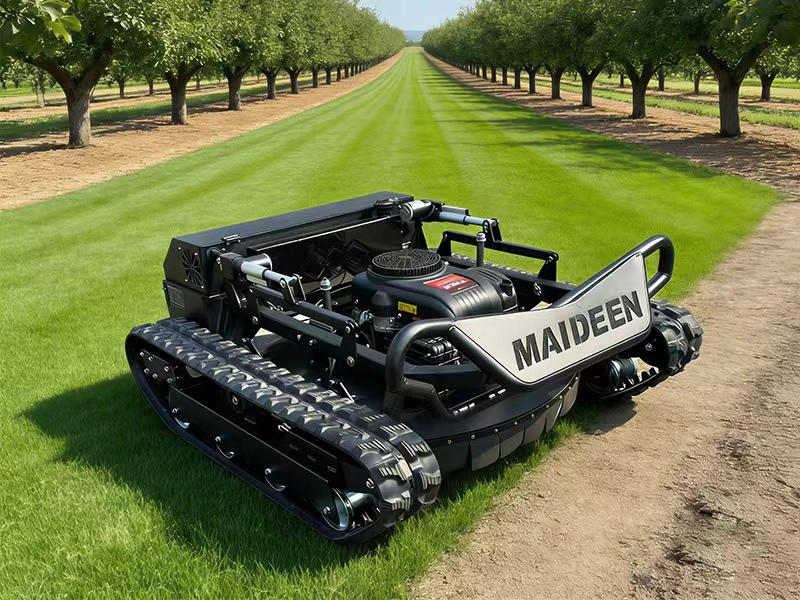
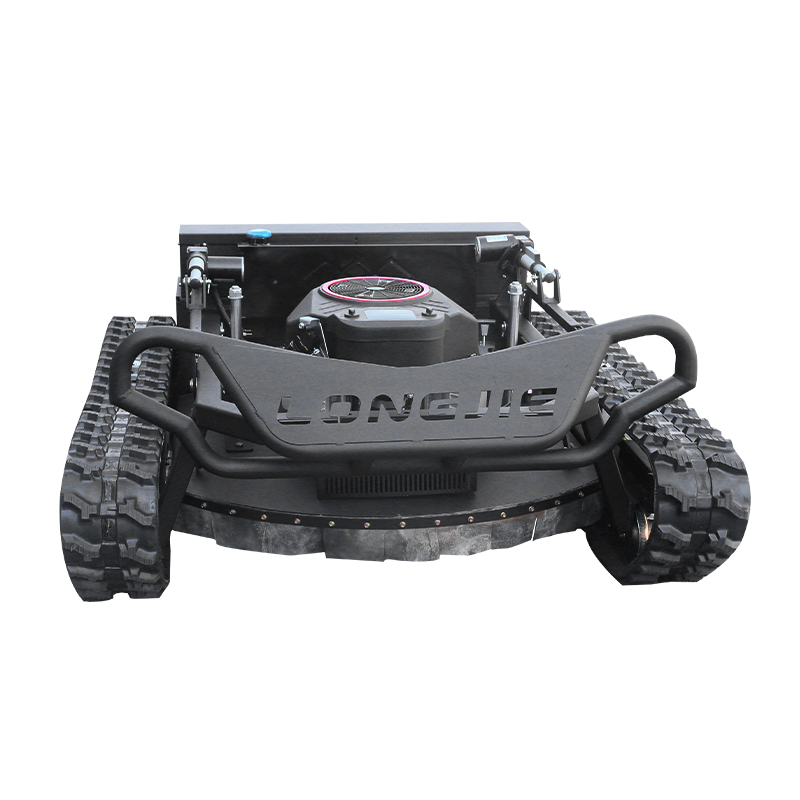
A remote control slope lawn mower may use a low-profile chassis, a broad stance, crawler tracks, or a weight distribution intended for uneven ground. These features can support stability, but they do not establish a universal safe angle. The approved slope rating in the manufacturer’s instructions remains the starting point for any job.
Surface condition can change the result even when the measured slope seems acceptable. Wet grass, mud, loose gravel, matted vegetation, exposed roots, and cross-slope bumps can reduce traction or change how weight transfers. A hillside can also contain ditches, culverts, retaining edges, and drop-offs that are more important than the average grade. Inspect the entire route rather than judging the site from one convenient point.
As a conservative planning reference, OSHA guidance for riding mowers says that when manufacturer limits are unavailable, operators should evaluate terrain and avoid slopes over 15 degrees if no other information is available. That is not a rating for every remote-control machine. It is a reminder to obtain and follow the specific machine documentation before work begins.
Why Route Planning Matters More Than a Straight Climb
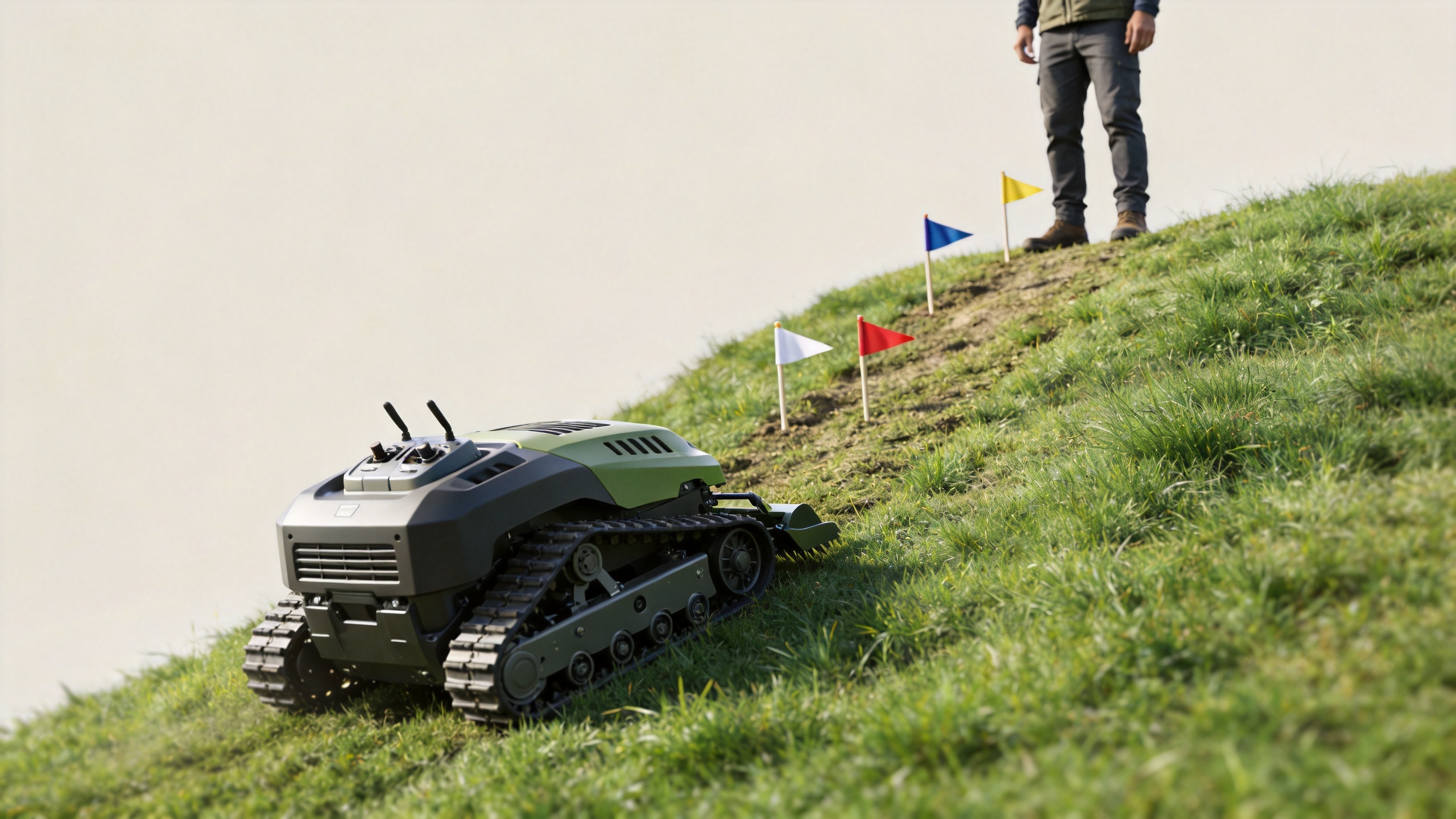
A remote-control system can help the operator make deliberate route choices instead of following a rushed, improvised line. Before mowing, divide the hillside into workable sections. Identify the entry and exit points, the direction of travel permitted by the equipment instructions, turning areas, and exclusion zones near obstacles or edges.
Avoid abrupt turns, sudden direction changes, and high-speed travel near the top or bottom of a slope. If the route requires a maneuver that the mower cannot complete within its documented operating guidance, use another method for that section. This is where a remote control lawn mower should be treated as part of a task plan, not as a solution for every hillside.
Check the hillside before each session
- Measure or verify the steepest relevant section and compare it with the manufacturer’s rated limit.
- Walk the planned route to find holes, ruts, roots, rocks, washouts, and soft ground.
- Mark ditches, culverts, retaining walls, water, drop-offs, and other boundaries that need a buffer.
- Check whether dew, rain, irrigation, or loose cuttings have changed traction.
- Confirm that the operator can keep the mower in sight through the entire planned pass.
Traction, Cutting Load, and Speed Work Together
Falling or sliding risk is not only about angle. Dense, tall, or wet grass can increase cutting load, while a sudden patch of loose soil can reduce grip. A remote control slope lawn mower should therefore be operated at a pace that allows the operator to observe changes in motion and stop before a small problem becomes a recovery problem.
Do not assume that a powerful drive system makes every condition manageable. Cutting height, vegetation density, ground moisture, travel direction, and the condition of tracks or tires all affect how the machine behaves. When any one of these conditions becomes uncertain, reduce the task: stop, inspect, clear the route if appropriate, or select a different piece of equipment.
Operator Controls Still Need a Safe Work System
Remote operation changes the operator’s location, but it does not remove the need for training and site control. Before starting, test the stop function, steering response, communication range, and any emergency controls in a flat, clear area. Keep bystanders out of the work zone and establish a no-entry area below the mower’s possible travel line.
Personal protective equipment and clear communication remain relevant. Safety glasses, hearing protection, suitable footwear, and non-loose clothing can still matter during setup, inspection, and nearby work. If multiple people are involved, one person should have clear responsibility for the remote controls and for deciding when conditions require a stop.
A Practical Pre-Operation Decision Checklist
- Confirm the machine: Review the model-specific slope limit, operating manual, emergency-stop procedure, and maintenance condition.
- Confirm the ground: Check slope angle, traction, obstacles, drainage features, and the stability of the access route.
- Confirm the job: Match cutting height, vegetation condition, travel route, and work speed to the site—not just to a specification sheet.
- Confirm the people: Set a controlled work area, retain sight of the mower, and keep others away from the hillside and runout area.
- Confirm the stop decision: Pause immediately if traction, visibility, machine response, or weather differs from the initial assessment.
Choose a Machine Based on Verified Conditions
The main advantage of a remote control lawn mower on a hillside is that it can help separate the operator from the machine’s immediate working zone while supporting controlled route planning. Its ability to help prevent falls comes from a combination of distance, stable machine design, conservative operating limits, and careful site management.
Before purchasing or assigning a remote control slope lawn mower, ask the supplier for the approved slope range, recommended travel direction, traction configuration, stopping procedure, and documentation for the actual model. Then compare those answers with the site’s steepest section, surface condition, vegetation, boundaries, and seasonal changes. A careful match is more valuable than a broad promise about hillside capability.