EN
EN
How Many Working Functions Can a Multifunctional Wireless Remote Control Lawn Mower Realize?
A remote control lawn mower can support several working functions, but there is no reliable universal number. The answer depends on the machine’s confirmed configuration, the cutting attachment, the terrain, and the controls supplied with that model. For buyers comparing a multifunctional wireless remote control lawn mower, it is more useful to group functions by the job they support than to count features from a brochure.
From a technical-selection perspective, a remote control lawn mower should be assessed through three connected questions: what it can cut, how it can be controlled, and what conditions must be met for safe operation. A mower that offers remote travel and blade control may be a strong fit for one site, while a project that includes steep ground, dense vegetation, narrow turns, or public access may require additional verification before any function is treated as available.
Start with a function map, not a feature count
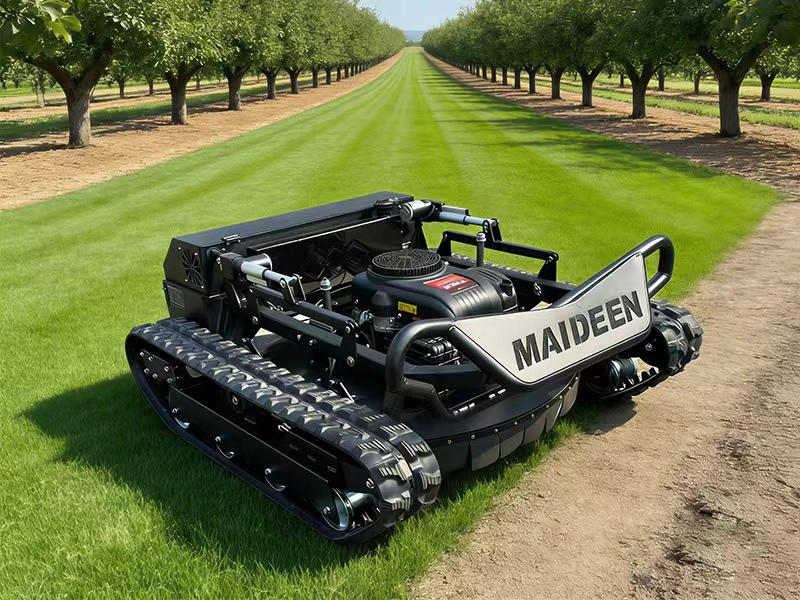
A multifunctional wireless remote control lawn mower is often described as if “multifunctional” automatically means it can do every maintenance task. In practice, a remotely operated mower usually combines functions from four categories: travel and steering, cutting and vegetation handling, operator protection, and routine-service support. The final function set must be confirmed against the supplier’s current specification and operating instructions.
That distinction matters. A function is not simply a switch on a handset; it is a capability that must work within stated limits. For example, remote steering can make it easier to position a machine around a work zone, yet it does not remove the need to maintain line of sight, inspect the route, or keep people outside the operating area.
1. Travel, steering, and route-control functions
The first working group is movement. A remotely operated mower may allow forward and reverse travel, left and right steering, turning, stopping, and speed adjustment through a wireless controller. These functions can help an operator manage repeated passes or keep distance from an area that is uncomfortable to walk behind a conventional mower.
However, the value of travel control is determined by site conditions. Before operating a remotely operated mower, inspect the intended route for loose debris, holes, hidden drop-offs, fixed obstacles, and restricted turning areas. General mowing-safety guidance similarly emphasizes an advance site inspection. If the surface changes from dry grass to wet soil, loose stones, or uneven ground, the route and operating plan may need to change as well.
2. Cutting and vegetation-management functions
The central task of a remotely operated mower is vegetation cutting. Depending on the confirmed deck, blade system, power source, and guarding, the machine may be intended for regular lawn cutting, taller grass, weeds, light brush, or maintenance in orchard and roadside areas. A multifunctional wireless remotely operated mower may also let the operator engage or disengage the cutting system separately from travel.
Do not assume that a cutting function applies to every material. Grass height, moisture, stem density, hidden debris, and the desired finish all affect whether a given machine and attachment are suitable. Rather than asking only whether the remotely operated mower can cut a certain type of growth, buyers should request the applicable vegetation conditions, recommended operating method, and any attachment limitations in writing.
3. Terrain-adaptation functions
Many buyers investigate a remotely operated mower because the work area has slopes, rough ground, banks, or irregular vegetation. Depending on configuration, relevant functions may include traction-oriented travel, controlled speed, responsive steering, and a lower-risk operator position away from the machine. These are terrain-adaptation functions, not automatic proof that a machine is suitable for every incline.
Manufacturer angle limits, surface condition, route direction, obstacles, and weather must all be checked before work starts. OSHA materials on mower rollover risk illustrate why slope assessment and equipment matching cannot be reduced to a generic claim. If a site has steep sections or unprotected edges, the operator should follow the model-specific manual and the site’s safety rules rather than rely on a stated “all-terrain” label.
4. Wireless-control and safety functions
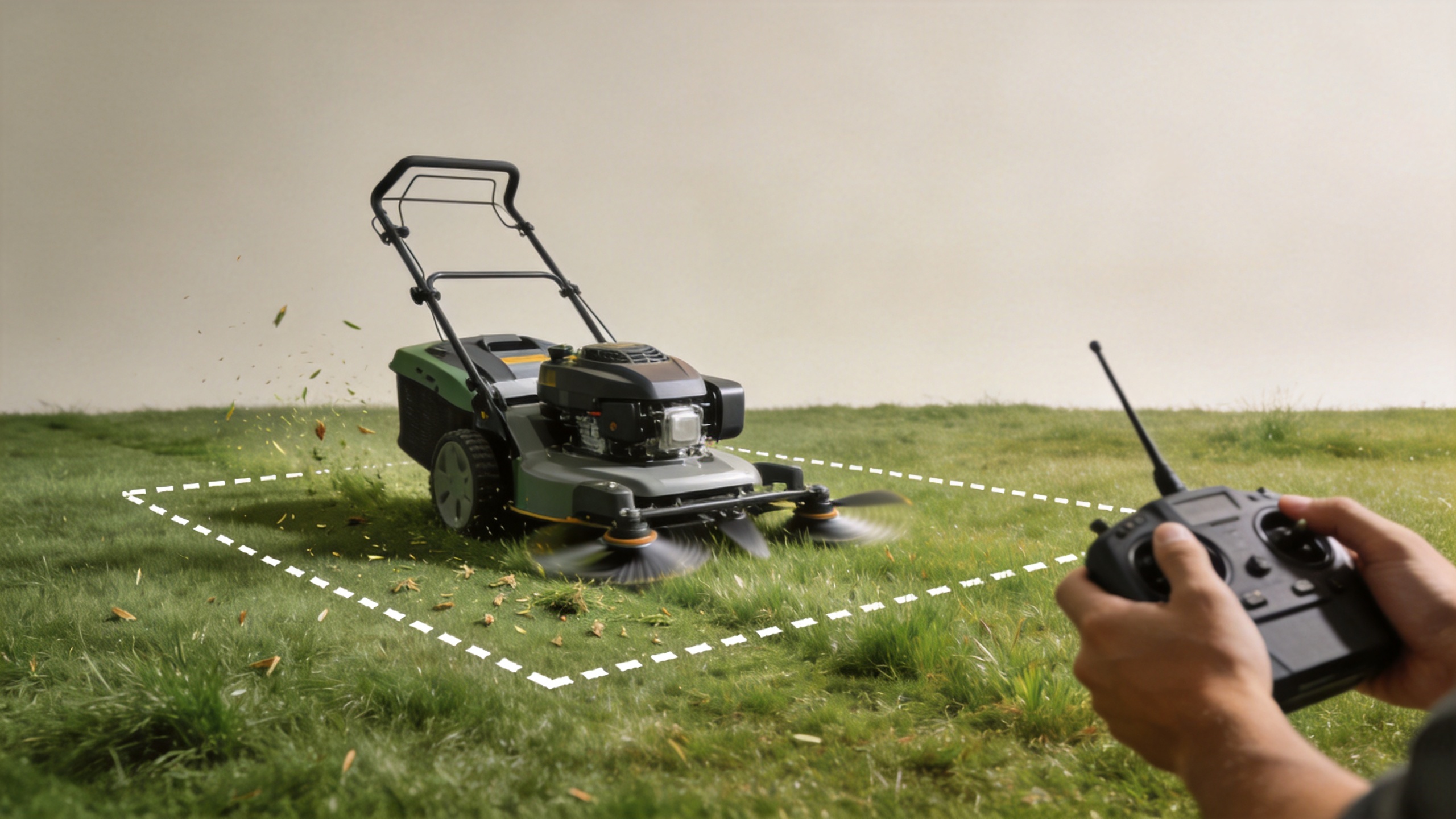
A remotely operated mower may include wireless start/stop control, controlled movement, and an emergency-stop function. Safety-oriented remote-mowing material commonly treats visibility and emergency stopping as important controls. For a buyer, the key point is verification: confirm how the emergency stop works, what range and conditions apply, what happens if communication is interrupted, and what pre-start checks the manufacturer requires.
Remote operation does not mean unattended operation. The person using a remotely operated mower still needs a clear view of the machine, a defined exclusion zone, suitable personal protective equipment, and a plan for changes in traction or visibility. Efficiency can be useful, but it does not replace a site check or trained operating judgment.
5. Adjustment, maintenance, and work-planning functions
Some functions support the task before and after cutting rather than during the pass itself. A multifunctional wireless remotely operated mower may offer an adjustable cutting-height arrangement, service-access features, or controls that support a repeatable route. Whether these are standard, optional, or unavailable is configuration-specific.
For procurement, divide the requirement into preparation, work, and review. Preparation includes checking the ground, vegetation, access route, and safety perimeter. Work includes travel, steering, cutting, and monitored stopping. Review includes cleaning, inspecting wear items, recording any route issue, and confirming maintenance needs. This approach helps distinguish genuinely useful functions from options that add unnecessary operating complexity.
How to confirm the real function count
Instead of accepting a single headline number, use this verification checklist for a remotely operated mower:
- List the required work tasks: mowing, taller-grass management, route access, slope work, or repeated maintenance.
- Ask which travel, cutting, safety, and adjustment functions are included in the exact configuration.
- Request the applicable terrain, vegetation, slope, and weather boundaries for each claimed function.
- Confirm controller range, stop behavior, visibility expectations, training needs, and maintenance requirements.
- Separate essential functions from optional accessories or future customization requests.
Conclusion
A multifunctional wireless remotely operated mower can realize a useful set of travel, cutting, terrain-management, safety, and support functions. Still, the right answer is not a fixed number. The most suitable remotely operated mower is the one whose confirmed functions match the actual work area, vegetation, safety plan, and maintenance process. Before purchasing, provide the supplier with site photos, slope information, vegetation conditions, operating frequency, and the functions that are truly essential so the proposed configuration can be checked against the intended job.