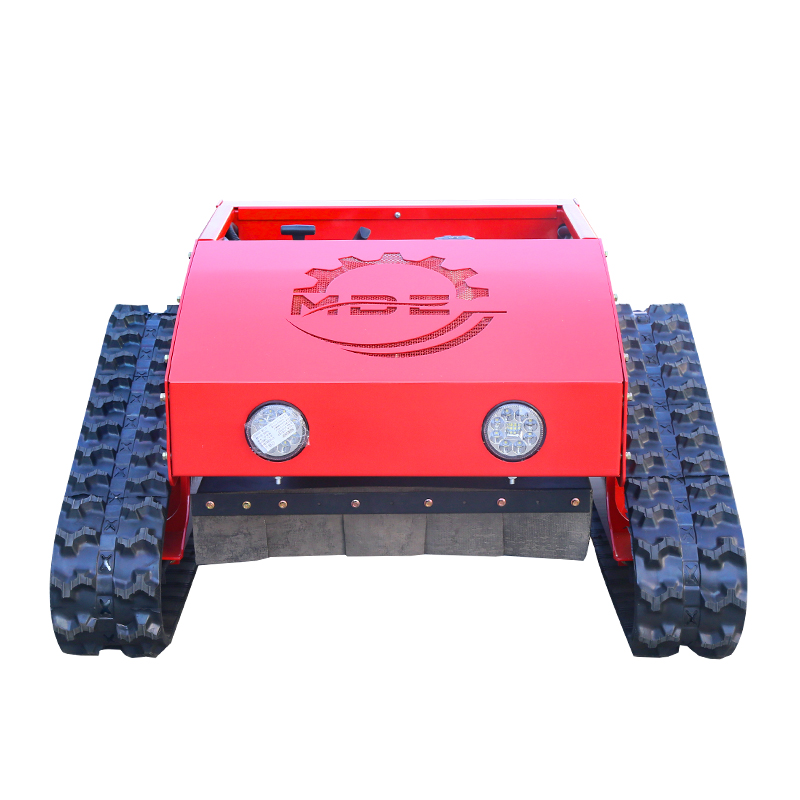
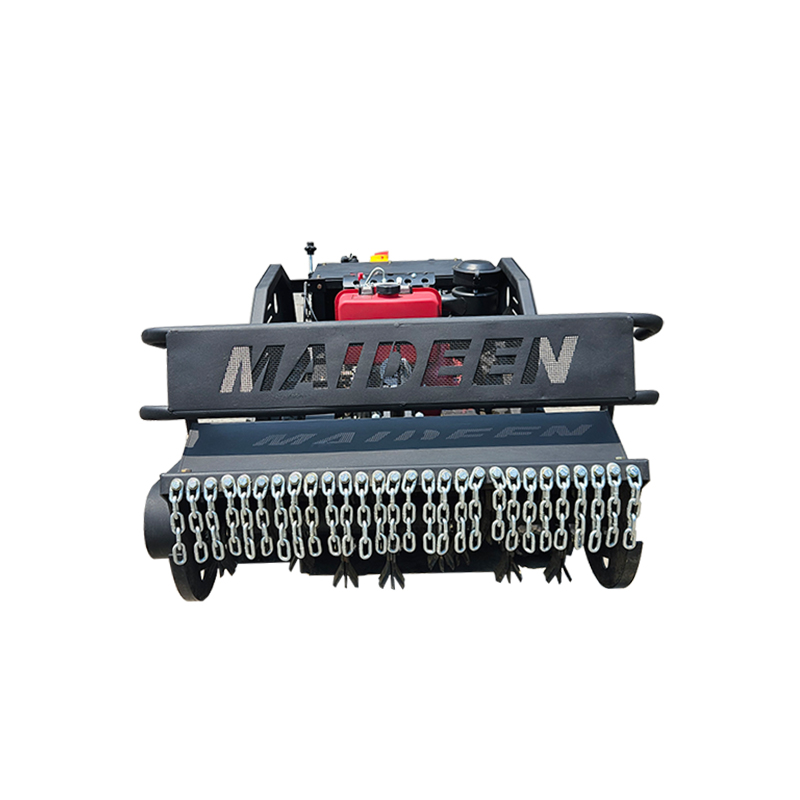
EN
EN
What Operation Safety Rules For Remote control grass cutter machine
A remote grass cutter can keep an operator away from noise, flying debris, and difficult ground, but distance does not remove responsibility. A safe job begins before the engine starts and continues until the machine is parked, isolated, and checked. This guide gives a practical operating routine for a remote control grass cutter machine; it does not replace the manufacturer’s manual, safety decals, training requirements, or local rules.
Efficiency matters, but in remote work the site check cannot be skipped. The central rule is simple: do not ask a remote grass cutter to work in a place you have not first inspected on foot. Ground condition, blind spots, bystanders, obstacles, weather, and the particular machine’s limits all affect whether a task should proceed.
1. Read the machine-specific rules before every new site
Start with the operating manual and the warning labels for the exact remote grass cutter you will use. Confirm the approved operating range, slope guidance, emergency-stop procedure, transport method, fuel or battery precautions, maintenance intervals, and any restrictions on wet grass or unstable ground. Do not assume that a feature seen on another remote mower exists on yours.
OSHA guidance for mower work emphasizes understanding the operation, maintenance, limitations, and warnings in the equipment manual. That principle is especially important for a remote control grass cutter machine, where the operator may be standing away from the cutting deck and cannot rely on the same cues as a walk-behind user. If the manual, decals, or controls are unclear, stop and obtain qualified instruction before operating.
2. Inspect the work zone before bringing in the remote grass cutter
Walk the full route while the remote grass cutter is off. Mark or remove stones, wire, branches, hidden holes, irrigation hardware, discarded metal, and other debris that could be thrown, wrapped around a blade, or caught in the track or wheels. Check for drop-offs, drainage channels, soft shoulders, loose gravel, and changes in slope that may not be visible from the control position.
Look beyond the grass. Identify roads, paths, buildings, parked vehicles, livestock, utility boxes, children’s play areas, and any place where a person could enter the work zone. Plan where the operator will stand, where the machine will turn, and where it can be stopped safely. A remote grass cutter should not be used when the operator cannot maintain the visibility required by the manufacturer.
Create an exclusion zone
Set a controlled perimeter before cutting begins. Keep coworkers, visitors, and pets out of the area, and assign a spotter where site traffic or blind approaches make that necessary. Do not rely on a shouted warning after the machine has already moved. The operator of a remote control grass cutter machine must have a clear plan for stopping work if anyone enters the zone.
3. Complete a pre-use machine inspection
Use the manufacturer’s checklist for your remote grass cutter. At minimum, inspect guards, shields, blade area, fasteners, tires or tracks, control linkages, cables, battery connections, fuel lines, fluid leaks, and the emergency-stop function. OSHA’s mower guidance also points to checks such as tire pressure and missing or damaged guards. Treat a damaged guard or an unexplained leak as a reason to remove the machine from service, not as a small issue to address later.
With the cutter safely secured and power isolated as the manual directs, remove packed grass or debris only with appropriate tools and gloves. Do not place hands or feet near a blade, belt, rotating shaft, or pinch point simply because the engine appears to be off. A remote grass cutter can retain stored energy or restart if controls are mishandled.
- Test the stop control and confirm that it is accessible from the operator position.
- Check that the remote handset is charged, paired, and responsive before entering the work zone.
- Verify that guards and covers are installed and secure.
- Confirm that the intended route stays within the machine’s stated operating limits.
- Keep a safe parking location available for an immediate shutdown.
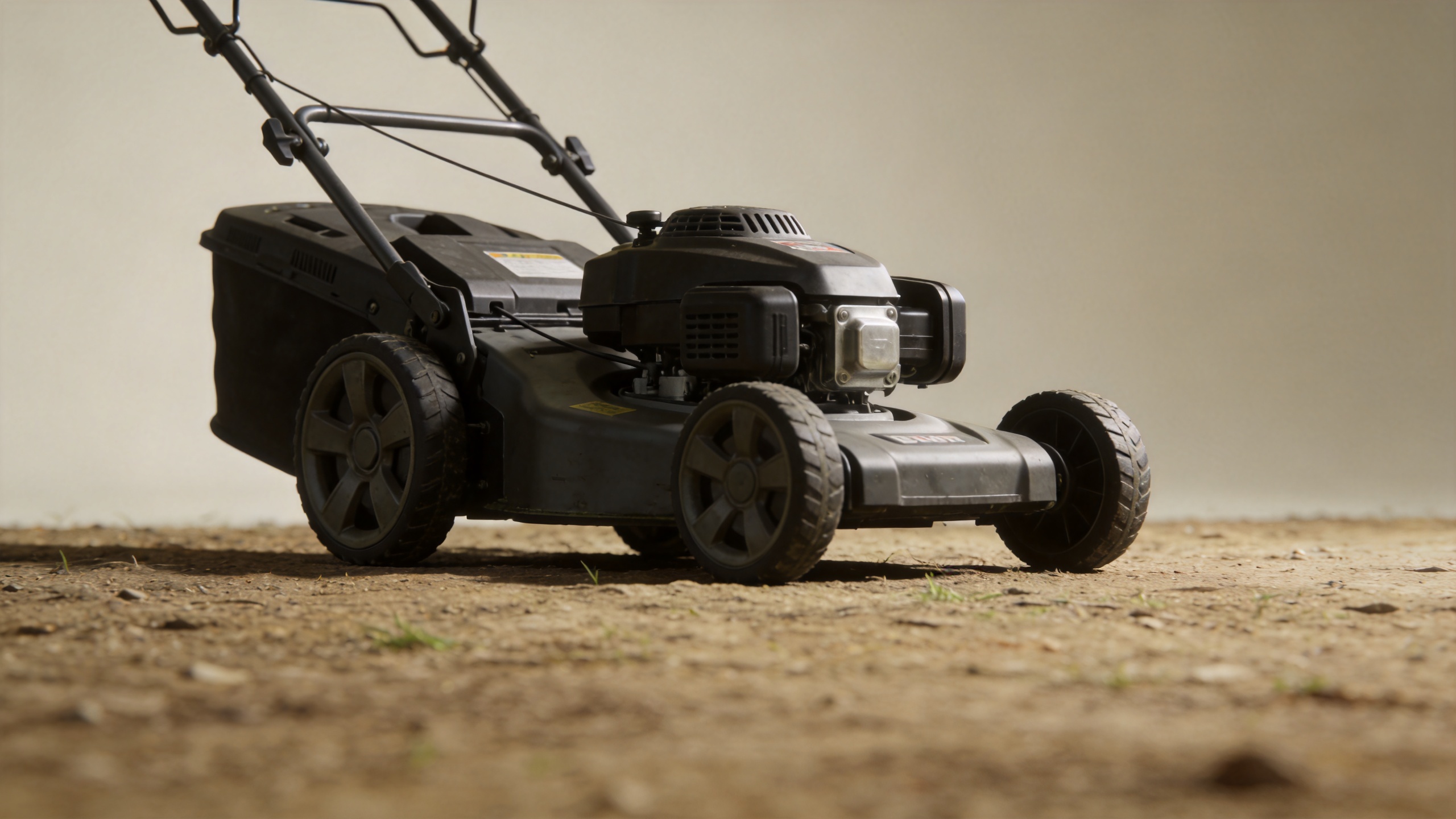
4. Choose a safe operator position and maintain line of sight
Operate the remote grass cutter from a stable, protected location with a clear view of the machine, its discharge area, and the route ahead. Do not stand downhill of a moving machine, directly in its likely travel path, or near a rollover path. Avoid areas where trees, tall vegetation, walls, or bright sun conceal the cutting deck or a person entering the zone.
Maintain the line-of-sight distance and control range specified for the remote control grass cutter machine. Signal strength, terrain, wet weather, and obstructions can affect communication. If you lose sight of the machine or notice delayed, erratic, or unexpected control response, activate the stop procedure and investigate only after all motion has ceased.
5. Treat slopes as a planning decision, not a challenge
A remote grass cutter may be selected for difficult terrain, yet no machine makes every slope safe. Measure or assess the slope according to the manufacturer’s method, inspect the surface for loose material and hidden holes, and consider grass moisture, ground firmness, turning space, and the direction of travel. Do not rely on a generic slope angle from a website; use the limit published for the specific machine and configuration.
Before mowing, decide how the remote grass cutter will enter, travel, turn, and exit the slope. Avoid abrupt direction changes, sharp turns at edges, and travel near ditches or unsupported shoulders. If conditions differ from the plan—rain begins, traction changes, or the machine slides—stop work. A delayed job is preferable to an uncontrolled movement.
6. Start, move, and stop in a controlled sequence
- Clear the exclusion zone and confirm that the operator, spotter, and machine are in their planned positions.
- Start the remote grass cutter only as directed in its manual, with the cutting area clear.
- Begin at low speed in an open area to confirm steering, braking, and stop response.
- Engage cutting only after the machine is stable and pointed along the planned route.
- Use smooth, deliberate inputs; avoid sudden acceleration, reversal, or turns.
- Stop the remote grass cutter before adjusting the plan, communicating with a spotter, or approaching an obstacle.
Do not leave an energized remote control grass cutter machine unattended. If you must move to another viewpoint, cross a barrier, take a call, or deal with an interruption, park it safely, disengage the cutting function, and follow the shutdown procedure first.
7. Use weather, visibility, and fatigue as stop signals
Do not operate a remote grass cutter when rain, fog, dust, low light, lightning, or high wind prevents reliable observation of the work zone. Wet grass can conceal obstacles and alter traction; poor light makes it harder to judge distance and slope edges. The right decision is sometimes to reschedule, even if the machine appears capable of continuing.
Operator attention is also a safety control. Take breaks, avoid operating when fatigued or impaired, and do not divide attention between a remote grass cutter and phone calls, paperwork, or conversations. A focused operator can recognize a developing hazard before it becomes a collision, thrown-object event, or rollover.
8. Shut down, clean, and report issues correctly
When the task is complete, move the remote grass cutter to a firm, level parking area away from people and traffic. Disengage the cutting system, shut down according to the manual, isolate the energy source where required, and wait for all movement to stop. Let hot components cool before refueling, cleaning, or storage.
Record damaged guards, unusual vibration, control lag, leaks, thrown-debris incidents, and near misses. Small observations help prevent repeat events. Before the next shift, make sure the remote grass cutter has received the inspection or repair that the finding requires.
A practical remote grass cutter safety checklist
Before each job, ask: Is the site inspected? Is the exclusion zone controlled? Is the remote grass cutter mechanically sound? Does the operator have clear visibility? Are ground, weather, and slope conditions within the manufacturer’s limits? Is the emergency stop known and tested? If any answer is no, do not begin cutting.
A disciplined routine is more valuable than rushing through a task. When operators treat the remote control grass cutter machine as powerful equipment rather than a distance-operated convenience, they can make safer decisions for people, property, and the machine itself.