EN
EN
What Cutting Precision Can Professional Grass Cutter Achieve?
A professional grass cutter can produce a visibly even finish, but “precision” is not a single machine number. It is the combined result of selected cutting height, a sound deck or cutting head, sharp and balanced blades, steady travel speed, sensible overlap, and conditions that let the operator see the work. From a technical-explainer perspective, the useful question is not whether a grass cutter is precise in every situation. It is which parts of the finish can be controlled on a particular site and which conditions still need to be checked.
For a professional grass cutter, a clean result generally means a consistent target height across accessible turf, cleanly severed leaf tips, few missed strips, and deliberate treatment around edges and obstacles. That standard is realistic on prepared, reasonably even ground. On wet turf, tall stemmy growth, rutted land, hidden debris, steep slopes, or tight turns, the achievable finish changes. A good work plan makes those limits visible rather than promising a uniform outcome everywhere.
Start by Defining Precision in Observable Terms
Precision is often confused with cutting low. In practice, a grass cutter can look more professional at a slightly higher, even setting than at an aggressive setting that scalps high spots and leaves uneven bands. Turf guidance consistently treats mowing height and frequency as the foundations of a uniform appearance. The target should therefore be a repeatable height range that suits the grass, the surface, and the current growth—not the lowest available setting.
Use four observable checks after a short test pass:
- Height consistency: compare the cut across the centre of the pass and along the overlap, especially where ground levels change.
- Leaf finish: look for cleanly cut tips rather than torn or shredded blades of grass.
- Coverage: inspect for narrow uncut strips, missed tufts, or streaks at the edge of each pass.
- Surface response: watch for scalping, soil contact, displaced clippings, or wheel marks that suggest the height or route should change.
These checks give a professional grass cutter team a practical definition of precision without turning an unverified performance claim into a promise.
What Controls the Cut Quality of a Grass Cutter?
1. Cutting height and deck stability
The height setting establishes the intended result, but it only remains meaningful if the cutting assembly follows the ground predictably. A grass cutter moving over a level, firm surface can hold a more consistent visual line than one crossing holes, mounds, loose soil, or abrupt transitions. Before work begins, inspect the area for surface changes and set a height that leaves margin for local high spots. If the site is irregular, divide it into zones instead of forcing one setting through every section.
2. Blade condition and balance
Sharp, correctly maintained blades are central to a clean cut. Torn clippings, uneven height, and repeated narrow strips can indicate a dull, damaged, or unsuitable cutting edge. The remedy is not automatically more speed or a lower setting. Stop, follow the equipment manual and lockout procedures, then inspect the blade system and its mounting condition. A professional grass cutter should be maintained according to the manufacturer’s instructions; any blade service must be performed safely by qualified personnel where required.
3. Grass condition and the amount removed
Grass height, density, moisture, and seasonal growth all influence what one pass can do cleanly. The commonly used one-third principle—avoiding removal of more than one-third of the leaf blade in a single mowing—offers a sensible planning reference for turf. If growth is far above the intended height, a staged approach may produce a neater result than one heavy pass. Wet grass can clump, bend, and obscure the surface, so it should not be treated as a normal precision condition.
4. Travel speed, overlap, and route discipline
A grass cutter does not create a uniform finish simply by covering an area quickly. Excess speed can reduce the time available for the cutting system to process dense growth and can make height changes harder to spot. Plan straight, repeatable lanes where the site allows, retain a deliberate overlap, and slow down near dense patches, turns, boundaries, and changing terrain. The right overlap is site-dependent: too little may leave strips; too much wastes time and can disturb the visual pattern.
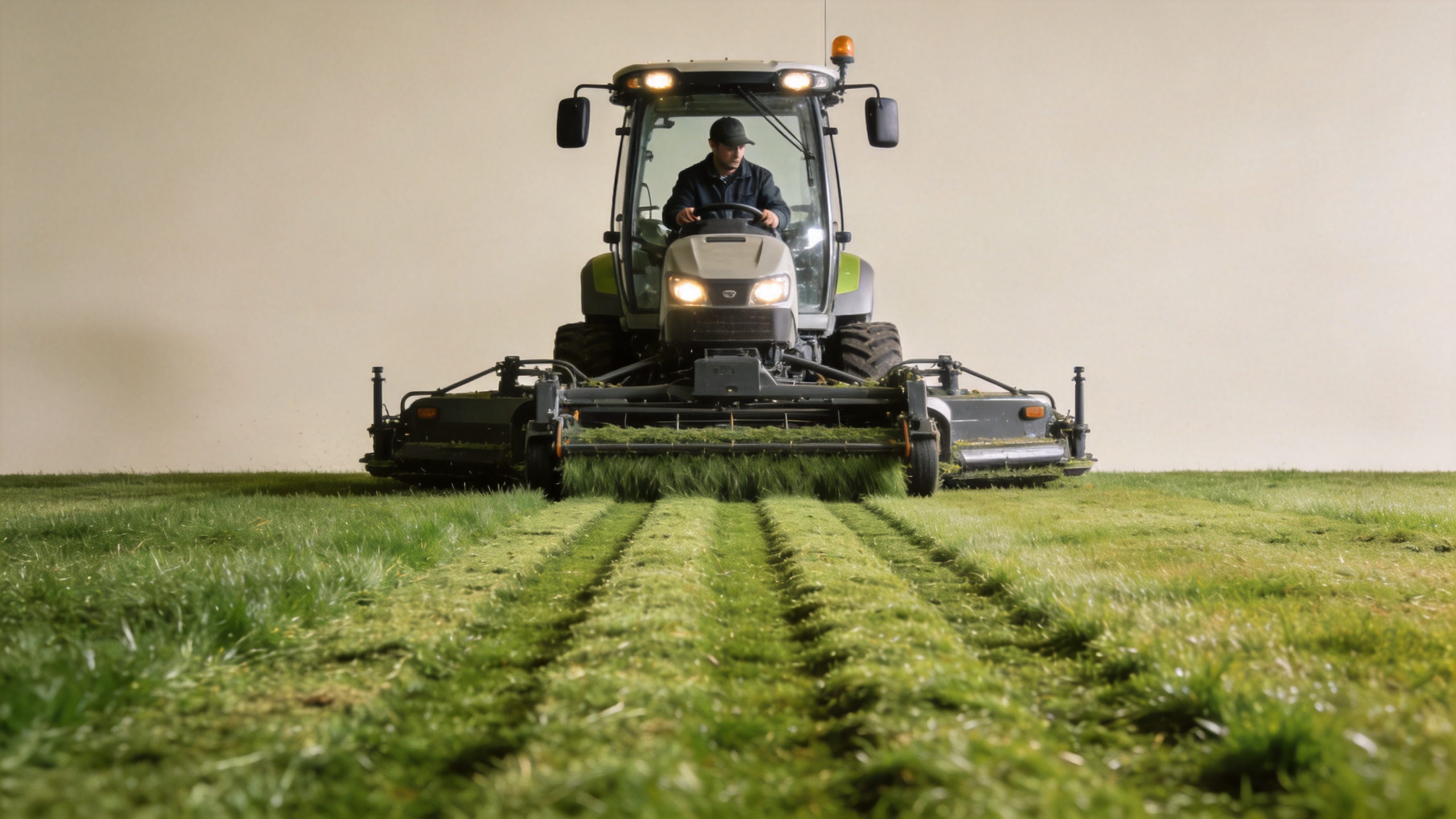
Where a Professional Grass Cutter Can Deliver Its Most Consistent Finish
The most consistent results are usually achievable when the operator has clear visibility, the grass is dry enough to cut cleanly, obstacles have been removed or marked, and the planned height fits the turf condition. On an open lawn, managed grounds, orchard lanes, or other accessible areas, a professional grass cutter can support a disciplined finish when the route and maintenance routine are equally disciplined.
That does not mean every part of a commercial site should receive the same treatment. Around trees, fences, drainage features, slopes, and traffic-sensitive boundaries, precision may mean slowing down, changing the route, leaving a protective margin, or using an appropriate follow-up tool. “More precise” should not mean operating outside the equipment guidance, site rules, or safe visibility limits.
A Practical Precision Workflow Before, During, and After Cutting
- Walk the site first. Mark obstacles, soft ground, ditches, abrupt slopes, and tight edge zones. Confirm that access, turning space, and operator visibility are appropriate.
- Set the target condition. Identify the desired grass height and decide whether tall growth needs more than one pass. Do not set the grass cutter by appearance alone; use the grass and surface condition as the reference.
- Inspect the cutting system. With the machine made safe in accordance with its manual, check the condition of blades or the specified cutting components, guards, fasteners, and height-adjustment parts.
- Make a short test pass. Check height consistency, cut cleanliness, and missed strips. Adjust the route, overlap, speed, or setting before committing to the whole area.
- Keep the route deliberate. Use a repeatable pattern, reduce speed at transitions, and leave enough room around obstacles for safe, controlled manoeuvres.
- Review the finish. Inspect representative areas from more than one angle. Record recurring streaks, scalped points, or clumping so the next maintenance or setup decision is based on evidence.
Questions to Ask Before Selecting a Professional Grass Cutter
If precision is a priority, ask suppliers and technical teams for information that can be verified for the proposed configuration. Useful questions include:
- Which cutting-height adjustment range and method apply to this configuration?
- What site conditions, vegetation types, and slope or surface limits are specified in the official operating information?
- Which blade or cutting-system maintenance checks are required, and at what intervals?
- How should an operator plan overlap, turning, and boundary work for the actual site?
- What training, safety procedures, and inspection records should be in place before operation?
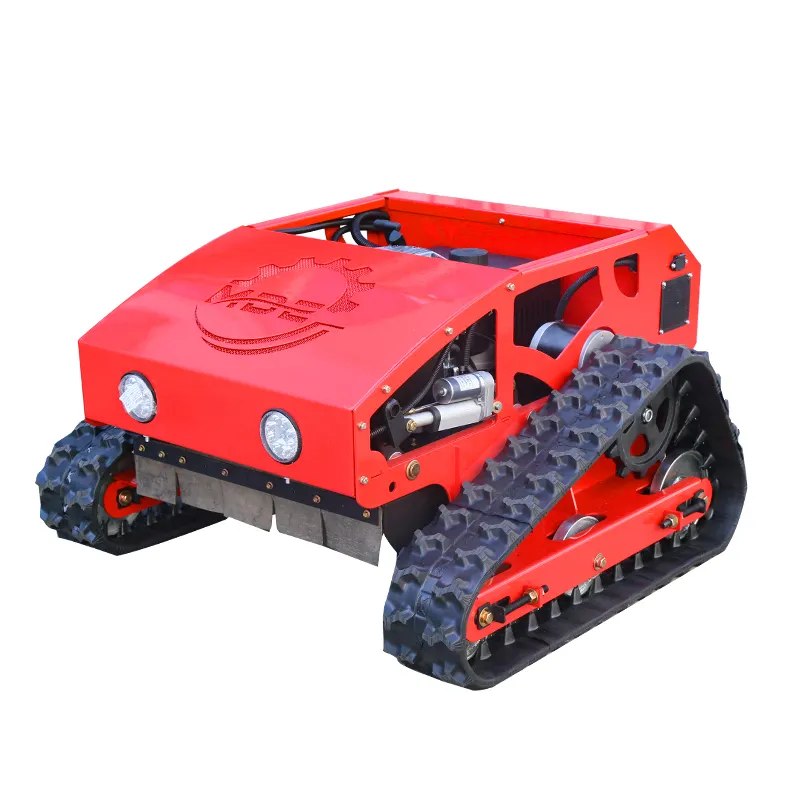
Shandong Maide En Intelligent Technology Co., Ltd. presents remote-control lawnmower solutions alongside agricultural machinery. For a real project, the most reliable next step is to provide the terrain, grass condition, operating frequency, access constraints, and required finish so that the appropriate configuration and its documented limits can be reviewed. Specific performance, safety, and configuration claims should be confirmed against current product documentation.
Conclusion: Precision Is a Managed Outcome
A professional grass cutter can achieve a clean, consistent finish when the equipment is matched to the site and the operator controls the variables that matter: height, blade condition, speed, overlap, route, and inspection. The most useful standard is not an unconditional claim about flawless cutting. It is a repeatable process that detects when turf, terrain, or maintenance conditions call for an adjustment. Before purchasing or scheduling a demonstration, prepare a simple site brief with grass height, surface changes, boundaries, desired finish, and maintenance expectations. That makes a meaningful precision discussion possible.