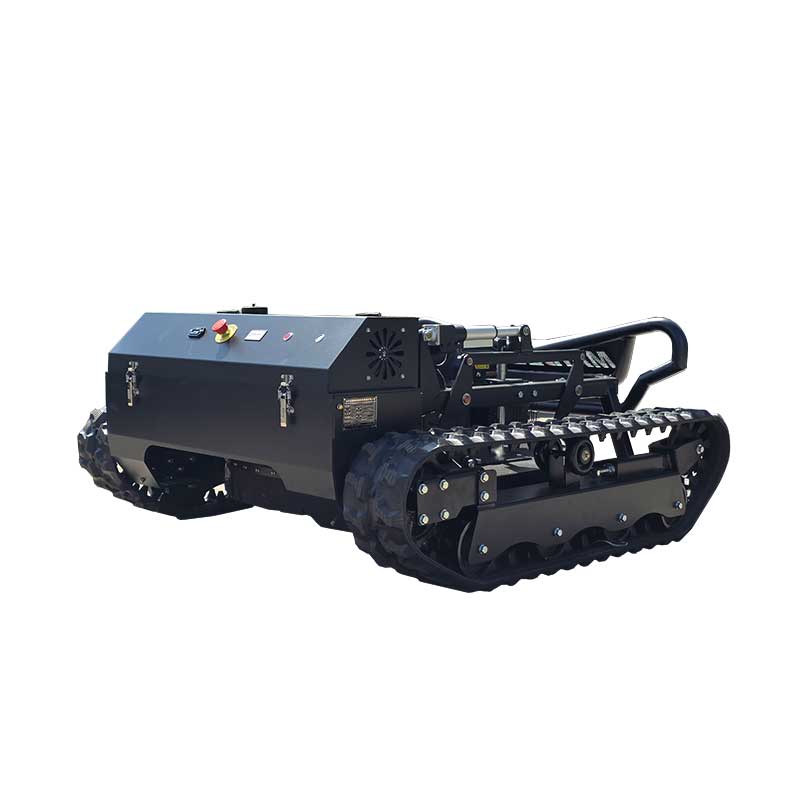
EN
What Transport Requirement Does Big lawn mower Have
Moving a lawn mower becomes a transport-planning job once the machine is too large for a pickup bed or ordinary utility trailer. A big lawn mower may be a ride-on, remote-control, commercial, or specialty machine, so there is no honest one-size-fits-all trailer recommendation. The useful starting point is the actual specification sheet: machine mass, overall length and width, height, wheelbase, approved tie-down points, fuel or battery condition, and any detachable attachments.
For a buyer arranging freight or moving equipment between job sites, it helps to work in this order: confirm the lawn mower data, match it to the tow vehicle and trailer, plan loading and securement, then check the rules that apply to the route. This approach is more reliable than selecting a trailer from a product photo or assuming that a larger deck alone tells you what is required.
Start with the real transport profile of the lawn mower
Ask the supplier for the shipping and operating dimensions separately. Shipping dimensions may change when a handle, roll bar, discharge chute, or attachment is folded or removed. Operating weight can also differ from the shipped weight when fuel, tools, optional equipment, or a battery pack are included. For a big lawn mower, collect a written list of:
- machine weight in the intended transport condition;
- length, width, and height, including fitted attachments;
- ground clearance, approach angle, and recommended ramp method;
- manufacturer-approved securement points and parking instructions;
- fuel, battery, and hydraulic-system handling instructions; and
- any components that must be restrained independently.
That information determines whether a given lawn mower physically fits, whether ramps are suitable, and which restraints can be used without damaging the machine. A machine that fits between the fenders can still be a poor match if it cannot be positioned to give the trailer stable load distribution.
Match the lawn mower to trailer and tow-vehicle ratings
Trailer capacity is not the same as the number printed in a listing. Gross Vehicle Weight Rating (GVWR) describes the maximum safe total weight of the trailer plus its cargo; the trailer’s empty weight reduces the payload that remains for a lawn mower, attachments, and accessories. Check the rating label and documentation for the specific trailer rather than relying on a generic category name.
The tow vehicle also needs adequate rated towing capacity, hitch capacity, braking capability, and tire condition for the planned combined load. The coupling, safety chains, electrical connector, brake controller where applicable, and breakaway system should all match the configuration. If the machine is near a rating limit, or if two machines share the trailer, verify the complete combination with a qualified transport professional or the relevant manufacturer documentation.
Placement matters as much as capacity. Load the lawn mower according to the trailer and vehicle guidance, keep the center of mass controlled, and avoid a setup that makes the trailer unstable or causes poor steering and braking response. Before setting off, check that the deck, mower blades, and any movable attachment are in the travel position specified by the equipment instructions.
Choose a loading method that protects people and equipment
Ramps, loading angle, ramp capacity, traction, and operator visibility deserve their own check. A big lawn mower can bottom out at a sharp ramp transition, while wet ramps or loose surfaces can make an otherwise ordinary loading operation unsafe. Use ramps and a trailer deck rated for the equipment, keep bystanders clear, and follow the operating manual for whether the engine should be running, the drive engaged, or a winch used during loading.
Do not treat remote control as a substitute for a loading plan. The person directing a remote lawn mower still needs a clear view, a controlled exclusion area, and a way to stop the machine. If visibility is restricted or the gradient is questionable, a different loading location or a trained loader may be the safer choice.
Secure the lawn mower using approved anchor points
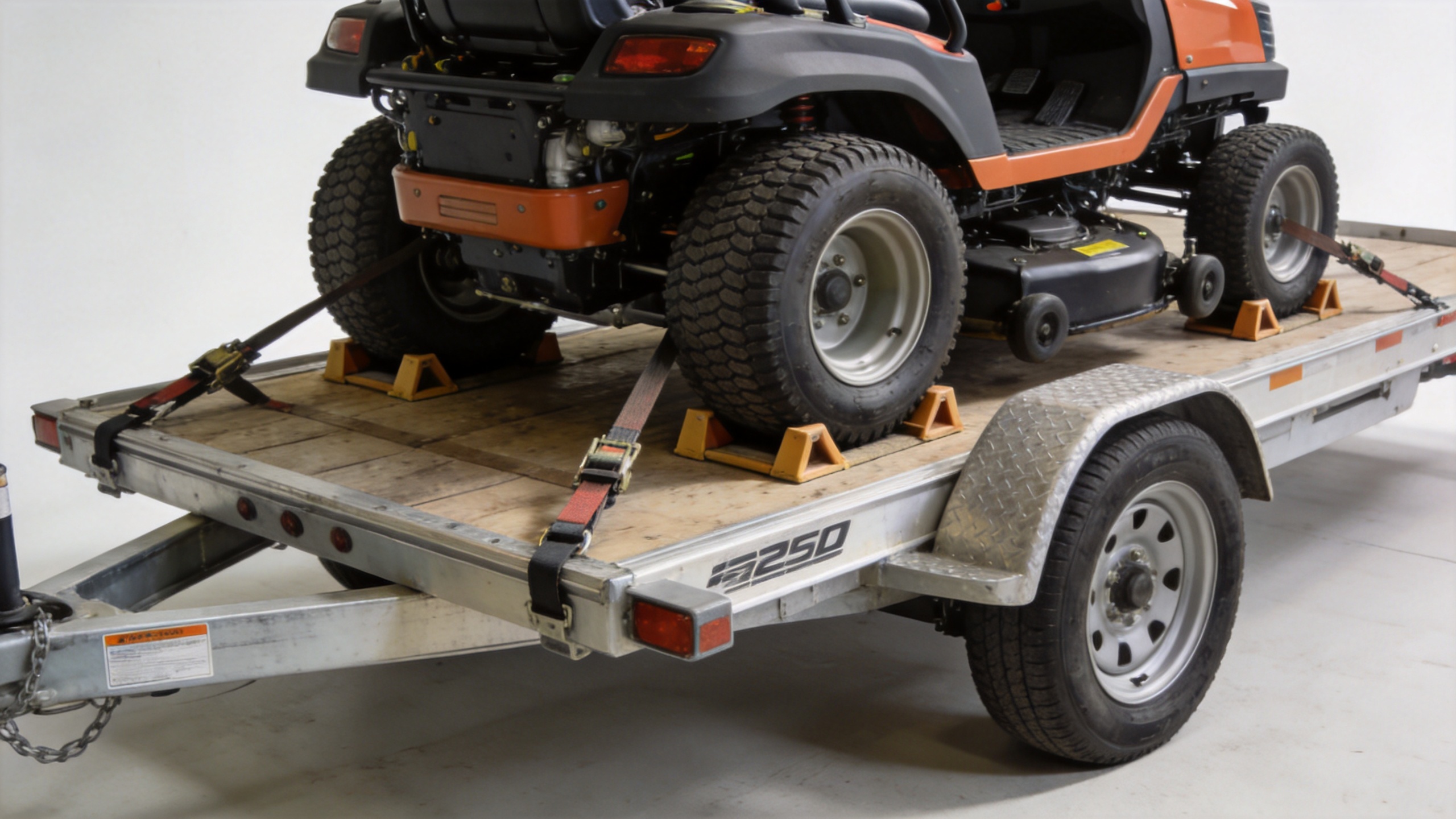
Securement must prevent the lawn mower from shifting, rolling, or becoming loose in transit. Use restraints that are appropriately rated, in sound condition, and attached to suitable points on both the machine and trailer. Avoid routing chains or straps over components not intended to carry transport loads. Chock wheels when appropriate, apply the parking brake if the manufacturer instructs it, and restrain loose implements or accessories separately.
For U.S. commercial transport, FMCSA cargo-securement guidance states that tiedowns and their components must be attached and secured so they do not loosen, unfasten, open, or release while moving. Its rules also distinguish tiedown requirements by cargo length and weight. This is a useful example, not a universal prescription: a lawn mower owner should confirm the rules, working-load limits, and equipment-specific requirements that apply in the jurisdiction and to the actual trip.
After the first short section of travel, stop in a safe place and recheck the lawn mower, straps or chains, ramps, hitch, lights, and tire condition. Vibration and settling can change tension. Repeat inspections during long trips and after rough roads, heavy braking, or adverse weather.
Plan for dimensions, route, and legal requirements
A big lawn mower can create a route issue even when the trailer is mechanically suitable. Measure the loaded height and width, including any protective cover or attachment. Compare those measurements with the route’s bridges, gates, branches, work-site entrances, turning areas, and parking space. Check whether a load is permitted on public roads, whether lighting, marking, brakes, registration, insurance, or an escort is required, and whether local limits differ from the rules at the origin.
Cross-border, interstate, and commercial movements may add documentation, driver-licensing, hours-of-service, tax, customs, or hazardous-material considerations. Fuel and batteries should be handled according to the equipment manual and applicable carrier rules. Because these obligations vary, the right answer for one lawn mower and route may not apply to another. Confirm them with the carrier, local authority, and transport insurer before dispatch.
Prepare the lawn mower for a carrier pickup
When a carrier will move the machine, provide accurate dimensions, verified weight, pickup and delivery access details, photos of the lawn mower in its transport condition, and a list of attachments. Tell the carrier about slopes, narrow gates, forklifts, loading docks, or timing restrictions at both ends. Clear information helps the carrier choose the right deck height, ramp arrangement, and securement equipment.
Before pickup, photograph the machine’s condition, remove or secure loose personal items, record the serial number if appropriate, and retain the bill of lading or handover record. If a cover is used, make sure it is suitable for travel and does not conceal loose parts or interfere with lights. A careful handover protects both the lawn mower and the people moving it.
A practical transport checklist for a big lawn mower
- Confirm the exact weight, dimensions, attachments, and approved tie-down points.
- Verify trailer payload, GVWR, deck space, ramp rating, and tow-vehicle compatibility.
- Inspect the hitch, coupler, chains, brakes, lights, tires, restraints, and anchor points.
- Load the lawn mower on stable ground using a controlled method and proper exclusion area.
- Secure the machine and attachments with appropriately rated equipment, then inspect again after departure.
- Check route-specific size, road-use, and commercial transport rules before leaving.
Final takeaway
The transport requirement for a big lawn mower is a verified combination of machine data, trailer capability, securement, and route compliance. Start with the manufacturer’s transport instructions, not assumptions about a mower category. Then match the lawn mower to a properly rated trailer and tow vehicle, use approved securement practices, and confirm local rules for the journey. For complex moves or unfamiliar regulations, arranging the trip with a qualified carrier is often the most practical next step.