EN
EN
How Does Self Mowing Lawn Mower Move Without Manual Push?
A self mowing lawn mower does not truly operate without a person. It still needs an operator to start it, guide its direction, watch the cutting area, and stop it when conditions change. What it removes is most of the forward pushing effort. The important distinction is that a self-propelled lawn mower has a drive system for its wheels in addition to the system that turns the blade.
From an operator’s viewpoint, the useful question is not simply whether a lawn mower moves by itself. It is how the drive is engaged, which wheels receive power, and whether the mower remains controllable on the grass, slope, or uneven ground you actually have. Once those pieces are clear, using a self mowing lawn mower becomes easier to understand and safer to assess.
The basic idea: power reaches the wheels
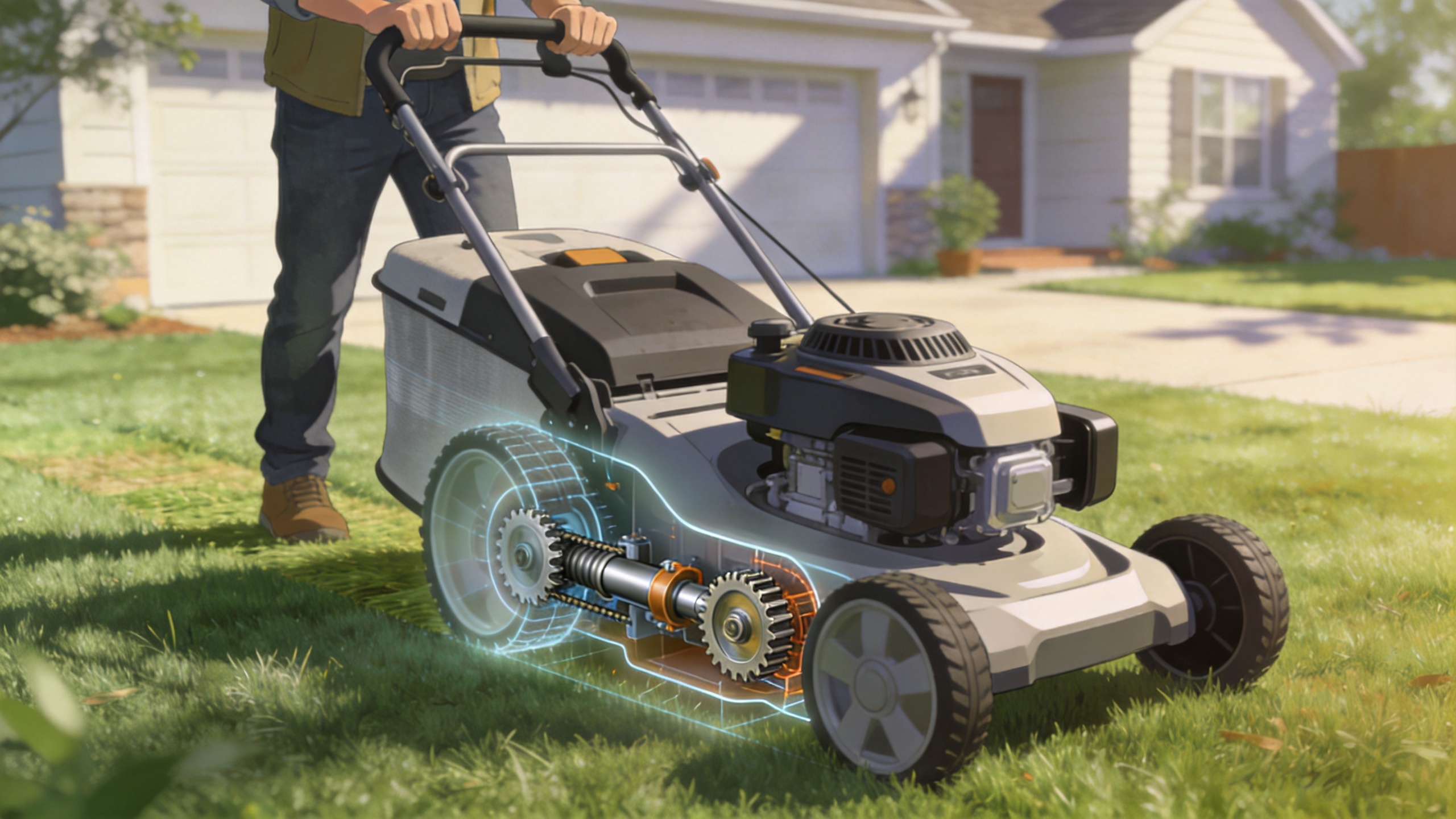
A conventional push lawn mower uses engine or battery power to spin the cutting blade, while the user supplies forward motion. A self mowing lawn mower adds a separate path for power to reach one or more wheels. On many gasoline machines, a belt, pulley, gearbox, cable-operated clutch, or combination of those parts transfers engine power into wheel rotation. On battery-powered equipment, a dedicated electric drive motor or an integrated drive assembly may move the wheels.
The exact layout differs by model, so the owner’s manual is the authority for service and controls. Still, the operating sequence is usually similar: start the lawn mower, hold the required safety control, then squeeze or pull the drive control. That action engages the wheel-drive system. The wheels turn and the mower advances at a fixed or variable pace. Releasing the drive control normally disconnects propulsion, allowing the mower to stop moving forward while the operator remains in control.
That separation matters. Blade rotation and wheel movement may be linked differently depending on the machine. Do not assume that engaging the self-propel control starts or stops the blade, and do not assume a moving mower can be left unattended. Check the labels and instructions on the specific self mowing lawn mower before use.
What the operator still does
Self-propelled movement reduces pushing force; it does not replace steering, judgment, or site preparation. The operator sets the travel direction with the handle, chooses a safe route, slows or stops before obstacles, and turns the mower at row ends. On a flat, open lawn, that may feel straightforward. Around trees, borders, drainage edges, or changes in grass density, the operator still needs to manage the machine deliberately.
It is tempting to think that a self mowing lawn mower can handle every situation simply because its wheels are powered. A better approach is to break the job into preparation, operation, and review. Before mowing, remove loose objects, identify holes and drop-offs, and decide where turns will happen. During mowing, keep both hands in the intended control position, maintain a pace that matches visibility and footing, and stop to inspect anything unusual. Afterward, clean grass buildup only with the machine safely shut down according to its manual, then check the drive and cutting areas for obvious wear.
Why wheel-drive layout changes the feel of a lawn mower
Self-propelled lawn mower designs commonly use front-wheel drive, rear-wheel drive, or all-wheel drive. These labels tell you where the driving force is applied; they do not guarantee that one layout is the right choice for every property.
- Front-wheel drive: The front wheels pull the mower forward. This can be practical for relatively level lawns and for users who often tip the front slightly to turn or reposition. If the driven wheels lose contact or traction on uneven ground, forward pull can reduce.
- Rear-wheel drive: The rear wheels push the mower forward. Because the operator’s handling force is applied through the handle, rear drive can feel steadier when mowing through thicker grass, making turns, or working on modest changes in grade. Actual slope limits must come from the manufacturer.
- All-wheel drive: Power is delivered to both front and rear wheels. This may help maintain traction in changing conditions, but it does not cancel the hazards of wet grass, loose soil, steep slopes, or hidden obstacles.
For any self mowing lawn mower, traction is a condition to verify rather than a promise. Wet turf, clippings, compacted soil, and a sloping path can all change how a lawn mower responds. If the work area is complex, review the instructions for the correct mowing direction and safe slope guidance instead of relying on a general rule.
Variable speed and the walking pace problem
Some self-propelled models have one travel speed; others let the operator adjust speed with a lever, dial, or pressure-sensitive control. Variable speed can make a lawn mower more comfortable when grass conditions change, but faster is not automatically better. A pace that is comfortable on a smooth, open pass may be too quick near a garden edge or on bumpy ground.
Start slowly when using an unfamiliar self mowing lawn mower. Notice whether the drive engages smoothly, whether the machine tracks straight, and whether you can release the control immediately without changing your grip. In tall or dense grass, a slower walking speed and sensible cutting approach may provide more time to see obstacles and maintain control. If the mower surges, pulls to one side, slips, or fails to disengage predictably, stop using it and inspect the relevant controls or arrange qualified service.
How to use the drive system safely
- Read the model-specific manual and identify the blade, engine or battery, drive, and stopping controls before starting.
- Inspect the mowing area for stones, wire, toys, branches, holes, and sharp changes in level.
- Wear appropriate footwear and keep bystanders, pets, and children away from the work area.
- Start the lawn mower on stable ground and engage self-propel only when you are ready to walk behind it.
- Use a controlled pace. Release the drive control before a tight turn, obstacle, or uncertain patch of ground when needed.
- Stop the machine and follow the manual’s shutdown procedure before clearing blockages, checking wheels, or cleaning underneath.
Efficiency matters, but an engaged drive system does not make a lawn mower low-risk. Safe distance, stable footing, and an unobstructed route are the first conditions to confirm.
Maintenance keeps self-propel movement predictable
A self mowing lawn mower has extra moving parts compared with a basic push mower, so the drive deserves routine attention. Depending on the design, inspect the drive cable adjustment, belt condition, wheel traction surfaces, gearbox area, battery connections, or electric-drive housing as directed by the manufacturer. Grass and debris around the wheels can interfere with movement or make inspection harder.
Do not diagnose every problem as a motor failure. A mower that moves weakly may have a worn belt, loose cable, contaminated wheel drive, low battery charge, or a condition that requires professional inspection. Record the symptom, stop using the machine if control is affected, and use the approved maintenance procedure. This is especially important before a new mowing season or after the machine has struck an object.
Choosing the right expectation
A self mowing lawn mower moves without manual pushing because its power source drives the wheels through a controlled transmission or electric-drive system. The operator still supplies direction, supervision, and safe decision-making. When comparing a lawn mower, look beyond the phrase “self-propelled.” Ask which wheels are driven, how the drive engages, whether the pace is adjustable, what terrain the manual permits, and what maintenance the system requires.
For a clearer equipment discussion, prepare a short description of your lawn size, surface condition, grass density, slope, obstacles, and expected mowing frequency. That gives a supplier or service team the information needed to discuss suitable lawn mower configurations without making assumptions about your site.