EN
Why Lawn Care with a Lawn Mower Keeps a Lawn Healthy for the Long Term
A healthy lawn is not maintained by a lawn mower alone. Still, the way you use a lawn mower strongly affects leaf area, root vigor, moisture retention, and the lawn’s ability to compete with weeds. From an operator’s point of view, the useful question is not “How often should I mow?” but “What does this lawn need before I start the lawn mower today?” That small shift helps turn routine cutting into a repeatable lawn care lawn mower practice.
Long-term lawn health comes from matching a lawn mower routine to grass type, weather, growth rate, terrain, and the condition of the machine. The guidance below is intentionally practical: prepare the site, mow with care, then review what the turf is telling you.
Start with the grass, not the lawn mower schedule
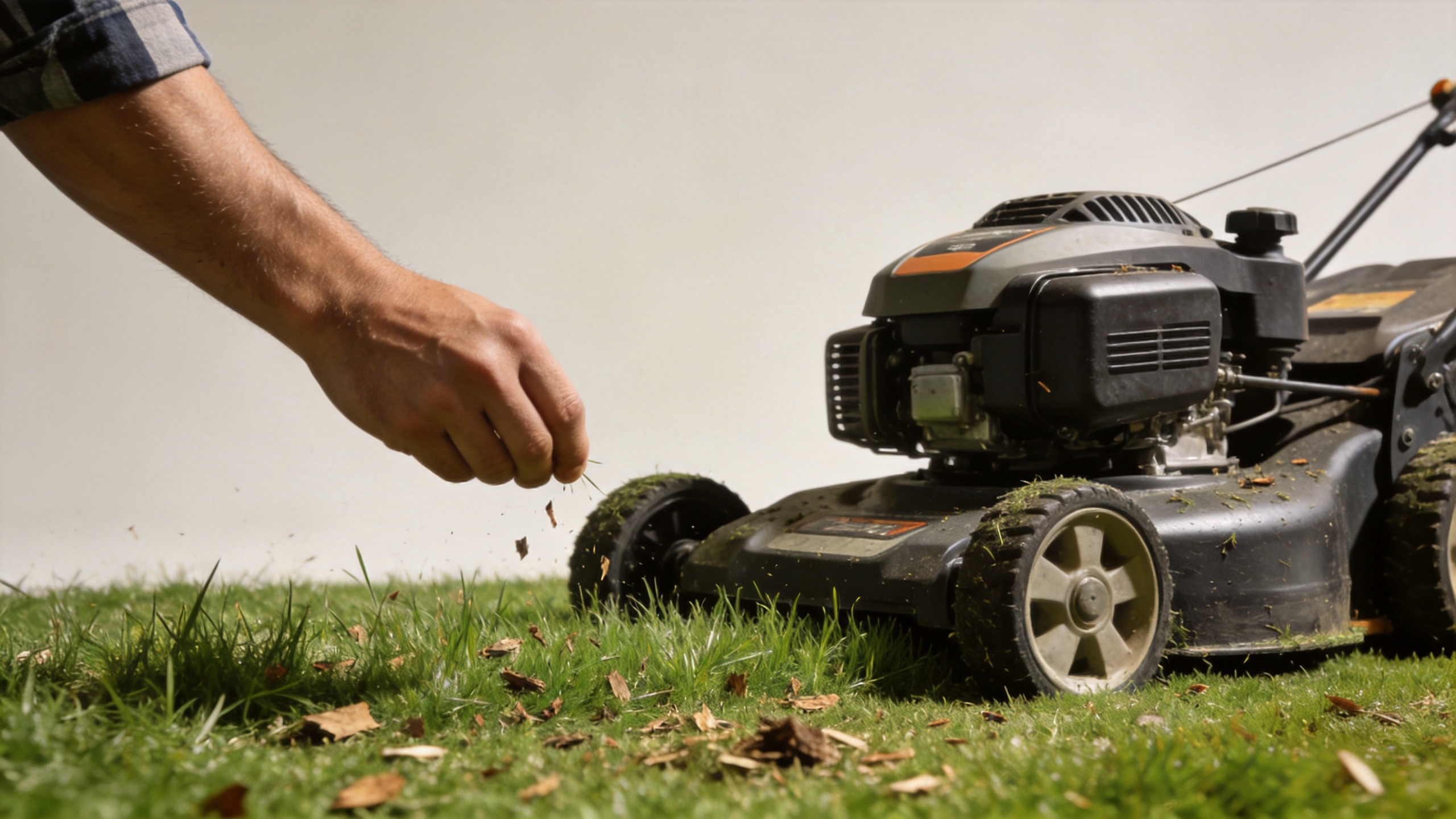
It is tempting to run a lawn mower on the same day every week. In reality, grass growth changes with temperature, rainfall, shade, and the season. A fixed schedule can lead to cutting too much at once, especially after a wet week. A better lawn mower decision starts with a walk across the lawn. Look for uneven growth, soggy patches, stones, toys, branches, pet areas, and edges near trees or drainage channels.
For many common lawns, extension guidance places typical mowing height around 2½ to 3 inches, while local grass type and conditions may call for a different target. University of Minnesota Extension also notes that keeping grass around 3 inches or higher can support density and that raising the cutting height during midsummer can help turf tolerate heat and drying winds. Treat these as starting points rather than a promise for every lawn: local grass guidance remains the most reliable final check.
A lawn mower should support the grass plant rather than constantly reset it. Taller grass often shades the soil surface, which can reduce rapid drying and help the turf compete for light. On the other hand, a very tall, neglected lawn may need several gradual cuts instead of one aggressive pass.
Use the one-third rule to set lawn mower timing
The simplest way to decide when to use a lawn mower is the one-third rule: remove no more than one-third of the grass blade in a single mowing. Cornell IPM presents this rule as a practical way to avoid taking too much leaf tissue at once. If your target height is 3 inches, wait until the grass is roughly 4½ inches before cutting it back to that target. Growth is not perfectly even, so use the rule as a guide, not a measurement contest.
This approach changes lawn care lawn mower work from calendar-driven to condition-driven. During active growth, you may need the lawn mower more often; during dry or cool periods, you may need it less often. If the grass has become too tall, raise the lawn mower deck for the first pass and lower it gradually on a later mowing if conditions allow. That reduces shock and leaves the lawn with enough green tissue to recover.
- Check the desired cutting height for your grass variety and climate.
- Measure the tallest actively growing areas, not only the shortest spots.
- Use a lawn mower often enough to stay close to the one-third guideline.
- Delay mowing when the soil is saturated or the turf is stressed by heat or drought.
Set the lawn mower for the site you actually have
Two lawns with the same area can need different lawn mower settings. Slope, thick growth, shade, uneven ground, and obstacles all change the job. A small flat lawn may be manageable with a straightforward walk-behind lawn mower, while larger or more complex areas call for a plan that considers access, turning space, visibility, and operator control. Bigger is not automatically better if the machine cannot move safely around borders and obstacles.
Before using any lawn mower on slopes or irregular ground, consult the manufacturer’s instructions and site safety rules. Remote-control equipment can create distance between an operator and the cutting area, but it does not remove the need for a clear route, safe exclusion zone, and continuous observation. Keep people and pets away, identify holes and hidden debris, and stop if footing, traction, or visibility becomes uncertain.
For teams managing larger properties, write down the site conditions before choosing or configuring a lawn mower: grass height, density, slope, soil moisture, boundary obstacles, access points, and expected mowing frequency. This makes future lawn care lawn mower decisions easier to compare and communicate.
A sharp blade makes each lawn mower pass cleaner
A lawn mower makes a cleaner cut with a sharp, undamaged blade. A dull blade can tear grass tips rather than cut them cleanly, leaving a ragged appearance and adding unnecessary stress to the plant. Inspect the lawn mower only when it is switched off, secured, and handled according to its manual. If you are not trained to service the machine, use a qualified service provider.
Build a simple inspection into your lawn mower routine:
- Clear grass buildup from the deck only after the lawn mower is safely powered down.
- Inspect the blade condition and arrange sharpening or replacement when needed.
- Check fasteners, guards, wheels, controls, and the cutting-height setting.
- Confirm that the discharge direction will not send debris toward people, vehicles, windows, or planted beds.
- After mowing, clean and store the lawn mower as the manufacturer recommends.
Maintenance is not separate from lawn care lawn mower work. A well-maintained machine helps make the next cut more predictable and gives you a chance to notice issues before they interrupt a mowing plan.
Change the lawn mower routine with the season
Spring growth can be fast, so a lawn mower may be needed more frequently while still following the one-third rule. In summer, many lawns benefit from a higher cut, especially when heat or dry wind increases stress. In autumn, continue mowing while grass is actively growing, but avoid letting long, wet grass collapse into a mat. Exact timing depends on region, grass type, and weather, so local extension advice should guide seasonal decisions.
Grass clippings can often be returned to the lawn when they are short and spread evenly, because they do not form a heavy layer. If clippings are thick, wet, or clumped, remove or redistribute them so they do not block light and air at the surface. The goal is not a perfectly empty lawn after every lawn mower pass; it is a tidy surface that can keep growing.
Review results after every lawn mower session
Healthy lawn care is a feedback loop. After using the lawn mower, look for an even cut, clean grass tips, missed strips, wheel marks, clumps, and areas that appear scalped. Scalping is a signal to raise the lawn mower deck, slow down, alter the mowing route, or correct uneven ground before the next pass. If one zone repeatedly looks weak, review shade, compaction, watering, traffic, and drainage instead of expecting the lawn mower to solve every problem.
Over time, keep a simple log of mowing height, weather, grass growth, and any changes you observe. This gives homeowners and property managers a more useful basis for lawn mower adjustments than memory alone. For commercial or large-site work, the same record can support clearer conversations about terrain, vegetation density, and safe operating conditions.
A practical long-term lawn mower checklist
- Walk the lawn and remove hazards before starting the lawn mower.
- Set a cutting height that suits the grass and current weather conditions.
- Follow the one-third rule instead of relying only on a weekly schedule.
- Use a sharp, well-maintained lawn mower and follow its operating manual.
- Adjust the plan for heat, drought, wet soil, slopes, and dense growth.
- Review the cut and record what should change next time.
A sound lawn mower routine is not necessarily the fastest routine. It is the one that respects the grass, the site, and the operator’s safety boundaries. By mowing at an appropriate height, avoiding severe cuts, keeping equipment in good condition, and responding to seasonal conditions, you can make lawn care lawn mower work part of a healthier lawn over the long term.